3D世界构建

Search documents
Meta再推WorldGen,一句话「盖」出50×50米一座城
具身智能之心· 2025-11-25 00:03
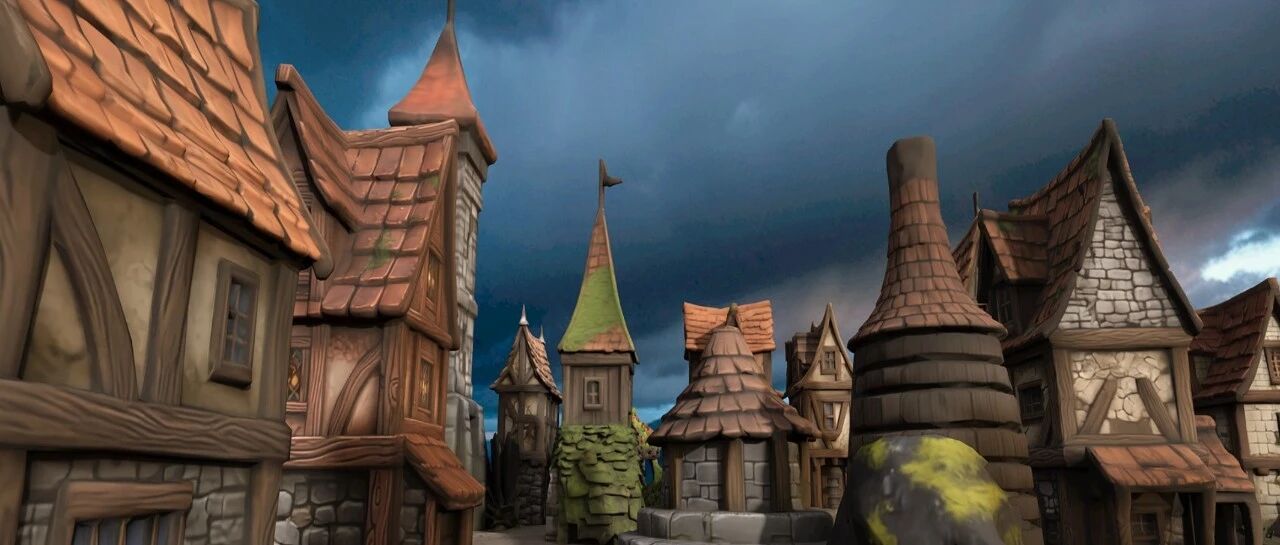
Core Insights - Meta has introduced a groundbreaking research project called WorldGen, which allows users to generate fully navigable and interactive 3D worlds from simple text prompts [12][22][30] - The technology leverages advanced procedural reasoning, diffusion models, and object-oriented scene decomposition to create coherent and visually rich 3D environments [13][19][29] Group 1: Technology Overview - WorldGen enables the creation of 3D worlds by inputting a simple prompt, such as "a medieval village in cartoon style," resulting in a consistent and themed environment [5][12] - The generated 3D worlds are not just static images but are interactive and allow for free movement within the space, maintaining structural integrity and connectivity between different areas [9][12] - Unlike existing methods that often degrade in quality when viewed from different angles, WorldGen maintains high-quality textures and geometry across a 50 x 50 meter area [19][29] Group 2: Development and Future Plans - Currently, WorldGen is in the research phase and is not yet available to developers, but it is compatible with major game engines like Unity and Unreal without additional conversion processes [22][31] - Future iterations of WorldGen are expected to support larger-scale world generation and reduce latency in the generation process [20][22] - The introduction of WorldGen signifies a shift in 3D content creation, making it more accessible to non-experts and potentially revolutionizing workflows in various industries [22][30]


Meta再推WorldGen,简单一句话,竟「盖」出50×50米一座城
机器之心· 2025-11-22 04:12
Core Viewpoint - Meta has introduced WorldGen, a groundbreaking research project that allows users to create fully navigable and interactive 3D worlds from simple text prompts, marking a significant advancement in generative AI technology [11][12]. Group 1: Technology Overview - WorldGen enables the generation of 3D environments based on text prompts like "cartoon-style medieval village" or "sci-fi base on Mars," producing consistent and themed interactive worlds within minutes [4][11]. - The system integrates procedural reasoning, diffusion models, and object-oriented scene decomposition to create geometrically consistent and visually rich 3D worlds suitable for gaming, simulation, and immersive social environments [12][21]. - Unlike existing methods that generate 3D worlds from a single perspective, WorldGen creates a complete textured scene covering an area of 50 x 50 meters, maintaining style and geometric consistency throughout [18][26]. Group 2: Development and Future Plans - Currently, WorldGen is in the research phase and is not yet available to developers, but it is compatible with major game engines like Unity and Unreal without additional conversion processes [21]. - Future versions of WorldGen are expected to support larger-scale world generation and reduce generation latency, enhancing its usability [21][19]. - The introduction of WorldGen signifies a shift in 3D content creation, allowing individuals without coding skills to create their own virtual worlds from simple text prompts, aligning with Meta's vision of democratizing content creation [21][28]. Group 3: Comparison with Other Technologies - Compared to other emerging technologies like Marble from World Labs, which uses Gaussian Splatting for realistic visuals but suffers from quality degradation when viewed from different angles, WorldGen's mesh-based output supports essential interactive features like physics simulation and collision detection [26][27]. - This structural approach allows for the generation of complete scenes while maintaining geometric integrity, making it a functional development tool rather than just a visual rendering solution [27][26]. Group 4: Impact on Industry - The advent of WorldGen is expected to transform workflows in the tech and creative sectors, shifting the focus from manual vertex placement to AI-driven scene generation and editing based on prompts [29]. - Despite the seamless integration with existing game engines, the high computational demands of the generation process necessitate careful consideration of local versus cloud rendering capabilities for developers [29].