
3D打印技术突破

Search documents
3D打印领域,新突破
财联社· 2026-02-12 07:54
Core Viewpoint - The breakthrough in 3D printing technology, developed by Chinese scientists, significantly enhances speed and precision, achieving high-resolution printing of complex millimeter-sized objects in just 0.6 seconds, setting a new speed record in the field [1][4]. Group 1: Technology Overview - The new 3D printing technology, named "Digital Incoherent Synthetic Holographic Field (DISH)," allows for the rapid and precise projection of complex three-dimensional light intensity distributions, overcoming the speed limitations of traditional point-by-point or layer-by-layer scanning methods [4][7]. - The technology can print structures with a minimum size of 12 micrometers and a printing rate of 333 cubic millimeters per second, marking it as the fastest known 3D printing method to date [7]. Group 2: Advantages and Applications - DISH technology simplifies the requirements for printing containers, needing only an optical plane and allowing for stationary containers during the printing process, which broadens the potential applications, including continuous printing in fluid environments [9]. - Potential applications of DISH technology include mass production of photonic computing devices, smartphone camera modules, and complex parts with sharp angles and curves, with future prospects in flexible electronics, micro-robots, and high-resolution tissue models [9].

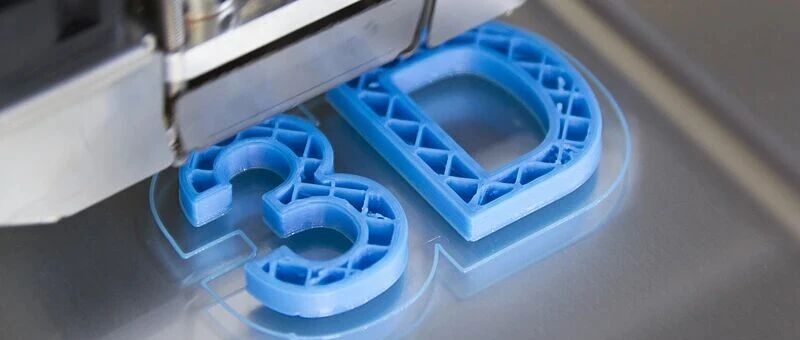
资本密集入局,3D打印产业,爆发了!
Zheng Quan Shi Bao Wang· 2025-12-15 05:16
Core Viewpoint - Since 2025, the Chinese 3D printing industry has entered a phase of capital frenzy, marked by significant investments and IPO attempts, indicating a shift towards large-scale and capitalized growth [1] Group 1: Capital Influx - On December 10, consumer-grade 3D printing brand KuaiZao Technology announced the completion of a multi-hundred million yuan Series B financing led by Hillhouse Capital and Meituan, with funds allocated for multi-color printing technology R&D and global talent acquisition [2] - KuaiZao Technology, founded in 2016 and headquartered in Shenzhen, has a product line that includes multifunctional printers and high-efficiency multi-color printers, with its flagship product U1 achieving a crowdfunding record of 150 million yuan, reflecting strong market demand [2] - DJI, a drone giant, invested several hundred million yuan in Smart Pie, indicating confidence in the growth potential of consumer-grade 3D printing technology [2] - Other major players, including Tencent and Shenzhen Capital Group, are also investing in the sector, with Chuangxiang Sanwei planning to raise funds through an IPO to enhance R&D and expand overseas [2][3] Group 2: Industry Growth and Trends - Since 2025, the number of investment and financing events in the industry has reached a near five-year high, exceeding 40, with a clear trend of capital concentrating on leading projects [4] - Shenzhen has emerged as a hub for the 3D printing industry, with significant contributions from consumer-grade products, as evidenced by customs data showing 3D printer exports reaching 3.7777 million units in 2024 [5] - In Q1 2025, global shipments of entry-level 3D printers (priced below $2,500) surpassed 1 million units, a 15% year-on-year increase, with Chinese suppliers accounting for 95% of the market share [5] - TuoZhu Technology, founded in 2020, reported revenues of 5.5 to 6 billion yuan in 2024, with a net profit of nearly 2 billion yuan and a net profit margin exceeding 30% [5] Group 3: Technological and Market Dynamics - The industry explosion is attributed to a deep resonance of technology, policy, and demand, with AI integration lowering usage barriers and enhancing user experience [8] - The demand for 3D printing is experiencing explosive growth, driven by the Z generation's pursuit of personalized expression and strong industrial demand from sectors like consumer electronics and aerospace [9] - Policies supporting the industry are intensifying, with the inclusion of desktop 3D printing devices in key consumption categories, leading to price reductions for entry-level devices [9]
