
U1打印机

Search documents
高瓴美团,投一个深圳团队
3 6 Ke· 2025-12-31 09:33
Core Insights - Snapmaker, a 3D printing startup, recently completed a multi-billion RMB Series B financing led by Hillhouse Capital and Meituan, highlighting the booming hardware entrepreneurship in Shenzhen [1][6]. Company Overview - Snapmaker was founded by Chen Xuedong and his team, who aimed to create a versatile tool for creative needs, leading to the development of a multifunctional printer that integrates 3D printing, laser engraving, and CNC cutting [2][3]. - The company faced a revenue bottleneck in 2023, prompting a strategic shift from a "three-in-one" product to focusing solely on 3D printing, resulting in the launch of the U1 printer, which became the highest crowdfunded 3D printing project on Kickstarter, raising over 150 million RMB [5][6]. Financing and Growth - Snapmaker's B round financing, amounting to several hundred million RMB, was noted as a significant event in the 3D printing sector, with expectations of several-fold revenue growth in the coming year as the company transitions from product development to ecosystem building [6]. - The company has attracted a surge of investor interest, with dozens of investors approaching them in just the second half of the year [7]. Industry Landscape - The 3D printing industry has seen a dramatic rise, particularly after the emergence of companies like拓竹, which has become a unicorn valued over 10 billion USD, prompting investors to seek the next big opportunity in this space [7][9]. - The competitive landscape has evolved, with major players like拓竹, 创想三维, and others forming a new tier in the consumer-grade 3D printing market, while Snapmaker and other emerging companies are also gaining traction [9][10]. Shenzhen as a Hub - Shenzhen is recognized as a global center for consumer hardware and 3D printing, offering a rich talent pool and robust supply chain, making it an attractive location for hardware startups [12][13]. - The city has been actively promoting hardware entrepreneurship through initiatives like the "X-Day" event, which has facilitated significant funding and support for numerous startups [13].


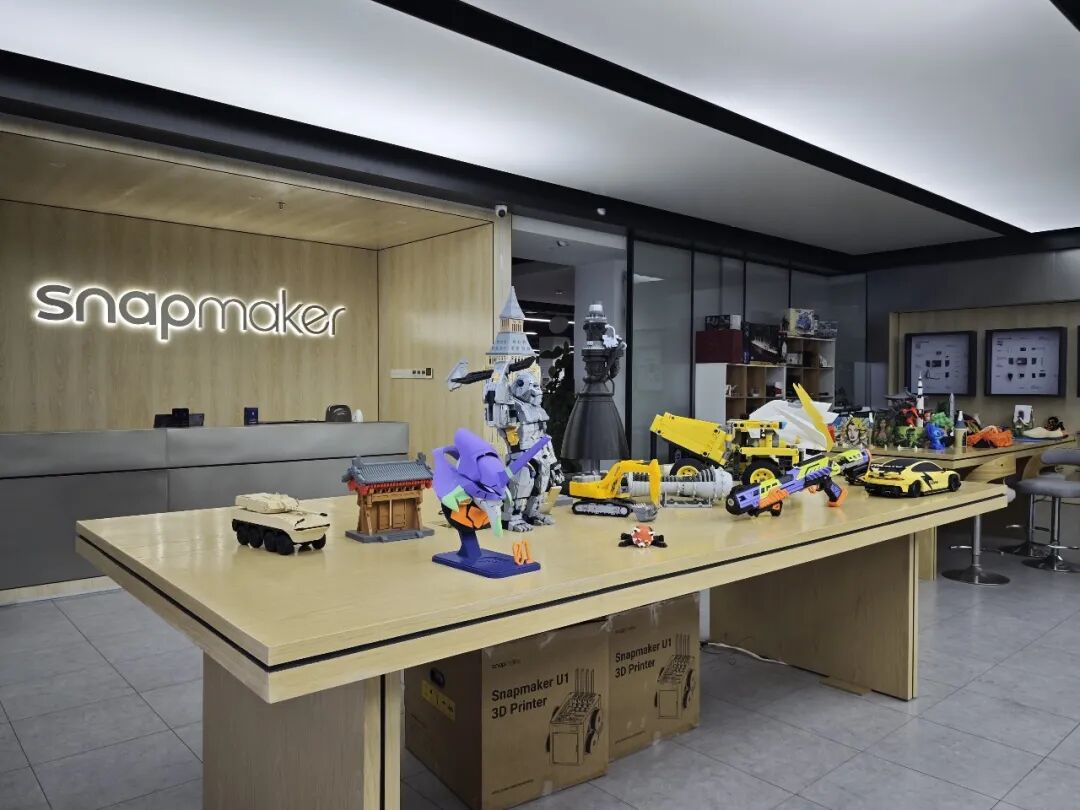
高瓴美团,投一个深圳团队
投资界· 2025-12-31 07:31
Core Viewpoint - The article highlights the rapid growth and investment interest in the 3D printing industry, particularly focusing on the company Snapmaker, which has recently secured significant funding and is seen as a leading player in the market [2][7]. Company Overview - Snapmaker, founded by Chen Xuedong and his team, has developed a multifunctional 3D printer that integrates 3D printing, laser engraving, and CNC cutting [4]. - The company has experienced a pivotal moment in 2023, deciding to shift its focus solely to 3D printing after facing revenue challenges with its "three-in-one" product [6]. - Snapmaker's new product, the U1, became the highest crowdfunded 3D printing project globally, raising over 150 million RMB on Kickstarter [6]. Investment Landscape - Snapmaker's recent B round financing, led by Hillhouse Capital and Meituan, raised several hundred million RMB, marking a significant milestone for the company [7]. - The 3D printing sector has seen a surge in investor interest, with numerous startups in Shenzhen attracting attention and funding [8]. - The success of companies like Tuozhu, which has reached a valuation of over 10 billion USD, has prompted investors to seek the next big opportunity in the 3D printing space [8]. Industry Dynamics - The 3D printing industry, once considered niche, has gained prominence, especially since 2022, when Tuozhu emerged as a major player [8]. - The competitive landscape is evolving, with several companies, including Snapmaker, Chuangxiang Sanwei, and Zongwei Lifang, vying for market share in the consumer-grade 3D printing sector [9]. - Shenzhen is recognized as a hub for hardware innovation, providing a rich talent pool and supply chain advantages for 3D printing startups [11]. Future Outlook - Snapmaker aims for significant revenue growth in the coming years, transitioning from product development to creating an ecosystem around its offerings [7]. - The article suggests that the competition in the 3D printing market is just beginning, with many players entering the field and seeking to establish their presence [9].

资本密集入局,3D打印产业,爆发了!
Zheng Quan Shi Bao Wang· 2025-12-15 05:16
Core Viewpoint - Since 2025, the Chinese 3D printing industry has entered a phase of capital frenzy, marked by significant investments and IPO attempts, indicating a shift towards large-scale and capitalized growth [1] Group 1: Capital Influx - On December 10, consumer-grade 3D printing brand KuaiZao Technology announced the completion of a multi-hundred million yuan Series B financing led by Hillhouse Capital and Meituan, with funds allocated for multi-color printing technology R&D and global talent acquisition [2] - KuaiZao Technology, founded in 2016 and headquartered in Shenzhen, has a product line that includes multifunctional printers and high-efficiency multi-color printers, with its flagship product U1 achieving a crowdfunding record of 150 million yuan, reflecting strong market demand [2] - DJI, a drone giant, invested several hundred million yuan in Smart Pie, indicating confidence in the growth potential of consumer-grade 3D printing technology [2] - Other major players, including Tencent and Shenzhen Capital Group, are also investing in the sector, with Chuangxiang Sanwei planning to raise funds through an IPO to enhance R&D and expand overseas [2][3] Group 2: Industry Growth and Trends - Since 2025, the number of investment and financing events in the industry has reached a near five-year high, exceeding 40, with a clear trend of capital concentrating on leading projects [4] - Shenzhen has emerged as a hub for the 3D printing industry, with significant contributions from consumer-grade products, as evidenced by customs data showing 3D printer exports reaching 3.7777 million units in 2024 [5] - In Q1 2025, global shipments of entry-level 3D printers (priced below $2,500) surpassed 1 million units, a 15% year-on-year increase, with Chinese suppliers accounting for 95% of the market share [5] - TuoZhu Technology, founded in 2020, reported revenues of 5.5 to 6 billion yuan in 2024, with a net profit of nearly 2 billion yuan and a net profit margin exceeding 30% [5] Group 3: Technological and Market Dynamics - The industry explosion is attributed to a deep resonance of technology, policy, and demand, with AI integration lowering usage barriers and enhancing user experience [8] - The demand for 3D printing is experiencing explosive growth, driven by the Z generation's pursuit of personalized expression and strong industrial demand from sectors like consumer electronics and aerospace [9] - Policies supporting the industry are intensifying, with the inclusion of desktop 3D printing devices in key consumption categories, leading to price reductions for entry-level devices [9]

3D打印产业,爆发了!
Zheng Quan Shi Bao· 2025-12-10 12:16
Core Insights - Since 2025, the Chinese 3D printing industry has entered a phase of capital frenzy, marked by significant investments and IPO attempts, indicating a shift towards large-scale and capitalized growth [1][2]. Group 1: Capital Influx - On December 10, consumer-grade 3D printing brand Kuaizao Technology announced it completed a multi-hundred million yuan Series B financing led by Hillhouse Capital and Meituan, with funds allocated for multi-color printing technology development and global talent acquisition [2]. - Kuaizao Technology, founded in 2016 and headquartered in Shenzhen, has a product line that includes multifunctional printers and high-efficiency multi-color printers, with its flagship product U1 achieving a crowdfunding record of 150 million yuan, reflecting strong market demand [2]. - DJI, a drone giant, invested several hundred million yuan in Smart Pie, indicating confidence in the growth potential of consumer-grade 3D printing technology [2]. - Other major players, including Tencent and Shenzhen Capital Group, are also backing companies like Chuangxiang Sanwei, which plans to raise funds through an IPO to enhance R&D and expand into overseas markets [2][3]. Group 2: Industry Growth and Trends - The number of investment and financing events in the industry reached a near five-year high since 2025, with over 40 occurrences, showing a clear trend of capital concentrating on leading projects [4]. - Shenzhen has emerged as a hub for the 3D printing industry, with significant contributions from consumer-grade products, as evidenced by 3D printer exports reaching 3.7777 million units in 2024 [5]. - In Q1 2025, global shipments of entry-level 3D printers (priced below $2,500) surpassed 1 million units, with Chinese suppliers accounting for 95% of the market share, led by Chuangxiang Sanwei with a 39% share [5]. Group 3: Company Performance - Tuo Zhu Technology, founded in 2020 by former DJI engineers, achieved revenue between 5.5 billion to 6 billion yuan in 2024, with a net profit nearing 2 billion yuan and a net profit margin exceeding 30% [5]. - Smart Pie, established in 2015, initially focused on STEM education kits but pivoted to 3D printing, launching its first resin printer at a competitive price, thus capturing the mid-to-low price market [6]. - Zongwei Lifang has expanded its business globally, generating over 1 billion yuan in annual revenue since 2016 [6]. Group 4: Industry Ecosystem and Demand - The industry's growth is driven by a confluence of technological advancements, policy support, and rising demand, with AI integration lowering usage barriers and enhancing user experience [7][8]. - The demand for 3D printing is surging, particularly among Gen Z consumers seeking personalized products, with sales of 3D printing-related categories during the 2025 JD 618 shopping festival increasing over threefold year-on-year [8]. - Policies supporting the industry, such as subsidies for desktop 3D printing devices, are expected to drive down entry-level equipment prices to around 1,000 yuan [8].