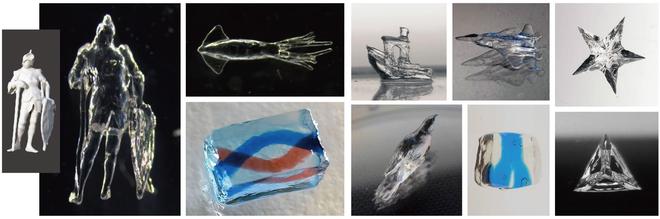
数字非相干合成全息光场(DISH)3D打印技术

Search documents
我国科学家在3D打印领域取得新突破
Ren Min Ri Bao· 2026-02-12 23:27
Core Viewpoint - A new 3D printing technology developed by Chinese scientists achieves a record speed of 0.6 seconds for high-resolution printing of complex millimeter-scale objects, addressing the long-standing issues of speed and precision in 3D printing [1] Group 1: Technology Development - The new technology, named "Digital Incoherent Synthetic Holographic Light Field (DISH)," was created by a research team led by Professor Dai Qionghai from Tsinghua University after five years of research [1] - The DISH technology can print complex structures with a minimum feature size of 12 micrometers and a printing speed of 333 cubic millimeters per second [1] Group 2: Applications and Implications - DISH technology offers a new solution for technological upgrades in various fields, including engineering manufacturing, where it can facilitate the mass production of photonic devices and micro-components such as smartphone camera modules [1] - Future applications may extend to flexible electronics, micro-robots, and high-resolution tissue models, indicating a broad potential impact across multiple complex scenarios [1]
0.6秒可完成毫米尺寸物体打印
Xin Lang Cai Jing· 2026-02-12 19:36
Core Viewpoint - Chinese scientists have made a breakthrough in 3D printing technology, achieving a new record speed of 0.6 seconds for high-resolution printing of complex millimeter-sized objects, which is published in the journal Nature [2][3]. Group 1: Technology Breakthrough - The new 3D printing technology allows for the generation of complex structures in just 0.6 seconds, with the capability to print structures as fine as 12 micrometers [3]. - The printing speed can reach 333 cubic millimeters per second, marking it as the highest known speed in 3D printing to date [3]. - The technology, named "Digital Incoherent Synthetic Holographic Light Field (DISH)," overcomes the speed limitations of traditional point-by-point or layer-by-layer scanning methods [3]. Group 2: Applications and Advantages - The DISH technology simplifies the requirements for printing containers, needing only an optical plane, allowing for stationary containers during the printing process [3]. - This advancement significantly expands the potential applications, enabling direct printing within ordinary fluid pipelines for batch and continuous printing [3]. - Potential applications include mass production of photonic computing devices, smartphone camera modules, and complex parts with sharp angles and curves, with future prospects in flexible electronics, micro-robots, and high-resolution tissue models [3].

推动制造业转型升级,我国3D打印技术实现新突破
Xuan Gu Bao· 2026-02-12 14:51
Group 1 - The core innovation is the "Digital Incoherent Synthetic Holographic Light Field (DISH)" 3D printing technology, which can complete high-resolution 3D printing of complex objects in millimeter size within 0.6 seconds, setting a new speed record for 3D printing [1] - DISH technology provides new solutions for technological upgrades in related fields, such as mass production of photonic computing devices and micro-components like mobile camera modules, as well as the ability to print parts with sharp angles and complex surfaces [1] - The 3D printing industry is on the verge of a transformative shift, with expectations to exceed 100 billion yuan by 2029, driving the scale of the upstream and downstream industrial chain to over 300 billion yuan [1] Group 2 - Relevant A-share concept stocks include AVIC Heavy Machinery and Dongmu Co., Ltd. [1]
3D打印领域,新突破
财联社· 2026-02-12 07:54
Core Viewpoint - The breakthrough in 3D printing technology, developed by Chinese scientists, significantly enhances speed and precision, achieving high-resolution printing of complex millimeter-sized objects in just 0.6 seconds, setting a new speed record in the field [1][4]. Group 1: Technology Overview - The new 3D printing technology, named "Digital Incoherent Synthetic Holographic Field (DISH)," allows for the rapid and precise projection of complex three-dimensional light intensity distributions, overcoming the speed limitations of traditional point-by-point or layer-by-layer scanning methods [4][7]. - The technology can print structures with a minimum size of 12 micrometers and a printing rate of 333 cubic millimeters per second, marking it as the fastest known 3D printing method to date [7]. Group 2: Advantages and Applications - DISH technology simplifies the requirements for printing containers, needing only an optical plane and allowing for stationary containers during the printing process, which broadens the potential applications, including continuous printing in fluid environments [9]. - Potential applications of DISH technology include mass production of photonic computing devices, smartphone camera modules, and complex parts with sharp angles and curves, with future prospects in flexible electronics, micro-robots, and high-resolution tissue models [9].
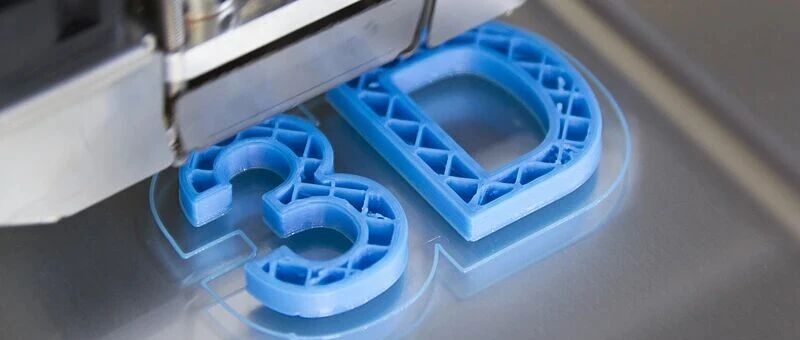
0.6秒可完成毫米尺寸物体打印!我国科学家在3D打印领域有新突破
Xin Hua She· 2026-02-12 07:26
Core Viewpoint - A new 3D printing technology developed by Chinese scientists achieves a record speed of 0.6 seconds for high-resolution printing of complex millimeter-sized objects, marking a significant breakthrough in the field [1][4]. Group 1: Technology Overview - The new 3D printing technology, named "Digital Incoherent Synthetic Holographic Light Field (DISH)," allows for the rapid and precise projection of complex three-dimensional light intensity distributions, overcoming the speed limitations of traditional point-by-point or layer-by-layer scanning methods [2][4]. - The technology can print structures with a minimum size of 12 micrometers and a printing speed of up to 333 cubic millimeters per second, which is currently the highest known speed in 3D printing [4]. Group 2: Advantages and Applications - DISH technology simplifies the requirements for printing containers, needing only an optical plane, which allows for stationary containers during the printing process. This expands the potential applications, including continuous printing within ordinary fluid pipelines [5]. - The technology is expected to provide new solutions for upgrades in various fields, such as engineering manufacturing, where it can facilitate the mass production of photonic computing devices, smartphone camera modules, and components with sharp angles and complex surfaces. Future applications may extend to flexible electronics, micro-robots, and high-resolution tissue models [5].