4D Occupancy

Search documents
双SOTA!GenieDrive:物理一致的自动驾驶世界模型(港大&华为诺亚)
自动驾驶之心· 2025-12-24 00:58
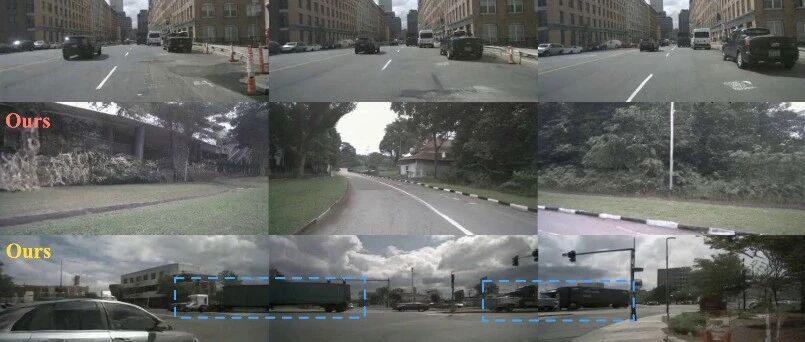
Core Insights - The article presents GenieDrive, a new framework for autonomous driving that utilizes 4D Occupancy as an intermediate representation, offering a novel research path of "first generating 4D occupancy, then generating video" [2][25]. Summary by Sections Project Overview - GenieDrive is a novel framework for autonomous driving world modeling that achieves highly controllable, multi-view consistent, and physically accurate video generation [7]. - It operates with only 3.47 million parameters while achieving a reasoning speed of 41 FPS and a 7.2% improvement in mIoU for 4D occupancy prediction tasks [5][7]. Research Background and Challenges - Current autonomous driving world models face two main challenges: insufficient physical consistency and high-dimensional representation modeling [8]. - Existing methods rely on single video diffusion models, which complicate learning and can lead to results inconsistent with real physical laws [4][8]. Innovations of GenieDrive - GenieDrive features a two-stage world modeling and generation framework, incorporating 4D Occupancy as an intermediate state to inject explicit physical information into video generation [10][11]. - It employs a Tri-plane VAE for efficient compression, using only 58% of the latent representations of existing methods while achieving state-of-the-art occupancy reconstruction performance [11]. - The framework includes a Mutual Control Attention mechanism to explicitly model the impact of driving control on occupancy evolution, enhancing prediction accuracy through end-to-end joint training [11]. Experimental Results and Analysis - GenieDrive shows significant improvements in 4D occupancy prediction performance, with a 7.2% increase in mIoU compared to the latest methods [13]. - The model achieves a reasoning speed of 41 FPS with a total parameter count of 3.47 million [13]. - In video generation, GenieDrive reduces the FVD metric by 20.7%, outperforming existing occupancy-based methods [15]. Future Outlook - By introducing 4D Occupancy as an intermediate representation, GenieDrive aims to advance closed-loop evaluation and simulation technologies, potentially opening new research directions and applications in the autonomous driving field [23].

深扒特斯拉ICCV的分享,我们找到了几个业内可能的解决方案......
自动驾驶之心· 2025-12-23 00:53
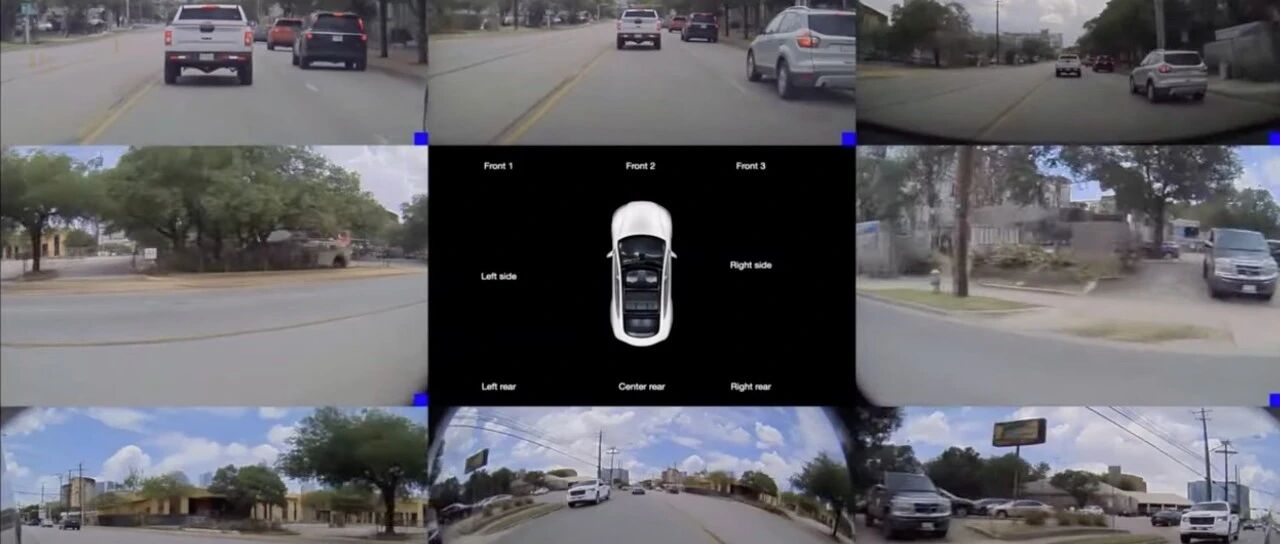
Core Insights - The article discusses Tesla's end-to-end autonomous driving solution, highlighting the challenges and innovative solutions developed to address them [3] Group 1: Challenges and Solutions - Challenge 1: Curse of dimensionality, requiring breakthroughs in both input and output layers to enhance computational efficiency and decision accuracy [4] - Solution: UniLION, a unified autonomous driving framework based on linear group RNN, efficiently processes multi-modal data and eliminates the need for intermediate perception and prediction results [4][7] - UniLION's key features include a unified 3D backbone network and the ability to handle various tasks simultaneously, achieving significant performance metrics such as 75.4% NDS and 73.2% mAP in detection tasks [11] Group 2: Interpretability and Safety - Challenge 2: The need for interpretability and safety guarantees in autonomous driving systems, which traditional models struggle to provide [12] - Solution: DrivePI, a unified spatial-aware 4D multi-modal large language model (MLLM) framework that integrates visual and language inputs to enhance system interpretability and safety [13][14] - DrivePI demonstrates superior performance in 3D occupancy prediction and trajectory planning, significantly reducing collision rates compared to existing models [13][17] Group 3: Evaluation - Challenge 3: The complexity of evaluating autonomous driving systems due to the unpredictability of human driving behavior and diverse interaction scenarios [18] - Solution: GenieDrive, a world model framework that uses 4D occupancy representation to generate physically consistent multi-view video sequences, enhancing the evaluation environment for autonomous systems [21][22] - GenieDrive achieves a 7.2% improvement in mIoU for 4D occupancy prediction and reduces FVD metrics by 20.7%, establishing new performance benchmarks [21][27] Group 4: Integrated Ecosystem - The three innovations—UniLION, DrivePI, and GenieDrive—form a synergistic ecosystem that enhances perception, decision-making, and evaluation in autonomous driving [30][31] - This integrated approach addresses key challenges in the industry, paving the way for safer, more reliable, and efficient autonomous driving systems, ultimately accelerating the transition to L4/L5 level autonomy [31]