UniLION

Search documents
AI Day直播 | 如何解决特斯拉提出的端到端三大挑战?
自动驾驶之心· 2025-12-29 01:07
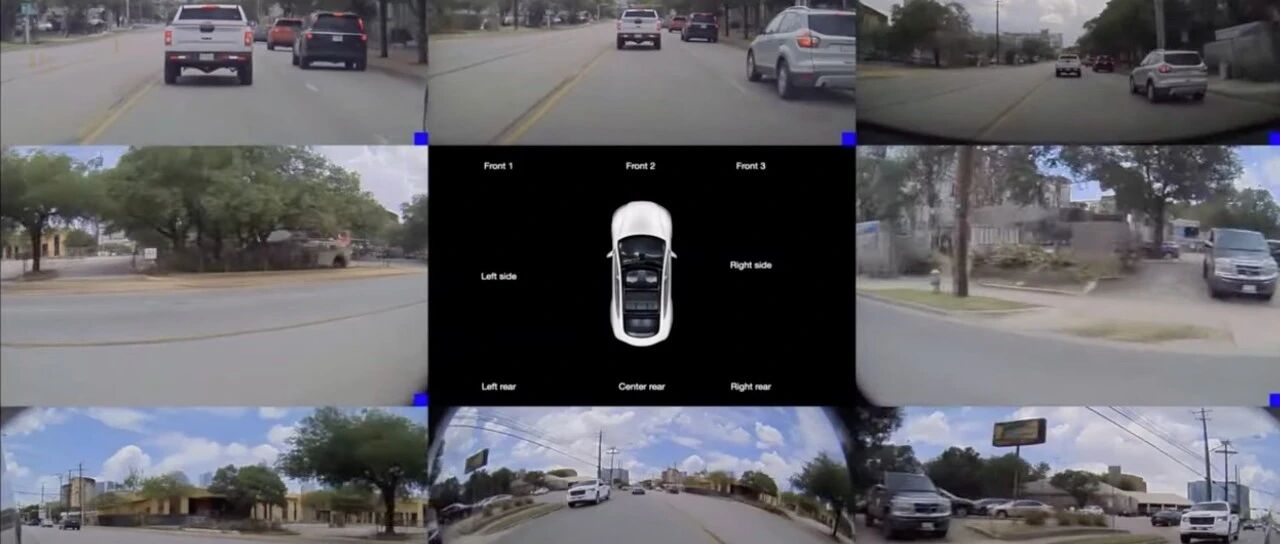
Core Insights - Tesla has identified three core challenges in autonomous driving during its presentation at ICCV2025, which have been widely discussed in both academia and industry [3][6][7] - The event features discussions on solutions to these challenges, including insights from researchers at the University of Hong Kong [3][11] Group 1: Core Challenges - The three main challenges in Tesla's end-to-end architecture for autonomous driving are dimensionality disaster, interpretability and safety guarantees, and closed-loop evaluation [6][7] - Solutions proposed include UniLION, DrivePI, and GenieDrive, which aim to address these challenges [6][13] Group 2: Technical Insights - The presentation includes a detailed explanation of Tesla's end-to-end technology evolution and FSD v14 [6][13] - The discussion will also explore the concept of a general artificial intelligence that can understand and interact with the physical world [6][13] Group 3: Additional Content - The event will provide deeper insights into the technical details, Q&A, and previously unpublished content related to autonomous driving [14] - There will be discussions on the divergence between academic research and mass production, as well as ongoing technical debates in the industry [14]



华科&港大提出UniLION:基于线性组 RNN 的统一自动驾驶模型
自动驾驶之心· 2025-12-25 09:33
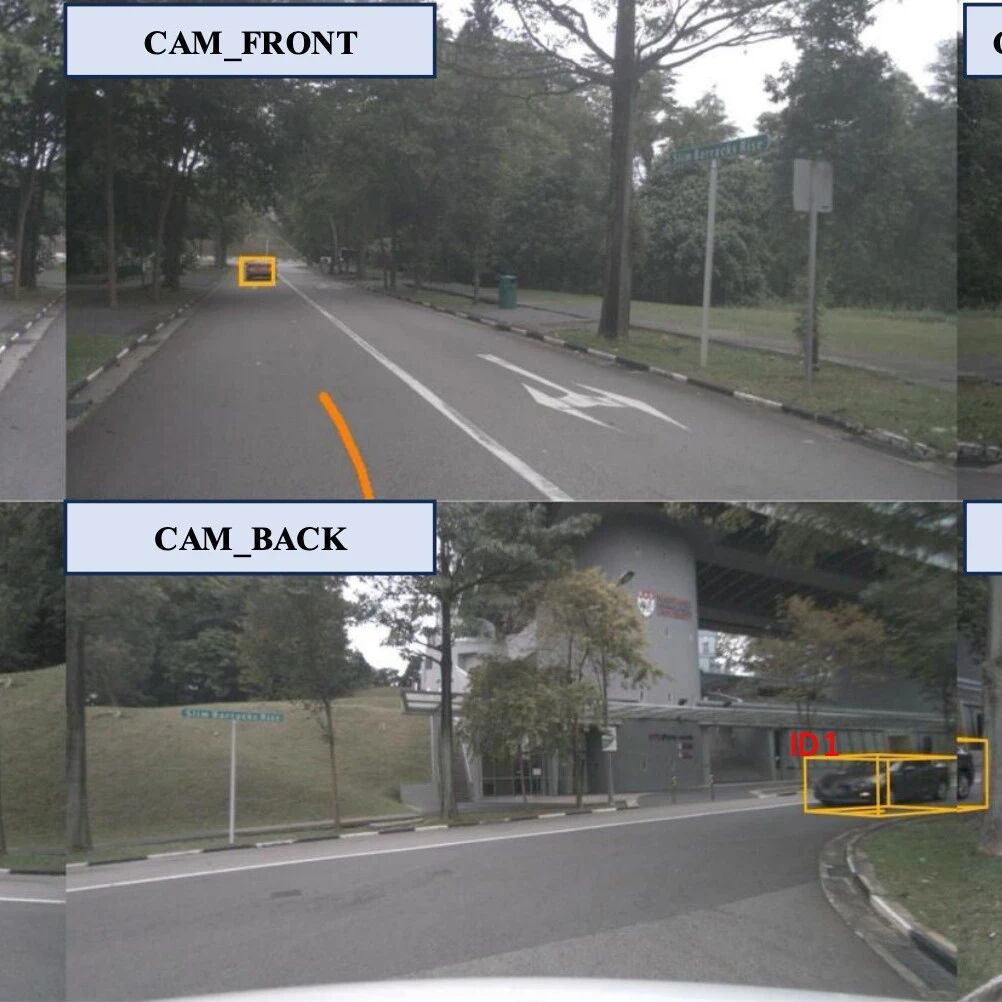
Core Viewpoint - UniLION is a groundbreaking unified autonomous driving framework developed by the University of Hong Kong, Huazhong University of Science and Technology, and Baidu, which effectively addresses computational efficiency issues in processing large-scale point cloud data and multi-view images using linear group RNN technology [2][3]. Group 1: Project Overview - UniLION is designed to efficiently handle large-scale LiDAR point clouds, high-resolution multi-view images, and temporal data without the need for explicit temporal or multi-modal fusion modules, supporting various configurations seamlessly [4][5]. - The framework aims to simplify the design of multi-modal and multi-task autonomous driving systems while maintaining superior performance across core tasks such as 3D perception, prediction, and planning [3][44]. Group 2: Research Background and Challenges - Current autonomous driving systems face challenges in computational efficiency, multi-modal fusion complexity, temporal information processing, and multi-task learning difficulties [5]. - Traditional Transformer models introduce significant computational overhead due to their quadratic complexity in attention mechanisms when processing long sequences [5]. Group 3: Innovations of UniLION - UniLION features a unified 3D backbone network based on linear group RNN, allowing seamless processing of different modalities and temporal information without explicit fusion modules [8]. - The framework utilizes linear computational complexity to convert multi-view images, LiDAR point clouds, and temporal information into tokens for unified integration in 3D space [8]. - UniLION generates a compact unified bird's-eye view (BEV) representation of heterogeneous multi-modal information and time series, serving as shared features for various downstream tasks [8]. Group 4: Performance Results - UniLION demonstrated competitive and state-of-the-art performance on the nuScenes dataset, achieving 74.9% NDS and 72.2% mAP in 3D object detection, 76.2% AMOTA in multi-object tracking, and 72.3% mIoU in BEV map segmentation [20]. - The strongest temporal multi-modal version of UniLION achieved 75.4% NDS and 73.2% mAP in detection tasks, showcasing its advanced capabilities across multiple evaluation tasks [20]. Group 5: Efficiency and Robustness - UniLION significantly reduces computational resource requirements and inference time through its linear computational complexity, making it suitable for deployment in real-world autonomous driving systems [35]. - The framework exhibits strong robustness against sensor misalignment, maintaining performance even under high misalignment levels [32]. Group 6: Future Prospects - Future work includes expanding UniLION to support additional sensor modalities, applying it in real-world autonomous driving systems, and exploring large-scale pre-training to enhance its generalization capabilities [45].
深扒特斯拉ICCV的分享,我们找到了几个业内可能的解决方案......
自动驾驶之心· 2025-12-23 00:53
Core Insights - The article discusses Tesla's end-to-end autonomous driving solution, highlighting the challenges and innovative solutions developed to address them [3] Group 1: Challenges and Solutions - Challenge 1: Curse of dimensionality, requiring breakthroughs in both input and output layers to enhance computational efficiency and decision accuracy [4] - Solution: UniLION, a unified autonomous driving framework based on linear group RNN, efficiently processes multi-modal data and eliminates the need for intermediate perception and prediction results [4][7] - UniLION's key features include a unified 3D backbone network and the ability to handle various tasks simultaneously, achieving significant performance metrics such as 75.4% NDS and 73.2% mAP in detection tasks [11] Group 2: Interpretability and Safety - Challenge 2: The need for interpretability and safety guarantees in autonomous driving systems, which traditional models struggle to provide [12] - Solution: DrivePI, a unified spatial-aware 4D multi-modal large language model (MLLM) framework that integrates visual and language inputs to enhance system interpretability and safety [13][14] - DrivePI demonstrates superior performance in 3D occupancy prediction and trajectory planning, significantly reducing collision rates compared to existing models [13][17] Group 3: Evaluation - Challenge 3: The complexity of evaluating autonomous driving systems due to the unpredictability of human driving behavior and diverse interaction scenarios [18] - Solution: GenieDrive, a world model framework that uses 4D occupancy representation to generate physically consistent multi-view video sequences, enhancing the evaluation environment for autonomous systems [21][22] - GenieDrive achieves a 7.2% improvement in mIoU for 4D occupancy prediction and reduces FVD metrics by 20.7%, establishing new performance benchmarks [21][27] Group 4: Integrated Ecosystem - The three innovations—UniLION, DrivePI, and GenieDrive—form a synergistic ecosystem that enhances perception, decision-making, and evaluation in autonomous driving [30][31] - This integrated approach addresses key challenges in the industry, paving the way for safer, more reliable, and efficient autonomous driving systems, ultimately accelerating the transition to L4/L5 level autonomy [31]