5G/物联网

Search documents
行业聚焦:全球探针卡用陶瓷基板行业头部企业市场份额及排名情况(附厂商名单)
QYResearch· 2025-11-26 01:49
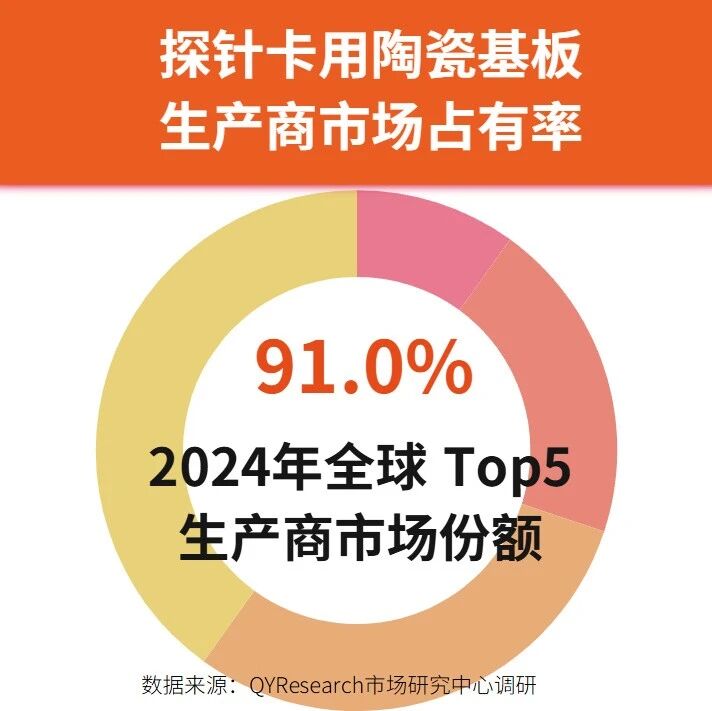
Core Viewpoint - The global market for ceramic substrates used in probe cards is projected to reach $280 million by 2031, with a compound annual growth rate (CAGR) of 8.6% over the coming years [4]. Market Overview - The ceramic substrate market for probe cards is characterized by high rigidity, high insulation, and low thermal expansion, essential for wafer electrical testing [2]. - Major manufacturers include Kyocera, SEMCNS Co., Ltd, Niterra (NTK), and IMTech Plus, with the top three companies holding approximately 91.0% market share in 2024 [7]. - The 300mm semiconductor test probe card substrates dominate the market, expected to account for 89.42% of the market share by 2031, up from 83.96% in 2024 [9]. Application and Demand - NAND flash memory is the primary demand source, representing about 45.5% of the market share [11]. - North America is the largest consumer market, projected to hold 29.06% of the sales market share in 2024, followed by Japan and South Korea [13]. - The domestic market in China is expected to grow rapidly due to localization and self-research efforts, with a CAGR of approximately 17.00% from 2025 to 2031 [13]. Market Drivers - The rise of AI/HPC and 5G/IoT is driving the need for increased wafer testing parallelism and I/O density, leading to advancements in ceramic substrates [15]. - Structural demand and technological upgrades are supported by government initiatives for key material localization and supply chain security [15]. Future Trends - Higher testing density is anticipated due to advancements in integrated circuit technology, necessitating substrates that support more probes [21]. - Miniaturization and high integration are expected to enhance testing efficiency and reduce space requirements [22]. - Multi-functional integration may include features like temperature monitoring and automatic adjustments for improved testing stability [23]. - New materials, including composite substrates, are likely to emerge to enhance thermal management and reduce production costs [24]. - Automation and smart technology integration will improve testing accuracy and efficiency [25]. - Cost optimization and domestic production are becoming increasingly important as the industry shifts towards localization [26].