5G - A通感融合

Search documents
五部门部署低空基础设施,产业链上下游迎来哪些机遇
第一财经· 2026-02-11 01:27
Core Viewpoint - The article emphasizes that low-altitude infrastructure is a crucial foundation for the development of the low-altitude economy, with a new policy document aiming to enhance the capabilities of the information and communication industry to support this infrastructure [3][12]. Summary by Sections Policy Overview - The Ministry of Industry and Information Technology, along with four other departments, released an implementation opinion aimed at strengthening the information and communication industry's capacity to support low-altitude infrastructure development [3][4]. - By 2027, the goal is to achieve a ground mobile communication network coverage rate of no less than 90% for low-altitude public air routes, improve navigation service levels, and develop at least 10 information infrastructure standards [3][16]. Key Tasks - The policy outlines four key tasks: advancing low-altitude scene communication network coverage, exploring multi-source detection collaborative service capabilities, enhancing navigation precision service levels, and supporting the construction of low-altitude intelligent network systems [6][8]. - It emphasizes the use of existing public mobile communication facilities and a combination of ground mobile communication, satellite communication, and other technologies to support low-altitude applications [6][19]. Industry Development - The policy is expected to accelerate the growth of various upstream and downstream industry chain segments, creating a complete industrial ecosystem covering core components, network facilities, equipment manufacturing, system integration, and operational services [7][9]. - It aims to enhance the integration of low-altitude equipment with information communication, promoting the development of 5G and lightweight modules, and facilitating the adaptation of these technologies to low-altitude aircraft [9][10]. Infrastructure and Technology Integration - The policy promotes the upgrade of ground base stations, the development of sensing and fusion devices, and the establishment of dedicated low-altitude networks, which will drive the growth of related industries such as communication equipment manufacturing and signal enhancement [9][10]. - It also focuses on the integration of hardware and software capabilities, ensuring that both construction and operation are synchronized for a robust low-altitude economy [9][10]. Safety and Regulation - The document highlights the importance of establishing a regulatory framework for telecommunications business access, equipment management, service supervision, and data security, ensuring a safe and orderly development of the low-altitude economy [8][26]. - It calls for the development of a network and data security assurance system to protect critical information infrastructure and enhance monitoring and emergency response capabilities [26][27].

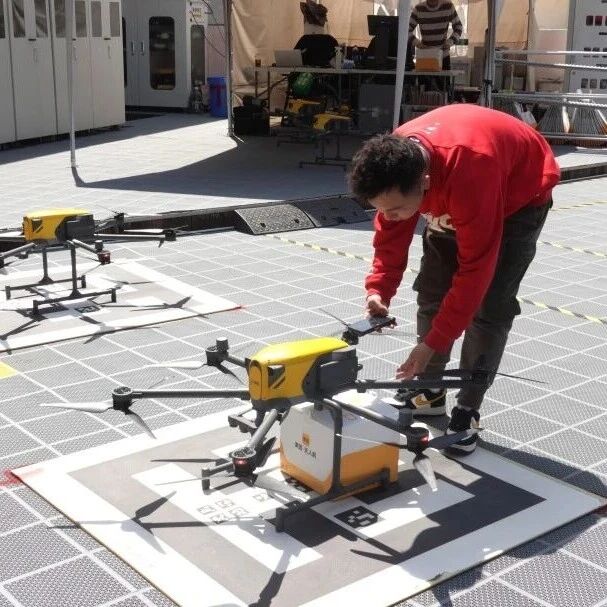
五部门部署低空基础设施,产业链上下游迎来哪些机遇?
Di Yi Cai Jing· 2026-02-10 11:20
Core Viewpoint - The implementation opinion released by the Ministry of Industry and Information Technology and other departments aims to strengthen the information and communication industry's capacity to support low-altitude infrastructure development, targeting a nationwide ground mobile communication network coverage of no less than 90% by 2027 [3][32][30]. Group 1: Low-altitude Infrastructure Development - Low-altitude infrastructure is identified as a crucial foundation for the development of the low-altitude economy [2][31]. - The opinion outlines that by 2027, the coverage of the national low-altitude public air route ground mobile communication network should reach at least 90%, with the development of at least 10 information infrastructure standards [3][15][30]. - The policy marks a transition from pilot scenarios to a new stage of infrastructure standardization in the low-altitude economy, which is expected to accelerate the growth of various upstream and downstream industry chains [3][32][36]. Group 2: Key Tasks and Implementation Strategies - The opinion emphasizes four key tasks: advancing low-altitude scene communication network coverage, exploring multi-source detection and collaborative service capabilities, enhancing navigation precision service levels, and supporting the construction of low-altitude intelligent network systems [5][34][36]. - It advocates for the use of existing public mobile communication facilities and the integration of ground mobile communication, satellite communication, and other navigation technologies to support low-altitude application development [6][35][36]. - The policy promotes a collaborative and resource-efficient approach to infrastructure development, aiming to avoid redundant investments and maximize efficiency [6][36]. Group 3: Industry Growth and Ecosystem Development - The opinion outlines specific measures to enhance the capacity of the information and communication industry, including conducting experimental validations, improving industrial supply capabilities, promoting collaborative and standardized construction, and strengthening network and data security [7][36][37]. - It is expected that the policy will significantly drive the growth of various industry segments, creating a complete industrial ecosystem that includes core components, network facilities, equipment manufacturing, system integration, and operational services [7][37][8]. - The focus on hardware and software development, along with the integration of technology and standards, aims to build a more competitive industrial support system for the high-quality development of the low-altitude economy [8][37].

低空经济迎利好,五部门重磅发文
21世纪经济报道· 2026-02-10 10:59
Core Viewpoint - The article discusses the implementation opinions released by five departments, including the Ministry of Industry and Information Technology, aimed at strengthening the capabilities of the information and communication industry to support the development of low-altitude infrastructure, thereby promoting the healthy and orderly development of the low-altitude economy [1][3]. Summary by Sections Overall Requirements - The initiative is guided by Xi Jinping's thoughts and aims to enhance the technical foundation, industrial supply capacity, network support capability, and security assurance of the information and communication industry to support low-altitude economic development [4]. - It emphasizes a demand-driven approach, focusing on areas with low-altitude flight activities, and promotes the collaborative development of information infrastructure and low-altitude applications [5]. Key Tasks - **Low-altitude Communication Network Coverage**: The plan aims to utilize existing 5G infrastructure to enhance coverage in low-altitude flight routes and hotspots, ensuring compliance with national radio management regulations [6]. - **Multi-dimensional Detection Services**: The initiative seeks to improve detection and monitoring capabilities in critical areas by integrating various technologies [6]. - **Navigation Precision Services**: It aims to enhance positioning accuracy for low-altitude aircraft using the Beidou ground enhancement system and public service platform [6]. - **Low-altitude Intelligent Network System**: The plan encourages the use of new information technologies like IoT and AI to support the construction of intelligent low-altitude network systems [6]. - **Testing and Validation**: The initiative includes organizing trials to validate key technologies and develop replicable solutions for low-altitude communication [7]. - **Industry Supply Capacity**: It promotes the development of 5G-A technology and the integration of low-altitude equipment with communication systems [7]. - **Standardization and Collaboration**: The plan supports the establishment of shared infrastructure and the development of standards to facilitate low-altitude technology and industry growth [7]. - **Regulatory Management**: It emphasizes the need for a regulatory framework for telecommunications services, equipment management, and data security in low-altitude applications [8]. - **Network and Data Security**: The initiative aims to establish a security system for information infrastructure, ensuring compliance with safety regulations [8]. - **Frequency Resource Optimization**: It includes research on frequency resource planning to support low-altitude communication and related applications [8]. Organizational Assurance - The article highlights the importance of inter-departmental collaboration and local government involvement to ensure the effective implementation of the initiative [9].

中国电信副总经理唐珂发布集团低空经济能力体系最新升级成果
Zhong Guo Jin Rong Xin Xi Wang· 2025-06-06 12:15
Core Insights - The conference highlighted China's Telecom's advancements in the low-altitude economy, emphasizing its role in fostering new productive forces and strategic emerging industries [1] - The company has established a comprehensive low-altitude economic capability system, integrating various services and platforms to enhance operational efficiency and safety [2][3] Group 1: Low-altitude Economic Capability System - China Telecom has developed a "1+1+3+N" low-altitude economic capability system, which includes a comprehensive service solution base, an intelligent network, and three platforms for infrastructure management, service regulation, and flight operations [1][2] - The upgraded system offers a one-stop service for low-altitude consulting, construction, and operation, ensuring high-quality and safe connectivity [2] Group 2: Technological Innovations - The company leads in the integration of communication, perception, and intelligent computing within the low-altitude intelligent network, contributing to national standards and enhancing situational awareness through advanced technologies [3] - Innovations include the development of a millimeter-wave perception frame structure and AI-based target recognition, significantly improving detection accuracy and reducing false alarms [3] Group 3: Digital Platforms - The "Xinghan" platform is the first low-altitude infrastructure management platform, addressing industry challenges in standardization and equipment management, and has been implemented in six provinces [4] - The "Xingxun" service regulation platform enhances airspace management capabilities and has been applied in 45 cities across 16 provinces [4] - The "Xingyun" flight operation platform supports over 3,000 devices and has introduced new features for real-time modeling and intelligent operations, covering 28 provinces with over 400 projects [4] Group 4: Market Expansion and Applications - The "Xingyuan" low-altitude new standard product aims to meet rural governance needs and promote a "one village, one machine, one platform" model, with pilot projects already underway [5] - China Telecom is expanding low-altitude economic applications, developing over ten mature scenarios and collaborating with industry partners to foster continuous innovation [5]