
731部队罪行揭露

Search documents
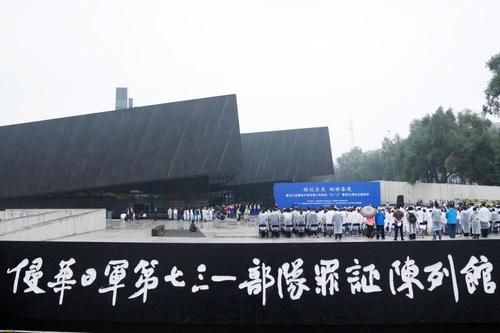
真实的历史远比电影残酷”——专访731部队罪证陈列馆馆长金成民
Xin Hua She· 2025-09-18 15:15
Core Viewpoint - The film "731" aims to reveal the atrocities committed by the Japanese military during World War II, particularly the actions of the infamous Unit 731, which conducted inhumane experiments under the guise of epidemic prevention [1][2]. Group 1: Historical Context - Unit 731, based in Harbin, China, was responsible for developing biological weapons and conducting human experiments, resulting in the deaths of thousands, primarily Chinese, but also including Soviet, Korean, and Mongolian victims [2][4]. - The facility is recognized as the largest and best-preserved site of biological warfare in history, containing various remnants and evidence of its operations [2][5]. Group 2: Evidence Collection - The director of the Unit 731 Evidence Exhibition Hall, Jin Chengmin, has led efforts to collect evidence over 26 years, including documents from multiple countries that substantiate the crimes committed by Unit 731 [3][4]. - The collection includes nearly 300,000 pieces of archival materials and artifacts, as well as testimonies from former members of Unit 731, forming a comprehensive evidence chain [4]. Group 3: Public Engagement and Education - Since the opening of the new exhibition hall in 2015, over 16 million visitors have attended, indicating a growing awareness and engagement with this dark chapter of history among younger generations [3]. - The site has been proposed for inclusion in the "China World Cultural Heritage Preliminary List," emphasizing its significance in reflecting on war and promoting peace [5]. Group 4: Future Implications - Jin Chengmin emphasizes the importance of preserving the site not to foster hatred but to serve as a warning against the horrors of war and the potential for history to repeat itself [5]. - There are ongoing efforts by conscientious individuals and groups in Japan to uncover the truth about Unit 731, highlighting a complex narrative of accountability and historical memory [5].
“真实的历史远比电影残酷”——专访731部队罪证陈列馆馆长金成民
Xin Hua She· 2025-09-18 14:53
Core Viewpoint - The film "731" aims to reveal the atrocities committed by the Japanese Unit 731 during World War II, highlighting the importance of uncovering hidden historical truths [1] Group 1: Historical Context - Unit 731, based in Harbin, China, conducted inhumane experiments under the guise of epidemic prevention, developing biological weapons and performing live human dissections [2] - The unit's activities included the breeding of plague fleas for biological warfare, with a focus on various infectious diseases such as plague, cholera, and anthrax [2] Group 2: Evidence Collection - The Unit 731 Memorial Hall has received over 16 million visitors since its opening in 2015, indicating a growing interest in historical memory among younger generations [3] - Over 26 years, the team has conducted more than 40 cross-border evidence collection missions, gathering nearly 300,000 documents and artifacts related to Unit 731's crimes [4] - Key documents include personnel records from the Heilongjiang Provincial Archives and various reports from American and Russian archives, which serve as crucial evidence of the unit's actions [3][4] Group 3: Ongoing Challenges - Despite extensive research, the available evidence is still considered only the "tip of the iceberg," with many details about the human experiments remaining undisclosed [5] - The team emphasizes the need for Japan to release more documents to fully understand the extent of Unit 731's crimes [5] Group 4: Preservation and Reflection - The Unit 731 site has been included in China's World Cultural Heritage preliminary list, serving as a reminder of the horrors of war and the importance of peace [6] - The preservation of the site is not intended to foster hatred but to alert future generations to the brutal realities of war and the potential for history to repeat itself [6]
侵华日军细菌战暴行再添铁证
Xin Hua She· 2025-08-15 09:05
Core Points - The article discusses the recent publication of new evidence regarding the atrocities committed by the Japanese military during World War II, specifically focusing on the Unit 731 and its associated biological warfare units [3][4][9] - The evidence includes 3010 pages of documents, 194 minutes of footage, 312 photographs, 12 postcards, and 8 letters, which aim to reveal the historical truth and foster social consensus on the horrors of war [3][4][9] Summary by Sections Historical Context - The Japanese military established six biological warfare units during its occupation of China and Southeast Asia, with Unit 731 being the most notorious [3][7] - From 1937 to 1945, these units systematically conducted biological warfare, which was a state-sponsored crime involving the collaboration of the Japanese government, military, and medical community [3][4][9] Recent Findings - The 40th anniversary of the Unit 731 Evidence Exhibition Hall coincides with the release of new evidence, which includes extensive documentation and testimonies from former members of the unit [3][4][9] - The evidence highlights the organized and premeditated nature of the biological warfare conducted by the Japanese military [3][4][9] Evidence Collection - The exhibition hall has collected over 400 hours of oral history and conducted numerous interviews with former Unit 731 members to gather evidence [6][9] - The newly released documents include personnel records from various biological warfare units, revealing their connections and the extent of their operations [10][13][15] Medical Collaboration - The article emphasizes the role of the Japanese military medical school in supporting the establishment of Unit 731, showcasing how medical science was perverted into a tool for state-sponsored crimes [16][18] - Evidence indicates that medical professionals were complicit in the inhumane experiments conducted on prisoners, blurring the lines between medical ethics and military objectives [16][20] Public Awareness and Remembrance - The release of this evidence aims to educate the public about the brutal realities of war and to unite those who cherish peace [4][33] - The exhibition hall has seen a significant increase in visitors, reflecting a growing interest in understanding this dark chapter of history [33][34]

【环时深度】清水英男的谢罪为何刺痛日本?
Huan Qiu Shi Bao· 2025-08-13 22:39
Core Viewpoint - The article discusses the return of Shimizu Hideo, a former member of the infamous Unit 731, to Harbin, China, to apologize for his past actions during World War II, highlighting the ongoing struggle with historical accountability in Japan [1][2][3]. Group 1: Historical Context - Shimizu Hideo was part of the last group of young soldiers sent to Harbin by Unit 731, tasked with extracting plague bacteria from rats, unaware of the human experiments that would follow [2]. - After Japan's defeat, Shimizu was ordered to destroy evidence of Unit 731's crimes before fleeing China [2][3]. - The article emphasizes the psychological burden Shimizu carries from his involvement in the atrocities committed by Unit 731, which included horrific human dissections [3][4]. Group 2: Personal Struggles - Shimizu faces significant backlash from Japanese nationalists for his public acknowledgment of the past, leading to estrangement from his family [3][4]. - Despite the personal cost, Shimizu expresses no regret for his decision to apologize, believing it is necessary to confront the truth [4][11]. - The article illustrates the emotional toll of Shimizu's revelations, as he grapples with the consequences of his past actions and the societal pressures to remain silent [3][4][11]. Group 3: Public Reception and Activism - The "For Peace Shinshu War Exhibition" has been a platform for former Unit 731 members to share their testimonies, with Shimizu publicly acknowledging his past for the first time in 2015 [6][7]. - Activists have worked for years to establish a memorial museum in Iida City, which faced challenges in displaying the full history of Unit 731 due to local government hesitance [6][9]. - The article notes the ongoing efforts to include testimonies from former members in the museum, which are crucial for understanding the atrocities committed [10][11].