AI+机器人融合

Search documents
2025机器人技能大赛折射中国AI+机器人融合新趋势
Xin Hua She· 2025-12-29 13:52
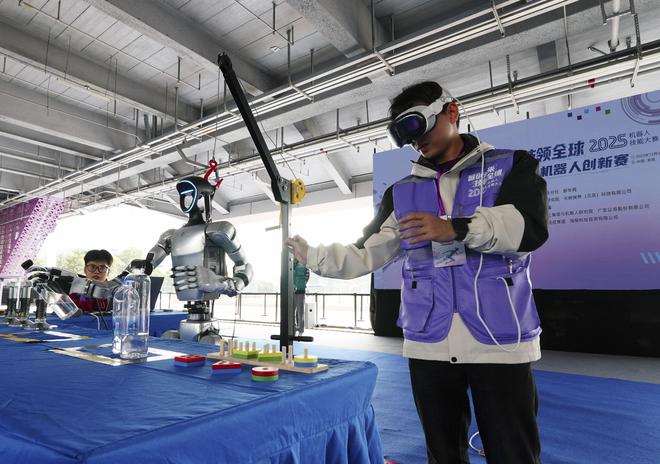
Group 1 - The 2025 Robot Skills Competition, themed "Intelligent Creation for the Future, Technology Leading the World," is being held in Longgang District, Shenzhen, featuring over 100 teams from universities, research institutions, and companies competing in six cutting-edge tracks including healthcare, low-altitude flight, humanoid performance, intelligent warehousing logistics, and high-precision industrial assembly [1][4] - The event highlights the deep integration of China's robotics industry with AI, showcasing a shift from mere technological demonstrations to practical applications in various sectors such as factories, hospitals, and homes [3][9] - Shenzhen's Longgang District is positioning itself as a global leader in AI and robotics, promoting new productive forces through relevant AI development strategies [4][6] Group 2 - In the healthcare and elderly care track, companies like Shenzhen Kangyiheng Technology and Wuhan Kuobote Robotics are presenting innovative solutions such as home care robots for the elderly and ultrasound scanning robots that mimic doctors' coordination abilities [4][7] - The competition reflects the broader trend of AI and robotics integration, with a focus on enhancing robots' capabilities to understand commands and adapt to open environments, moving from mere functionality to reliable productivity tools [4][7] - The establishment of "AI 6S stores" and "robot 6S stores" in the Xinghe World business district signifies a new industrial landmark, offering services like product display, sales, training, and personalized customization, with significant revenue generated since their opening [6][7] Group 3 - Despite the clear trend of integration, challenges remain, particularly regarding the environmental adaptability of robots, which is crucial for their deployment in diverse settings such as hospitals and elderly care facilities [7] - Cost control is essential for the widespread adoption of robotics, with local supply chains in the Guangdong-Hong Kong-Macao Greater Bay Area significantly reducing the costs of core components [7] - The competition serves as a reflection of the progress in the integration of AI and robotics, moving from laboratory concepts to practical applications in production lines [9]


视频丨发展成效显著 我国机器人产业已形成完整产业链体系
Yang Shi Xin Wen Ke Hu Duan· 2025-11-14 07:26
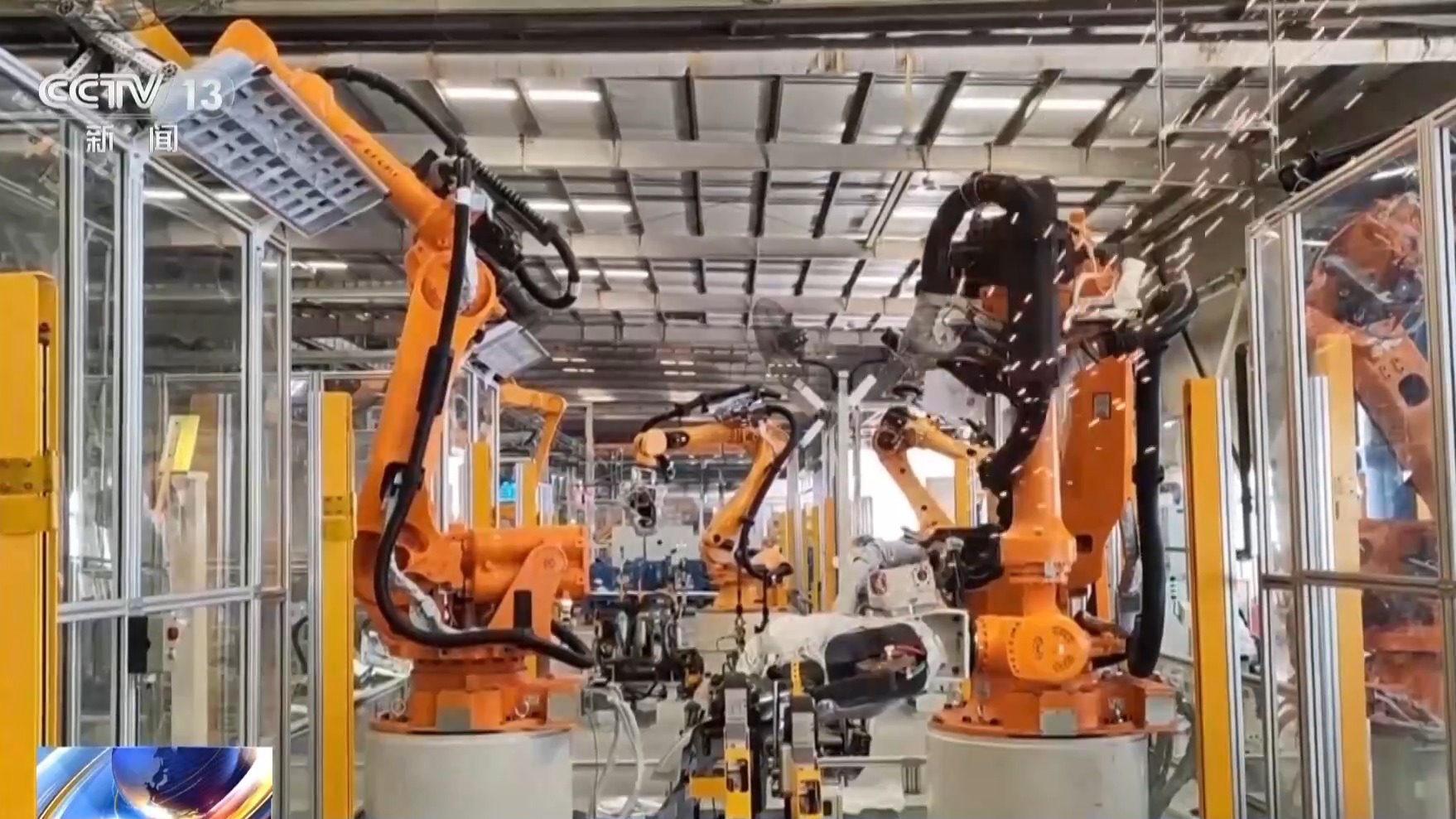
Core Viewpoint - The Chinese robotics industry has made significant progress during the "14th Five-Year Plan" period, achieving a complete industrial chain system compared to the early stages of the plan [1][3]. Industry Development - The robotics industry in China has transitioned from a nascent stage to a comprehensive industrial chain, covering upstream key components, midstream manufacturing, and downstream applications [7][8]. - The production of harmonic reducers, a core component of robots, has seen a substantial increase, with one company in Suzhou reporting a production growth of approximately 100%, reaching 500,000 units [3]. Innovation and Standards - The industry is focusing on innovation-driven development to avoid price competition and ensure high-quality growth [7][8]. - Since the beginning of the "14th Five-Year Plan," 131 national standards have been published, with over 40 additional standards currently under development [5]. Market Expansion - The export value of China's robotics industry has increased from $390 million in 2020 to an expected $1.15 billion in 2024, with a year-on-year growth of 56% in the first three quarters of this year, reaching $1.24 billion [14]. - Companies are actively expanding into international markets through mergers, establishing overseas R&D centers, and building marketing networks [16]. Future Directions - The integration of AI with robotics is seen as crucial for the development of humanoid robots, with efforts underway to significantly increase the dataset for embodied intelligence [12]. - The industry is encouraged to diversify applications beyond traditional sectors, as evidenced by the low market share of domestic brands in the paper industry, which stands at only 0.7% [10].