AI与文化融合

Search documents
当“数字原住民”邂逅文化遗产(“融”观中国)
Ren Min Ri Bao Hai Wai Ban· 2025-11-09 22:56
Core Viewpoint - The event organized by Beijing Normal University focuses on the "Belt and Road" initiative, encouraging Generation Z youth to creatively express cultural heritage through various media, showcasing the vibrancy and uniqueness of cultural assets [6][13]. Group 1: Event Overview - The "Belt and Road" initiative's "Heritage Photography and Storytelling" event has received nearly 1,000 submissions from over 50 universities and institutions worldwide since its launch in March 2025 [7][12]. - The event featured awards in three categories: AI, short video, and photography, with 17 works recognized for their creativity and innovation [9][11]. Group 2: Youth Engagement and Cultural Heritage - Youth creators expressed a strong desire to engage with cultural heritage, often sharing personal stories of how they were moved by traditional practices and artifacts [8][12]. - The event highlighted the importance of accurately representing cultural heritage while also addressing the challenges of preservation amid cultural shifts [12][13]. Group 3: Technological Integration - The integration of AI in the creative process has allowed for unique storytelling methods, enhancing the visual impact and narrative style of the works presented [10][11]. - Creators emphasized that AI serves as a tool to enrich their storytelling, enabling them to depict cultural narratives in innovative ways [10][11]. Group 4: Future Initiatives - The event plans to collaborate with various film festivals and platforms to promote outstanding works, aiming to bring cultural heritage stories to a broader audience [13]. - There is a collective mission among youth creators to ensure that cultural heritage does not fade into obscurity, but rather thrives through modern expression and technology [12][13].


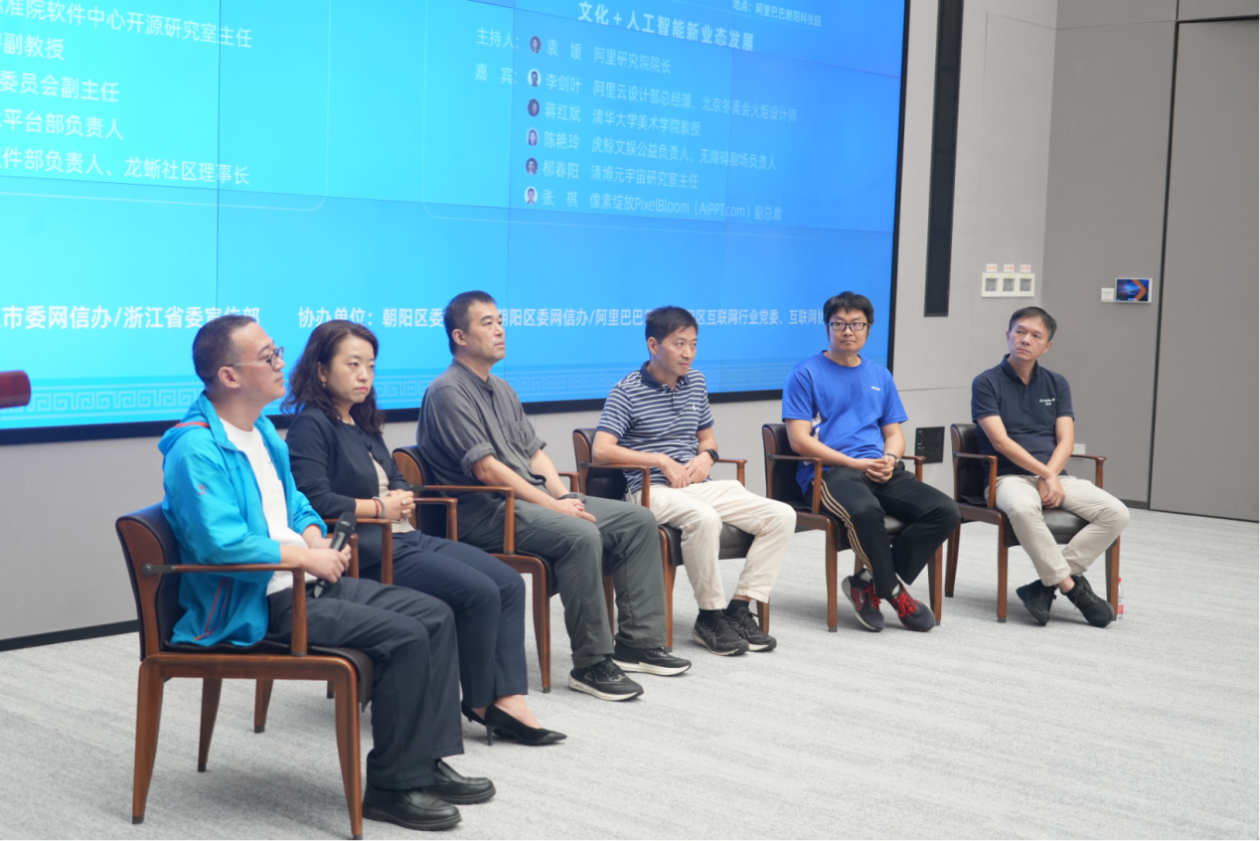
从技术开源到文化融合:AI大模型如何重塑全球创新生态与人文温度
Huan Qiu Wang· 2025-09-23 02:53
Core Insights - The event "Cultural Intelligence New Business Forms: Industry Empowerment and Innovation Pathways" was held to explore the integration of open-source AI technology with cultural industry innovation [1] - China has made significant progress in the open-source ecosystem, now leading globally in open-source large models [3][4] - The discussion emphasized the need for a governance framework addressing data quality, copyright, and ethical considerations in AI development [5][9] Group 1: Open Source Development - China has transitioned from being a user of open-source technology to a contributor, with major companies like Alibaba, Baidu, and Tencent leading this change [1][3] - The number of Chinese developers has surpassed that of the U.S., providing a strong foundation for a thriving open-source ecosystem [3] - Chinese companies are adopting a more open strategy in AI development compared to U.S. firms, which tend to keep core models closed [4] Group 2: AI and Cultural Integration - AI is transforming cultural creation and dissemination, moving from being a mere tool to becoming a creative partner [7][10] - Examples include the collaboration between Alibaba Cloud and the Paris Olympic Committee to restore historical images using AI [7] - AI is enhancing accessibility in cultural services, allowing for tailored experiences for visually and hearing-impaired audiences [7] Group 3: Governance and Ethical Challenges - The current lack of standardized licensing frameworks for AI models poses challenges for transparency and data quality [5] - Experts suggest that AI should be recognized as a co-creator in copyright discussions, with proposals for blockchain to document contributions [9] - Balancing model capabilities with safety and regulatory oversight is crucial for fostering innovation while ensuring ethical standards [9][10] Group 4: Future Directions - The synergy between technology and culture is essential for societal progress, with a focus on both innovation and humanistic values [10] - China's dual development path of "technological inclusivity + cultural integration" serves as a model for AI advancement [10] - The potential for China to lead in various fields, including mobile and consumer electronics, is highlighted as a significant opportunity for global influence [10]