AI全栈自研

Search documents
阿里证实自研AI芯片PPU,“通云哥”阵型浮出水面
Mei Ri Jing Ji Xin Wen· 2026-01-29 06:29
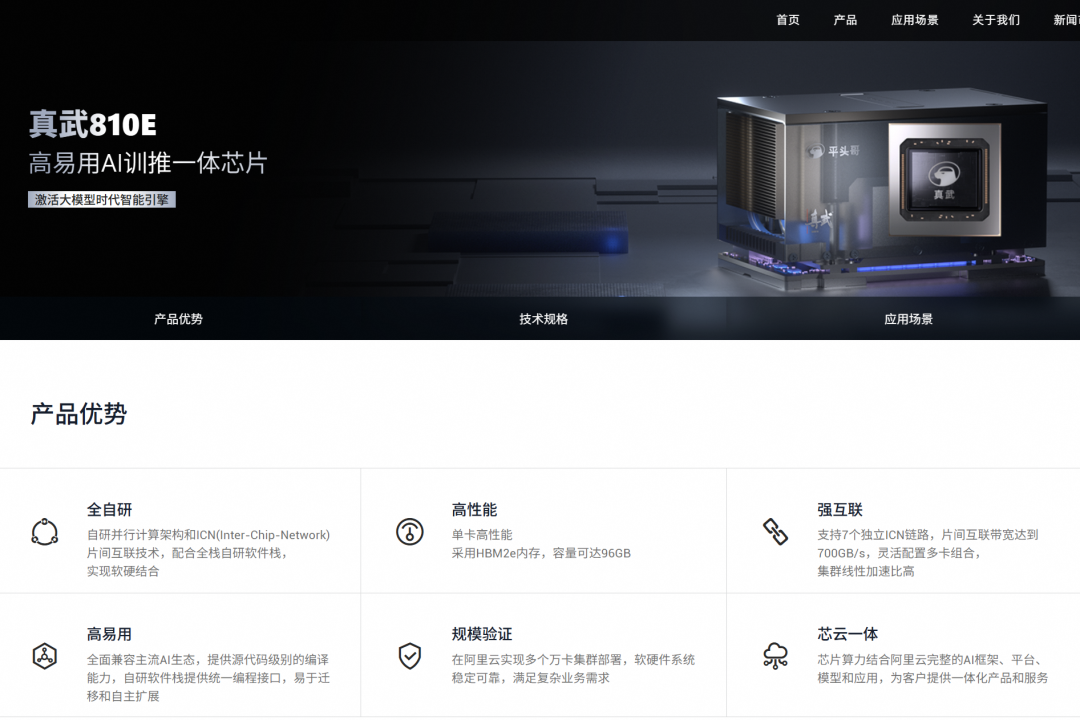
Core Insights - Alibaba's self-developed AI chip "Zhenwu 810E" has officially launched, marking a significant milestone in its 17-year strategic journey in AI and cloud computing [2][4][6] - The "Zhenwu" PPU chip features a 96GB HBM2e memory and a 700 GB/s interconnect bandwidth, positioning it as a competitive alternative to mainstream domestic GPUs and comparable to NVIDIA's H20 [4][5] - The launch of the "Zhenwu" PPU completes Alibaba's strategic framework of "large models + cloud + chips," establishing it as a leading player in the AI industry [4][7] Product and Technology - The "Zhenwu" PPU utilizes a self-developed parallel computing architecture and inter-chip interconnect technology, along with a fully self-developed software stack [4] - The chip has been in high demand, with multiple deployments in Alibaba Cloud serving over 400 clients, including major organizations like the State Grid and Xpeng Motors [4][7] - The chip's performance has been validated through extensive internal testing, demonstrating its stability and cost-effectiveness [6] Market Position and Strategy - Alibaba Cloud has achieved a 34% revenue growth, with AI-related product revenues increasing for nine consecutive quarters, indicating strong market demand for AI computing resources [7] - The company is prioritizing investments in AI infrastructure to meet the growing demand, with plans to potentially increase capital expenditures [7] - Alibaba's strategy contrasts with competitors like Amazon and Microsoft, focusing on a "full-stack self-research" approach rather than relying on external partnerships [8][9] Competitive Landscape - The global cloud market is dominated by four major players: Amazon, Microsoft, Google, and Alibaba, with Alibaba and Google pursuing a self-research strategy that may offer long-term value [8] - Self-developed chips are seen as a critical factor in reducing total cost of ownership (TCO) for AI computing, with examples like Google's TPU demonstrating significant cost advantages [9] - Alibaba's "Tongyun Ge" framework positions it favorably in the AI competition, enhancing its capabilities across cloud infrastructure, AI models, and chip technology [11]