超级AI云

Search documents
阿里证实自研AI芯片PPU,“通云哥”阵型浮出水面
Mei Ri Jing Ji Xin Wen· 2026-01-29 06:29
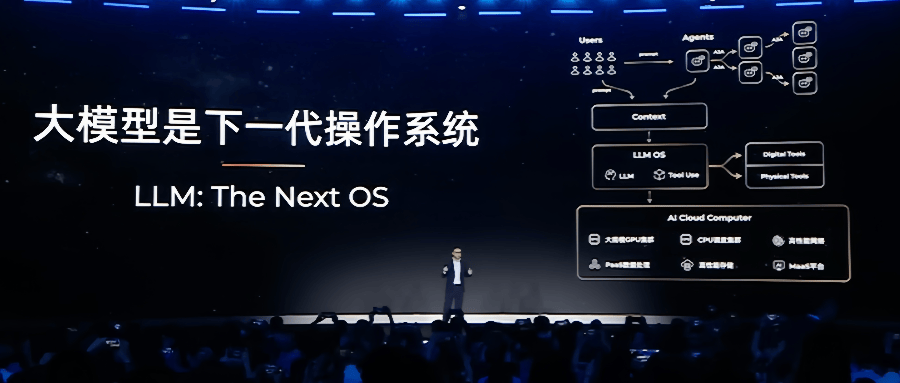
Core Insights - Alibaba's self-developed AI chip "Zhenwu 810E" has officially launched, marking a significant milestone in its 17-year strategic journey in AI and cloud computing [2][4][6] - The "Zhenwu" PPU chip features a 96GB HBM2e memory and a 700 GB/s interconnect bandwidth, positioning it as a competitive alternative to mainstream domestic GPUs and comparable to NVIDIA's H20 [4][5] - The launch of the "Zhenwu" PPU completes Alibaba's strategic framework of "large models + cloud + chips," establishing it as a leading player in the AI industry [4][7] Product and Technology - The "Zhenwu" PPU utilizes a self-developed parallel computing architecture and inter-chip interconnect technology, along with a fully self-developed software stack [4] - The chip has been in high demand, with multiple deployments in Alibaba Cloud serving over 400 clients, including major organizations like the State Grid and Xpeng Motors [4][7] - The chip's performance has been validated through extensive internal testing, demonstrating its stability and cost-effectiveness [6] Market Position and Strategy - Alibaba Cloud has achieved a 34% revenue growth, with AI-related product revenues increasing for nine consecutive quarters, indicating strong market demand for AI computing resources [7] - The company is prioritizing investments in AI infrastructure to meet the growing demand, with plans to potentially increase capital expenditures [7] - Alibaba's strategy contrasts with competitors like Amazon and Microsoft, focusing on a "full-stack self-research" approach rather than relying on external partnerships [8][9] Competitive Landscape - The global cloud market is dominated by four major players: Amazon, Microsoft, Google, and Alibaba, with Alibaba and Google pursuing a self-research strategy that may offer long-term value [8] - Self-developed chips are seen as a critical factor in reducing total cost of ownership (TCO) for AI computing, with examples like Google's TPU demonstrating significant cost advantages [9] - Alibaba's "Tongyun Ge" framework positions it favorably in the AI competition, enhancing its capabilities across cloud infrastructure, AI models, and chip technology [11]


早报|Meta否认诈骗广告牟利1140亿;平台主播控诉遭教唆吸毒,警方已介入核查;拜登炮轰特朗普;“上上谦”全国仅剩1家门店
虎嗅APP· 2025-11-10 00:08
Group 1 - Over 2000 flights were canceled and more than 7000 flights were delayed in the US on November 9, marking a record high due to government shutdown and FAA's 4% flight reduction directive [2] - The celebrity hotpot brand "Shangshangqian," founded by singer Xue Zhiqian, is closing its last store in Guangzhou, leaving only one store in Shanghai, reflecting a trend of celebrity restaurant brands declining [3] - BBC executives resigned following criticism over misleading editing of a Trump video, which allegedly misrepresented his statements regarding the Capitol riots [4] Group 2 - Blue Origin, Jeff Bezos's space company, is set to launch its "New Glenn" rocket for NASA, marking a significant step in challenging SpaceX's dominance in the space industry [6] - A tornado in Brazil's Parana state resulted in 6 deaths and approximately 750 injuries, with significant destruction reported in the city of Rio Bonito [7][8] - Meta's internal documents revealed that about 10% of its revenue in 2024, approximately $16 billion, could come from scam ads, prompting an SEC investigation [24][26] Group 3 - The "People's Cafe" has changed its name to "Yaochao People's Cafe" in response to public criticism regarding the use of the term "People" in its branding [9] - A Chinese fishing vessel capsized near South Korea, with ongoing search efforts for three missing crew members [10][12] - The 2025 China Robot Industry Development Conference will be held in Shanghai, focusing on the development of intelligent robotics [31]


再提“超级人工智能”!阿里巴巴吴泳铭,最新发声
Zheng Quan Shi Bao· 2025-11-07 09:13
Core Insights - The 2025 World Internet Conference in Wuzhen opened on November 7, with Alibaba Group CEO Wu Yongming emphasizing the accelerated evolution of AI technology towards "Artificial Superintelligence (ASI)" [1][2] - Alibaba is increasing investments to build a "Super AI Cloud" to support the next generation of computing and provide comprehensive AI capabilities [2][3] Group 1: AI Development Stages - Wu Yongming outlined three stages of AI development: 1. Emergence of intelligence, characterized by AI learning from vast human knowledge and solving real-world problems [2] 2. Transition to "General Artificial Intelligence (AGI)," where AI can assist in numerous digital tasks and connect with the physical world [2] 3. Achievement of "Super Artificial Intelligence (ASI)," which requires extensive time and involves AI's ability to autonomously learn and iterate [2] Group 2: Alibaba's AI Infrastructure - Alibaba Cloud aims to be a full-stack AI service provider, offering leading intelligent capabilities and a global AI cloud computing network [3] - The company is constructing large-scale AI infrastructure to support super-scale computing demands, essential for the development of Super AI Cloud [3] Group 3: Open Source and Community Engagement - Alibaba's "Tongyi Qianwen" has become the most influential open-source model family globally, with over 300 models and more than 600 million downloads [4] - The "Mota" community, the largest AI open-source community in China, has over 120,000 open-source models and serves over 20 million users [4] - Over 20.74% of AI developers in the community come from small organizations, and 13.7% are independent developers, highlighting the democratization of technology [4] Group 4: AI Product Innovations - Alibaba showcased its first self-developed Quark AI glasses, featuring dual chips and a replaceable battery design for extended use [5][6] - The AI glasses are designed for comfort and usability across various scenarios, reflecting Alibaba's commitment to innovative AI products [6] Group 5: Global AI Cloud Expansion - In 2023, Alibaba Cloud established eight new AI cloud data centers across multiple countries, enhancing its global infrastructure [6] - The company now operates 29 public cloud regions and 92 availability zones across four continents, with over 3,200 edge nodes [6]
阿里巴巴CEO吴泳铭:下一代计算机是超级AI云 | 巴伦精选
Sou Hu Cai Jing· 2025-11-07 07:48
Core Insights - Alibaba Group's CEO, Wu Yongming, emphasizes a shift in focus from e-commerce and digital economy to artificial intelligence (AI) during the World Internet Conference, highlighting the company's commitment to AI development [2][3] - Wu outlines three stages of AI evolution: intelligent emergence, general artificial intelligence (AGI), and super artificial intelligence (ASI), indicating that the industry is currently at the beginning of the AGI stage [3][4] - The company positions Alibaba Cloud as a full-stack AI service provider, aiming to support the growing demand for large-scale computing infrastructure necessary for the AI revolution [5] AI Development Stages - The first stage, intelligent emergence, involves AI learning from vast human knowledge to solve real-world problems, characterized by "learning humans" [4] - The second stage, AGI, is marked by AI agents performing numerous tasks in the digital realm and interacting with the physical world, characterized by "assisting humans" [3][4] - The third stage, ASI, will see AI autonomously learning and iterating, characterized by "surpassing humans," but this stage is still a long way off [4][5] Infrastructure and Technology - The demand for super-scale computing necessitates a robust infrastructure, which Alibaba aims to fulfill through its "super AI cloud" strategy [5] - Alibaba Cloud's offerings include a comprehensive AI service chain that encompasses model training, inference, deployment, and optimization, moving beyond mere computing resource provision [2][5] Community and Accessibility - The "Mota" community, established by Alibaba, has become the largest AI open-source community in China, providing a platform for developers to access and contribute to over 120,000 open-source models [6][7] - The community has seen significant participation from small organizations and independent developers, with initiatives aimed at leveraging AI for social good, particularly in education and support for vulnerable groups [6][7] Market Position and Future Outlook - Alibaba's "Tongyi Qianwen" model has gained recognition as a leading open-source model, dominating rankings and fostering a developer-friendly ecosystem [5] - The company expresses confidence in achieving the goal of transitioning to an intelligent economy and society by 2035, driven by AI's potential to enhance productivity and liberate human capabilities [4]
阿里巴巴-W(09988):FY26Q2预计阿里云营收增长提速,闪购投入扩大
Hua Yuan Zheng Quan· 2025-11-06 13:44
Investment Rating - The investment rating for Alibaba Group (09988.HK) is "Buy" (maintained) [5][7] Core Views - Alibaba is expected to see accelerated revenue growth in its cloud segment and expanded investment in flash sales [5] - The company is focusing on its e-commerce and cloud computing sectors, with significant investments aimed at opening new growth avenues [7] Financial Forecasts - For FY2026Q2, Alibaba is projected to achieve total revenue of 242.5 billion RMB, a year-on-year increase of 3%, with adjusted EBITA margin at 2.3% [6] - The Chinese e-commerce group is expected to generate revenue of 126.8 billion RMB, with an adjusted EBITA margin of 7% [6] - The cloud intelligence group is anticipated to see revenue of 38.5 billion RMB, with an adjusted EBITA margin of 9%, reflecting a 30% year-on-year growth [6] - The forecasted net profit for FY2026 is 103 billion RMB, with a year-on-year growth rate of -21% [8] Business Segment Insights - The cloud segment aims to establish itself as a leading player in the AI cloud market, with a market share of 35.8% in China as of the first half of 2025 [6] - The Chinese e-commerce group is implementing a large consumption platform strategy, with significant investments in flash sales expected to drive new growth [6] - The international digital commerce group is focusing on key regions to enhance operational efficiency, projecting a 17% year-on-year revenue growth [6]
云栖大会总结:阿里上调资本开支,2032年AIDC功耗将增长10倍,看好国产AI提速发展
KAIYUAN SECURITIES· 2025-09-28 01:41
Investment Rating - The industry investment rating is optimistic (maintained) [1] Core Viewpoints - The report emphasizes the continuous increase in AI capital expenditure by major players like Alibaba, with an additional investment plan of 380 billion in AI over the next three years, leading to a projected 10-fold increase in IDC energy consumption by 2032 compared to 2022 [4][12] - The report highlights the launch of seven new large models by Alibaba, including the flagship model Qwen3-Max, which ranks among the top three globally in performance [6][18] - The report suggests a sustained positive outlook for domestic AI large models and applications, indicating that the domestic computing power industry chain may continue to benefit [13] Summary by Sections 1. Investment Insights - Alibaba plans to increase AI investments significantly, with new hardware and software products introduced at the Yunqi Conference [12] - The company aims for ASI (Artificial Super Intelligence) and has outlined two major AI strategies: an open-source approach and the development of a super AI cloud [15][16] - The report recommends focusing on the AIDC computing power industry chain as a core investment direction, alongside AI applications and related sectors [22] 2. Communication Data Tracking - As of August 2025, China has 4.646 million 5G base stations, with a net increase of 395,000 stations since the end of 2024 [32] - The number of 5G mobile phone users reached 1.154 billion, showing a year-on-year growth of 19.46% [32] - The report notes a decline in 5G mobile phone shipments in June 2025, with 18.436 million units shipped, a year-on-year decrease of 16.7% [32] 3. Operator Performance - The report details the revenue growth of major telecom operators in cloud services, with China Mobile's cloud revenue reaching 56.1 billion, a year-on-year increase of 11.3% [47] - China Telecom's Tianyi Cloud revenue was 57.3 billion, up 3.8% year-on-year, while China Unicom's cloud revenue reached 37.6 billion, growing by 4.6% [47] - The ARPU values for the three major operators remained stable, with slight decreases noted for China Unicom [51][52][53]
阿里巴巴-SW(09988.HK):积极推进AI基础设施建设 计划追加更多投入
Ge Long Hui· 2025-09-25 11:03
Group 1 - The core viewpoint emphasizes the significant investment in AI infrastructure, which is expected to accelerate cloud business growth and maintain a "buy" rating for the company [1][2] - The company plans to increase its investment in AI infrastructure, with a projected net profit forecast for FY2026-2028 of 140.5 billion, 162.9 billion, and 189.8 billion yuan, reflecting a year-on-year growth rate of -11.2%, +16.0%, and +16.5% respectively [1] - The company is focusing on enhancing its AI capabilities, with a shift from CPU-centric to GPU-centric computing, indicating a transformation in the computing paradigm driven by large models [1] Group 2 - The demand for AI infrastructure is exceeding expectations, with the company actively advancing the construction of 380 billion yuan in AI infrastructure [1] - The company is leveraging its advantages in high-end users, merchants, and fulfillment systems to enhance its instant retail and in-store business [2] - The company is expected to see continuous improvement in the monetization rate of its Taotian platform, driven by increased investment in flash sales [2]
吴泳铭的两个新判断 和加倍激进投入的阿里云
3 6 Ke· 2025-09-25 03:32
Core Insights - Alibaba Cloud is aggressively advancing its AI strategy, aiming to establish a "Super AI Cloud" that will provide intelligent computing networks globally [3][15] - The company has introduced several new AI models, including the flagship Qwen3-Max, which outperforms competitors like GPT-5 and Claude Opus 4 [9][10] - Alibaba Cloud's revenue from AI-related services has seen significant growth, with a 26% year-on-year increase in the latest quarterly report [11] Model Development - Alibaba Cloud launched seven new models at the Yunqi Conference, showcasing advancements in capabilities and performance [9][10] - The flagship model Qwen3-Max has a pre-training data volume of 36 trillion tokens and over one trillion parameters, significantly enhancing coding and agent tool capabilities [9] - Other models include Qwen3-Next, Qwen3-VL, Qwen3-Coder, Qwen3-Omni, Wan2.5-preview, and Tongyi Bailing, each with unique functionalities [9][10] Strategic Vision - CEO Wu Yongming posits that large models will become the next generation of operating systems, allowing users to create applications using natural language [2][3] - The transition to "Super AI" is outlined in three stages: emergence of intelligence, autonomous action, and self-iteration [4] - Alibaba Cloud's infrastructure is undergoing a comprehensive reconstruction to align with the changes brought by large models [2][3] Market Position - Alibaba Cloud's market share in China's AI cloud market is 35.8%, leading the sector [11] - The company has opened over 300 models, making it a leader in the global open-source model space, with over 600 million downloads [10][11] - The stock price of Alibaba has surged over 9% following the announcement of its new AI strategy, reaching the highest level since October 2021 [6] Industry Context - The AI landscape is rapidly evolving, with significant investments from major players like Nvidia and OpenAI, indicating a competitive environment [13][14] - The shift towards AI is seen as a critical juncture for Alibaba Cloud, which has refocused its strategy on AI-driven public cloud services [14][15] - The relationship between AI and cloud computing is becoming increasingly intertwined, with Alibaba positioning itself as a full-stack AI service provider [15][16]
吴泳铭掌舵两周年,阿里穿过峡谷
36氪· 2025-09-24 13:39
Core Viewpoint - The future of AI is seen as a journey towards Artificial Super Intelligence (ASI), with significant investments in AI infrastructure and a focus on creating a new operating system for AI applications [4][11][27] Group 1: Leadership and Vision - Wu Yongming, the CEO of Alibaba, has maintained a low public profile while driving the company's AI strategy, emphasizing the importance of AI in future business models [2][5] - His vision includes a clear path towards ASI, with AI evolving through three stages: learning from humans, assisting humans, and ultimately self-iterating beyond human intelligence [7][9] Group 2: AI Infrastructure and Investment - Alibaba plans to invest 380 billion yuan over three years to build AI infrastructure, aiming for a tenfold increase in energy consumption by 2032 compared to 2022 [4][17] - The company is focusing on creating a "super AI cloud" that will serve as the next generation of computing resources, essential for supporting numerous AI agents [11][19] Group 3: Strategic Decisions and Market Position - The decision to prioritize public cloud services was made to align with the growing demand for scalable AI solutions, despite previous revenue challenges in this area [15][18] - Alibaba's AI model, Tongyi, has become a leading open-source model, with over 300 models released and significant adoption across various industries, including finance and consumer electronics [17][22] Group 4: Future Outlook and Industry Impact - The company is positioning itself as a full-stack player in the AI space, integrating AI chips, cloud computing, and foundational models to enhance its competitive edge [19][22] - The overarching goal is to prepare for the ASI era, where AI will significantly augment human capabilities and transform industries [23][24]
阿里狂发300多款模型背后,吴泳铭:做“AI时代的安卓”
Sou Hu Cai Jing· 2025-09-24 11:44
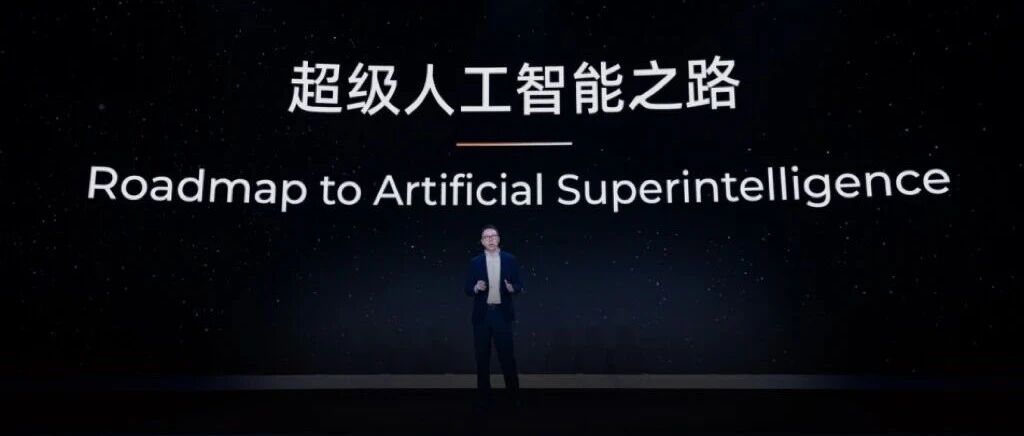
Core Insights - Alibaba released seven model updates at the 2025 Yunqi Conference, with over 300 models in the Tongyi series [2] - CEO Wu Yongming outlined a three-phase evolution towards Artificial Super Intelligence (ASI), emphasizing that achieving Artificial General Intelligence (AGI) is a certainty but merely a starting point for AI development [3][4][5] Model Updates - Qwen3-MAX: A trillion-parameter model excelling in programming and tool usage, achieving top international rankings [2][12] - Qwen3-Omni: A multimodal model supporting 19 languages for input and 10 for output, capable of processing 30-minute audio recordings [2][18] - Wan2.5-Preview: A video generation model that can create 10-second videos with enhanced quality [2][26] - Tongyi Bailin: An enterprise-level voice model with a significant reduction in hallucination rates [2][28] - Qwen3-VL: A visual understanding model with enhanced capabilities for video and OCR [2][21] - Qwen-Image: An upgraded image editing model with improved consistency in multi-image editing [2][22] - Qwen3-Coder: An intelligent programming model that supports multimodal input and has become popular on the OpenRouter platform [2][24] AI Development Vision - Wu emphasized that the first phase involves AI learning from human knowledge, the second phase focuses on AI assisting humans through tool usage, and the third phase aims for self-learning and surpassing human intelligence [5][6][8] - The ultimate goal is for AI to connect with the physical world and continuously learn from real-time data [6][8] Infrastructure and Strategic Goals - Alibaba is investing 380 billion yuan in AI infrastructure over three years, with plans to increase data center energy consumption tenfold by 2032 [11] - The company aims to establish a "super AI cloud" as the next-generation computing platform, requiring extensive resources and technology [10][11] - Alibaba's Tongyi Qianwen aims to be the "Android of the AI era," with over 300 models already open-sourced and a global download count exceeding 600 million [10][11] Agent Development Framework - The company introduced the Baolian Agent platform, which supports low-code development and aims to enhance the capabilities of intelligent agents [31][36] - The platform allows for dynamic memory updates and multi-modal memory capabilities, facilitating personalized agent experiences [32][35] AI Infrastructure Enhancements - Alibaba launched the Panjiu AI Infra 2.0 server, capable of high power and efficiency, and introduced the HPN 8.0 high-performance network for improved data center connectivity [38][39] - The company also unveiled a multi-modal intelligent data foundation for agent development, enhancing data processing capabilities [39] Conclusion - The Yunqi Conference showcased Alibaba's ambitions in AI, presenting a comprehensive ecosystem from model development to infrastructure, positioning itself for leadership in the next generation of AI operating systems and computing platforms [40]