AI决策算法

Search documents
最前线|RoboMaster 2025机甲大师超级对抗赛收官,从高校开始以赛促学
3 6 Ke· 2025-08-05 07:54
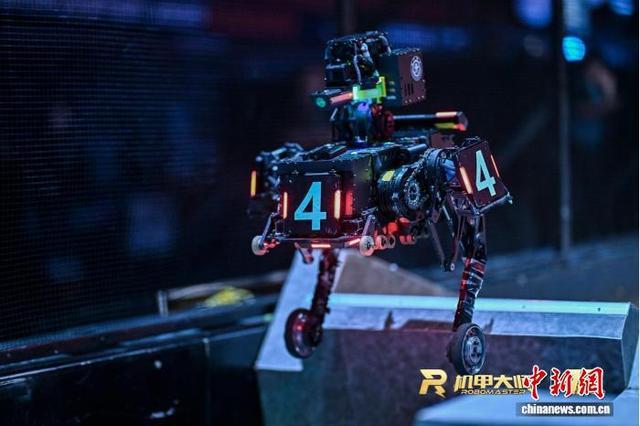
Core Insights - The RoboMaster 2025 competition concluded with Shanghai Jiao Tong University's team winning the national championship, highlighting the event's role in fostering innovation and talent in robotics [1] - The competition emphasizes practical applications of robotics technology, with advancements in areas such as machine vision, embedded systems, and autonomous navigation [1][2] Group 1: Technological Advancements - The 2025 season focused on the iteration of various robot technologies, particularly in terrain adaptability and control algorithms, enhancing capabilities like overcoming height differences and self-resetting after falls [1] - Teams utilized advanced technologies such as edge computing and neural networks for real-time target recognition and predictive analytics, improving combat performance and exploring applications in complex environments [2] - The introduction of aerial robots aimed at lightweight and high payload capabilities, with notable performance from the China University of Petroleum (East China) team, which developed a drone weighing only 12.4 kg with a 5 kg payload capacity [3] Group 2: Educational and Employment Impact - Participation in RoboMaster significantly boosts employment opportunities for students, with nearly 100% employment rates reported among participants, and many tech companies prioritizing candidates with RoboMaster experience [3] - The competition encourages students to transform innovative ideas into commercial ventures, leading to the establishment of startups that leverage the technologies and experiences gained during the competition [3] - RoboMaster has contributed to educational reform, promoting the "learning through competition" model as a valuable complement to traditional education methods [3]
RoboMaster 2025机甲大师超级对抗赛全国赛收官
Huan Qiu Wang Zi Xun· 2025-08-03 13:44
Core Insights - The RoboMaster 2025 National Competition concluded with Shanghai Jiao Tong University's team winning the championship, while teams from the University of Science and Technology of China, South China University of Technology, and Northeast University secured the second, third, and fourth places respectively [1][3]. Group 1: Technological Advancements - The competition showcased significant advancements in robot technology, particularly in the development of bipedal robots capable of navigating complex terrains, including stair climbing and self-resetting after falls [3]. - Teams focused on optimizing structures and algorithms to enhance robot load capacity, mobility, and adaptability to various terrains, which aligns with practical applications in security inspections and disaster rescue [3][5]. Group 2: Application of AI and Algorithms - The champion team's robot utilized edge computing and neural networks for enemy armor recognition and motion prediction, enhancing its combat capabilities and exploring applications of deep learning in dynamic environments [5]. - The runner-up team implemented laser radar and advanced algorithms for autonomous navigation, obstacle avoidance, and multi-machine communication, addressing complex offensive and defensive strategies [5]. Group 3: Educational Impact - The competition provided participants with a comprehensive engineering experience, requiring them to engage in demand analysis, design, prototyping, and iterative optimization, simulating real-world challenges in research and industry development [5][7]. - This "full-process practical" model prepares students for future careers in intelligent security, disaster rescue, and low-altitude economy sectors, establishing a solid foundation for practical application [7].