AI开支

Search documents
【市场聚焦】宏观:政策的矛与盾
Xin Lang Cai Jing· 2025-12-11 10:16
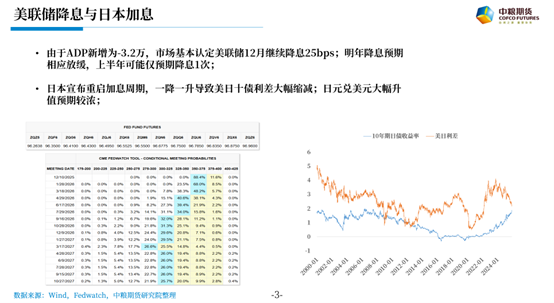
Group 1 - The Federal Reserve's interest rate cuts and Japan's interest rate hikes create a liquidity game between the US and Japan by 2026, with the importance of liquidity potentially surpassing the impact of Fed rate cuts due to accelerated AI spending [1][5][24] - China is likely to set a positive tone for the "15th Five-Year Plan" in the coming year, maintaining an active fiscal and monetary policy, while current tax reforms and debt management diverge from expectations [1][9][26] - The support and pace of fiscal policies for consumption will be the foundational policy basis for whether domestic commodities can reverse their current trends [1][12][34] Group 2 - The significant decline in the US-Japan interest rate differential due to monetary misalignment will naturally shift liquidity towards Japan, creating a sharp contradiction with the capital demands of AI expansion [4][21] - The current spending levels in the high-tech sector, when combining hardware and software investments, are higher than those in 2000, indicating a shift in investment focus [4][21] - The tightening liquidity in the US market suggests that capital will have higher demands for AI development, amplifying the probability of underperformance [5][24] Group 3 - The recent political bureau meeting emphasized the integration of existing and incremental policies, indicating a more responsive approach to fiscal policy based on external pressures and domestic recovery trends [9][26] - There is a notable divergence between sustained fiscal efforts and corporate expansion, with long-term loan growth continuing to decline, reflecting a fundamental shift from historical patterns [12][29] - The fixed investment growth is under pressure, and outside of advanced technology sectors, the contribution of broad investment to the economy remains low due to limited fiscal resources [15][32]