AI时代入口竞争

Search documents
快手也来「凑热闹」,春晚红包到底有什么「魔力」?
3 6 Ke· 2026-02-10 06:50
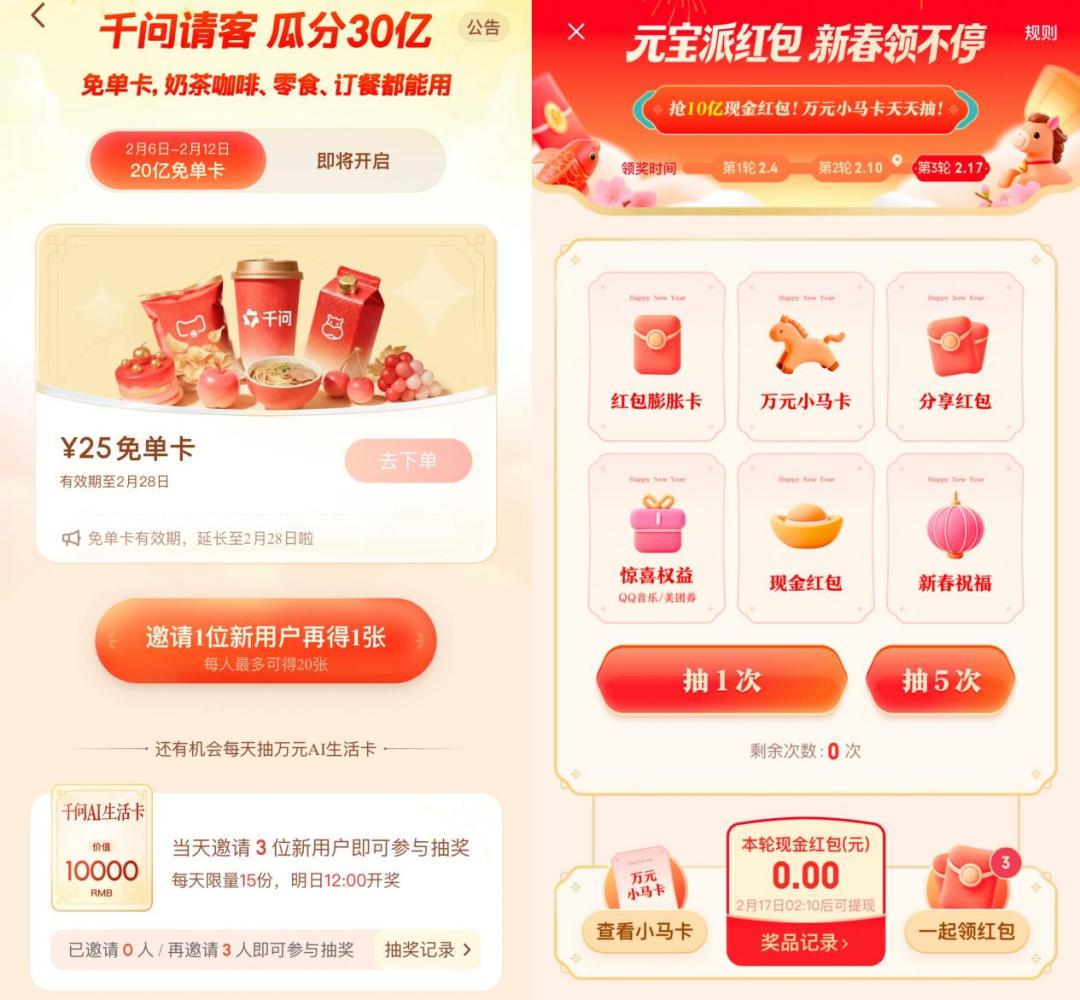
Core Insights - Kuaishou has officially announced a partnership with CCTV's Spring Festival Gala, utilizing live streaming, on-demand, and short video formats to present the 2026 gala content, with users able to receive cash red envelopes through interaction [1] - The competition for user engagement during the Spring Festival has shifted significantly, with major companies like Tencent, Baidu, and Alibaba investing a total of at least 4.5 billion yuan in cash red envelopes for AI product user acquisition [2][4] - This year's marketing strategy marks a fundamental shift in focus from mobile payment and short video traffic to positioning in the AI era, indicating a new competitive landscape [4] Group 1: Red Envelope War Evolution - The red envelope tradition has evolved through four distinct phases over the past decade, starting with the "payment entry competition" phase from 2015 to 2018, where Tencent and Alipay battled for dominance [5][6] - The second phase from 2019 to 2023 focused on "traffic ecosystem expansion," with companies like Baidu, Kuaishou, and Douyin increasing red envelope amounts to drive user engagement and ecosystem growth [6] - The current phase from 2023 to 2026 is characterized by a decline in red envelope activities, with companies now prioritizing more direct marketing strategies and user conversion [6] Group 2: AI Integration and Strategic Positioning - The 2026 red envelope activities are deeply integrated with AI products, requiring users to interact with AI assistants to earn rewards, marking the beginning of the "AI entry positioning phase" [6][10] - Major companies are investing heavily in AI to secure a foothold in the rapidly growing AI consumer market, projected to reach $1.3 trillion by 2030, with an annual growth rate exceeding 35% [12] - The Spring Festival serves as a critical opportunity for companies to establish user habits and expand their user base, as it is the only time of year that can achieve nationwide reach [15] Group 3: Challenges and User Retention - Despite the significant investments, companies face challenges related to user retention, as past experiences show that cash incentives often lead to low long-term engagement [21][23] - The quality of user interaction data is also a concern, as simplified motivations for engagement can lead to poor data quality, which negatively impacts AI model performance [23][24] - Ultimately, the success of AI assistants will depend on their inherent value and ability to solve real user problems, rather than solely on financial incentives [24]