AI精准诊断

Search documents
AI医疗:暴力破解创新药,人类突破长寿极限
泽平宏观· 2026-02-01 16:05
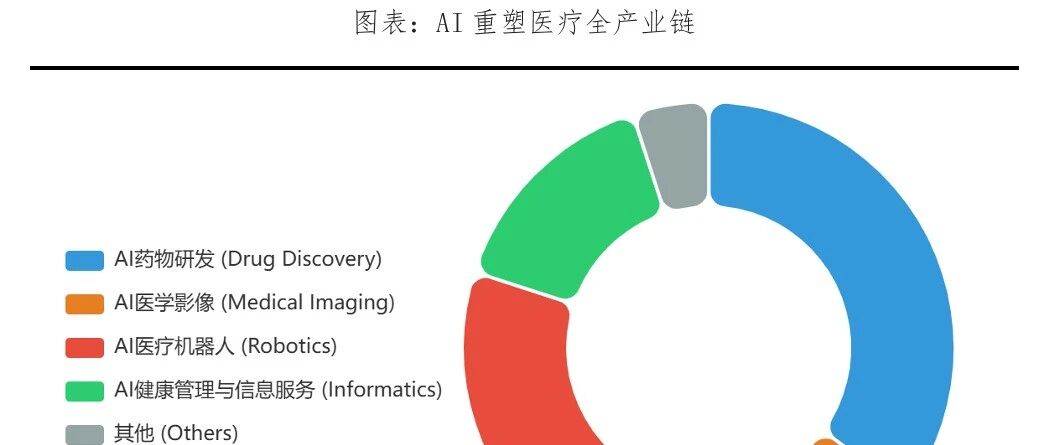
Core Viewpoint - AI is revolutionizing the life sciences and pharmaceutical research, significantly improving efficiency and reducing costs associated with drug development [3][4][7]. Group 1: Global AI Medical Market Expansion - The global AI medical market is rapidly expanding, characterized by the entry of major tech companies like NVIDIA, Google, and Microsoft, which are restructuring medical infrastructure [3][4]. - AI technology is deeply integrating with biotechnology, leading to unprecedented levels of financing and mergers in the AI medical sector, with projections indicating a record high in 2025 [4][5]. - Major pharmaceutical companies are investing billions in partnerships with AI startups, exemplified by Sanofi's $2.5 billion collaboration with Earendil and other significant deals with Atomwise and Dren Bio [5][6]. Group 2: AI Drug Development and Applications - AI is transforming drug development by addressing various diseases, including cancer, neurodegenerative diseases, metabolic disorders, autoimmune diseases, infectious diseases, and rare diseases, significantly lowering trial costs and improving success rates [7][8][9]. - The efficiency of AI in drug development is highlighted by its ability to reduce the traditional 10-year, $1 billion timeline with only a 10% success rate, enhancing the overall drug discovery process [8][9]. - AI's role in drug discovery is expanding from initial target identification to clinical trial design and patient recruitment, covering the entire industry spectrum [8][9]. Group 3: Policy Support for AI in Healthcare - National strategies are being implemented to support AI applications in healthcare, including the 2025 guidelines promoting AI in drug development to reduce costs and time [9][10]. - Local governments are providing financial incentives for AI drug development, with subsidies for computational costs and support for companies achieving regulatory approvals [11][12]. - Policies are encouraging the internationalization of innovative drugs, with significant support for local companies conducting global clinical trials [11][12]. Group 4: Future Opportunities in AI Healthcare - The first major opportunity lies in AI-assisted drug discovery, which is expected to have a trillion-dollar market potential, particularly in treating diseases like cancer and Alzheimer's [25][26]. - AI is set to enhance diagnostic accuracy in medical imaging, addressing resource distribution issues and integrating diagnostic capabilities into imaging devices [28][29]. - AI will drive advancements in clinical decision support and healthcare information systems, improving data utilization and patient care efficiency [30][31]. - AI-powered surgical robots are expected to redefine surgical precision and enable remote medical procedures, breaking geographical barriers in healthcare delivery [32][33].