
AI行为研判系统

Search documents
揭秘“太空小鼠”的“出差奇遇”
Zhong Guo Qing Nian Bao· 2026-01-09 02:27
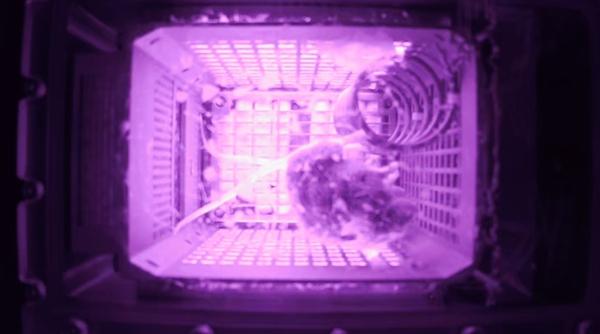
Core Viewpoint - The successful reproduction of "space mice" after their return from a 14-day stay in the Chinese space station demonstrates that short-term space travel does not significantly affect the reproductive capabilities of mammals, providing valuable samples for future research on the impact of space environments on mammalian life [1][14]. Group 1: Space Mice Experiment - Six offspring from a pair of "space mice" are thriving after being born following their parents' return from space [1]. - The experiment marks China's first complete process of mammalian space experiments, including preparation, in-orbit experiments, and sample recovery [14]. - The research aims to provide insights into the effects of space environments on human health and reproductive capabilities [14]. Group 2: Behavioral Observations - "Space mice" exhibited stronger maternal instincts compared to ground control mice, showing a heightened desire to protect their offspring [5][6]. - The adaptation of "space mice" to the microgravity environment involved initial anxiety, which decreased over time as they became more comfortable [5]. - The study includes a control group of ground mice to compare behaviors and reproductive outcomes [5]. Group 3: Emergency Response and Adaptation - The research team faced a "food shortage" crisis during the mission due to an extended stay in space, prompting an emergency response to ensure the mice's survival [7][10]. - Alternative food sources, including soy milk, were identified and successfully tested for their suitability for the mice [10]. - An AI behavior monitoring system was developed to track the mice's activities and health, aiding in decision-making during the mission [10]. Group 4: Future Research Directions - Ongoing studies will focus on the growth and physiological changes of the offspring, as well as their reproductive capabilities, to explore the potential multigenerational effects of space environments [14]. - The findings from this research are expected to inform strategies for human space travel and health [14].

【新华网】神舟出差返回后 “太空鼠”当妈妈啦!
Xin Hua She· 2025-12-29 03:02
Core Viewpoint - The successful birth of nine baby mice from a female mouse that returned from space marks a significant achievement in China's space research, demonstrating the feasibility of conducting mammalian experiments in space and providing valuable data for future studies [1][2]. Group 1: Space Experiment Overview - Four experimental mice were launched aboard the Shenzhou 21 spacecraft and conducted survival and adaptation experiments in a space environment [1]. - The mission faced challenges, including a temporary food shortage due to adjustments in the Shenzhou 20 return plan, which required rapid emergency responses from the ground research team [1]. Group 2: Emergency Response and Adaptation - The ground team quickly initiated an emergency response mechanism, evaluating various potential food substitutes and ultimately selecting soybean milk for the mice [1]. - The team also addressed the mice's drinking needs by utilizing a water supply interface in the space breeding device, ensuring the mice had access to water during the mission [1]. Group 3: Data Support and Monitoring - An AI behavior analysis system was developed to track the mice's movements, eating, and sleeping patterns, providing critical data to support emergency decision-making [2]. - The successful recovery of the mice after their return to Earth on November 14 and their subsequent transport to Beijing on November 18 highlights the comprehensive technical solution for conducting mammalian space experiments [2]. Group 4: Research Implications - The mother mouse exhibited normal nurturing behavior, and the vitality of the baby mice was reported to be good, indicating that short-term space flight did not negatively impact the reproductive capabilities of the mice [2]. - This mission provides invaluable samples for studying the effects of space environments on early mammalian development, laying a solid foundation for future large-scale mammalian space science experiments [2].

“太空小鼠”,当妈妈了!
Xin Lang Cai Jing· 2025-12-27 12:30
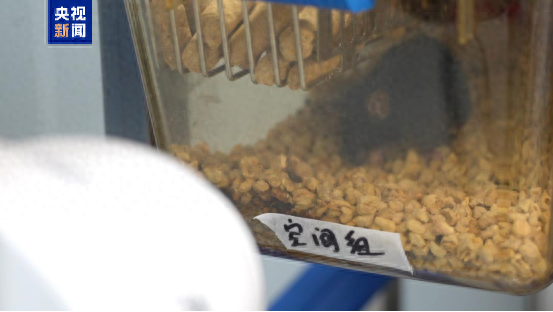
Core Viewpoint - The successful birth of nine offspring from a mouse that returned from space demonstrates that short-term spaceflight does not negatively impact reproductive capabilities in mice, providing valuable samples for studying the effects of space environments on early mammalian development [3][11]. Group 1: Space Mission Details - Four experimental mice were launched aboard the Shenzhou 21 spacecraft on October 31, 2025, and returned to Earth on November 14, 2025 [1]. - The mission faced challenges, including a food supply issue due to adjustments in the Shenzhou 20 return plan, which led to a "food shortage" for the mice [5][7]. Group 2: Emergency Response - The ground research team activated an emergency response mechanism to address the water supply issue by utilizing a reserved external water supply interface in the space breeding device, allowing astronauts to provide drinking water to the mice [5]. - For food supply, the team selected soy milk as an emergency food after testing various potential substitutes from the astronauts' food list, successfully completing the soy milk supply on November 12 and 13 [7]. Group 3: Monitoring and Future Research - An AI behavior analysis system was developed to track the mice's movement, eating, and sleeping patterns, providing critical data for emergency decision-making [9]. - Ongoing systematic research will focus on the growth and development curves, physiological and pathological changes of the offspring, as well as their reproductive capabilities, with the aim of exploring the potential impacts of space environments on multi-generational genetics and development [11].
“太空鼠”当妈妈啦
Xin Lang Cai Jing· 2025-12-27 07:23
Core Insights - The successful birth of nine baby mice from a female mouse that returned from space marks a significant achievement in China's space research, demonstrating the ability to conduct mammalian space experiments and recover samples [1][2] Group 1: Experiment Overview - Four experimental mice were launched aboard the Shenzhou 21 spacecraft on October 31 and were housed in a small mammal breeding facility in the Chinese space station [1] - The mission faced challenges, including a food supply issue due to adjustments in the Shenzhou 20 return plan, which led to a temporary "food shortage" for the mice [1] Group 2: Emergency Response - The ground research team activated an emergency response mechanism, evaluating various potential food alternatives, including compressed biscuits, corn, hazelnuts, and soy milk [1] - Soy milk was ultimately selected as the emergency food, and the team successfully provided it to the mice, resolving their food supply issue [1] Group 3: Data Support and Monitoring - An AI behavior analysis system was developed to track the mice's movements, eating, and sleeping patterns, providing critical data for emergency decision-making [2] - The mice safely landed on November 14, and were promptly recovered by researchers, marking the completion of a full-cycle mammalian space experiment [2] Group 4: Research Implications - The mother mouse exhibited normal nurturing behavior, and the vitality of the baby mice was reported to be good, indicating that short-term space flight did not negatively impact the reproductive capabilities of the mice [2] - This mission provides valuable samples for studying the effects of space environments on early mammalian development [2]
“太空小鼠”返回地面后成功孕育幼仔
Yang Shi Xin Wen· 2025-12-27 00:12
Core Viewpoint - The successful birth of nine offspring from a mouse that returned from space demonstrates that short-term spaceflight does not negatively impact reproductive capabilities in mice, providing valuable samples for studying the effects of space environments on early mammalian development [1][2]. Group 1: Space Mission Details - Four experimental mice were launched aboard the Shenzhou 21 spacecraft on October 31, 2025, and returned to Earth on November 14, 2025 [1]. - The mission faced challenges, including a food supply issue due to adjustments in the Shenzhou 20 return plan, leading to a "food shortage" scenario for the mice [1][2]. Group 2: Emergency Response and Solutions - The research team quickly activated an emergency response mechanism to address the food shortage, utilizing the astronauts' food supply to find suitable alternatives for the mice [2]. - Soy milk was selected as the emergency food after testing various options, and successful resupply occurred on November 12 and 13 [2]. Group 3: Ongoing Research and Future Studies - Continuous systematic research will be conducted on the offspring, focusing on their growth and development, physiological and pathological characteristics, and reproductive capabilities [2]. - Scientists aim to explore the potential genetic and developmental impacts of space environments across multiple generations of mice [2].
神舟出差返回后 “太空鼠”当妈妈啦!
Xin Hua She· 2025-12-27 00:03
Core Insights - The successful birth of nine baby mice from a female mouse that returned from space marks a significant achievement in China's space research, demonstrating the ability to conduct mammalian space experiments and recover samples [1][2] - The experiment faced challenges, including a food supply issue due to adjustments in the Shenzhou 20 return plan, which required rapid response and adaptation from the ground research team [1][2] Group 1: Experiment Overview - Four experimental mice were launched aboard the Shenzhou 21 spacecraft on October 31 and were housed in a specialized facility on the Chinese space station [1] - The female mouse successfully gave birth to nine pups, with six currently surviving, indicating a normal survival rate [1] Group 2: Emergency Response - The ground research team initiated an emergency response to address the food supply issue, evaluating various potential food alternatives and ultimately selecting soybean milk for the mice [1][2] - An AI behavior analysis system was utilized to monitor the mice's activities, providing critical data for decision-making regarding food consumption [2] Group 3: Research Significance - This mission represents China's first complete process of mammalian space experiments, from preparation to in-orbit experimentation and sample recovery, laying a solid foundation for future large-scale mammalian space science experiments [2] - The research indicates that short-term space flight does not negatively impact the reproductive capabilities of mice, providing valuable samples for studying the effects of space environments on early mammalian development [2]