太空实验

Search documents
揭秘“太空小鼠”的“出差奇遇”
Zhong Guo Qing Nian Bao· 2026-01-09 02:27
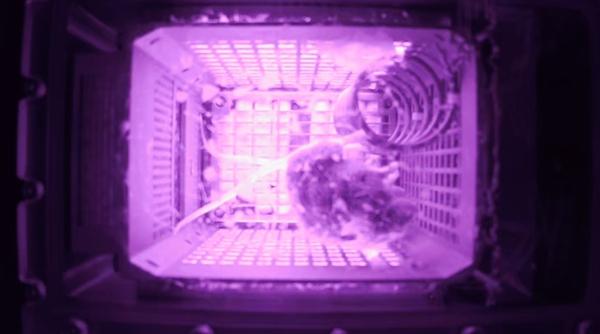
Core Viewpoint - The successful reproduction of "space mice" after their return from a 14-day stay in the Chinese space station demonstrates that short-term space travel does not significantly affect the reproductive capabilities of mammals, providing valuable samples for future research on the impact of space environments on mammalian life [1][14]. Group 1: Space Mice Experiment - Six offspring from a pair of "space mice" are thriving after being born following their parents' return from space [1]. - The experiment marks China's first complete process of mammalian space experiments, including preparation, in-orbit experiments, and sample recovery [14]. - The research aims to provide insights into the effects of space environments on human health and reproductive capabilities [14]. Group 2: Behavioral Observations - "Space mice" exhibited stronger maternal instincts compared to ground control mice, showing a heightened desire to protect their offspring [5][6]. - The adaptation of "space mice" to the microgravity environment involved initial anxiety, which decreased over time as they became more comfortable [5]. - The study includes a control group of ground mice to compare behaviors and reproductive outcomes [5]. Group 3: Emergency Response and Adaptation - The research team faced a "food shortage" crisis during the mission due to an extended stay in space, prompting an emergency response to ensure the mice's survival [7][10]. - Alternative food sources, including soy milk, were identified and successfully tested for their suitability for the mice [10]. - An AI behavior monitoring system was developed to track the mice's activities and health, aiding in decision-making during the mission [10]. Group 4: Future Research Directions - Ongoing studies will focus on the growth and physiological changes of the offspring, as well as their reproductive capabilities, to explore the potential multigenerational effects of space environments [14]. - The findings from this research are expected to inform strategies for human space travel and health [14].

太空小鼠无人智能实验舱入轨开展试验
Ke Ji Ri Bao· 2025-12-17 00:46
Core Viewpoint - The collaboration between Northwestern Polytechnical University and Beijing Ziwei Yutong Technology Co., Ltd. has successfully launched an AI-assisted unmanned intelligent experimental cabin for space mice, marking a significant advancement in automated space research [1] Group 1: Project Overview - The experimental cabin was launched aboard the Di'er No. 5 space test vehicle using the Kuaizhou-11 Yao-8 rocket from the Jiuquan Satellite Launch Center [1] - The cabin carries two male mice, representing China's first fully automated unmanned intelligent platform for mammalian space experiments [1] Group 2: Research Focus - The primary objectives include validating the multifunctional life support system, lightweight intelligent monitoring technology for animal activities in orbit, and studying the survival instinct behavior of mice in extreme space environments [1] - The experiments will assess various cognitive and instinctive tests, including open field, shuttle, location preference, and social behavior [1] Group 3: Technological Contributions - The cabin is equipped with an implanted brain-machine interface microsystem, which will provide crucial data and technical support for China's deep space exploration life support research [1]
大化所研究员张洪章入选神舟二十一号乘组
Zhong Guo Hua Gong Bao· 2025-11-03 02:01
Core Points - The Shenzhou 21 manned mission is scheduled for launch on October 31 at 23:44, with a crew consisting of Zhang Lu, Wu Fei, and Zhang Hongzhang, the latter being a researcher from the Dalian Institute of Chemical Physics [2] - This mission marks the sixth manned flight during the space station application and development phase and the 37th flight of the manned space program, focusing on in-orbit crew rotation, scientific applications, and space experiments [2] - Zhang Hongzhang will conduct in-situ research on lithium-ion batteries in space, contributing to six scientific experiments with a total weight of 63.2 kilograms [2][3] Group 1 - Lithium-ion batteries are crucial for powering various space missions due to their lightweight and long lifespan [3] - The research aims to understand the performance evolution of lithium-ion batteries in space, providing theoretical support for future high-reliability applications [3] - The project will utilize the expertise of the payload specialist to conduct optical observations of lithium-ion batteries in microgravity, capturing the growth of lithium dendrites [3]
神二十乘组“太空实验+返前准备”双推进
Qi Lu Wan Bao· 2025-10-27 14:41
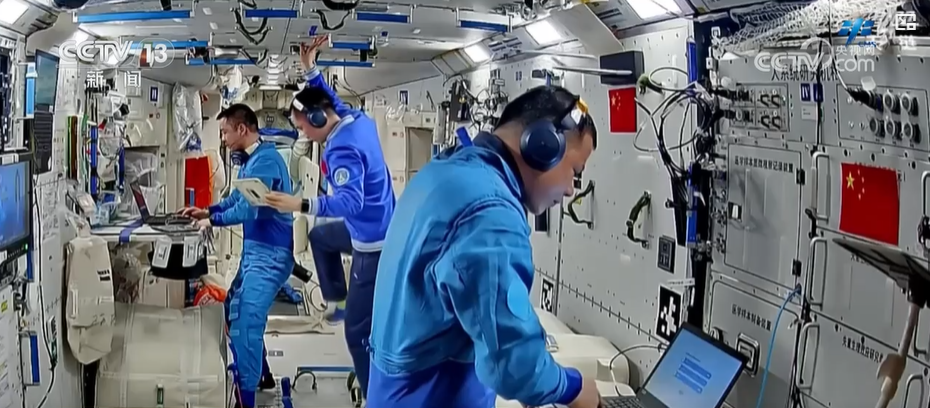
Core Points - The Shenzhou-21 manned spacecraft is scheduled for launch soon, following its successful transfer to the launch area with the Long March 2F rocket [1] - The Shenzhou-20 crew, currently in orbit for over 180 days, is conducting various experiments and preparing for their return [1][2] Group 1: Experiments and Research - The crew is performing experiments in space medicine, including assessments of trust and collaboration mechanisms, fine motor control, and emergency decision-making capabilities [1] - Research on skeletal muscle under different loads is being conducted, collecting data on foot pressure and joint kinematics during running and resistance exercises [1] - In the field of microgravity physics, experiments on inertial particle dynamics are ongoing, focusing on the effects of particle inertia and flow field fluctuations [1] Group 2: Equipment Maintenance and Health Monitoring - The crew is engaged in maintenance tasks such as cleaning and replacing samples in the containerless cabinet and maintaining the axial mechanism electrodes [2] - The upgraded space vegetable garden has yielded new crops, including carrots, following the successful harvest of "space lettuce" [2] - Health checks, including eye pressure and non-invasive cardiac function assessments, are being conducted to counteract the physiological effects of weightlessness [2]
天宫TV丨九月伊始工作稳步推进 “太空之家”新动态来了
Yang Shi Xin Wen· 2025-09-07 03:55
Core Viewpoint - The Shenzhou 20 crew is steadily advancing various space science experiments within the national space laboratory as of early September [1] Group 1 - The Shenzhou 20 crew has completed several tasks in the past week [1]
神二十乘组:太空实验室各项在轨实(试)验稳步推进
Yang Shi Wang· 2025-08-31 16:50
Group 1 - The Shenzhou-20 crew, consisting of astronauts Chen Dong, Chen Zhongrui, and Wang Jie, has been in space for over 120 days, focusing on various research areas including psychological and behavioral studies of astronauts [1] - In the field of microgravity physical science, the crew conducted high-temperature material experiments, achieving a new record by heating tungsten alloy to over 3100 degrees Celsius, marking the highest heating temperature in international space material science experiments [2] - The crew is also working on extraterrestrial artificial photosynthesis technology, having completed multiple key technology verifications and gathered significant data on physical and chemical reactions in microgravity, which is crucial for developing new in-situ resource utilization technologies [2] Group 2 - In aerospace medicine, the crew performed experiments on fine motor control and trust and collaboration mechanisms, providing valuable data for ground researchers [3] - Ongoing collaboration experiments with flying robots are being conducted, enhancing human-robot cooperation methods [3] - Regular maintenance activities include organizing supplies and cleaning the cabin environment to ensure a comfortable and clean working space [5] Group 3 - Health maintenance activities included eye pressure and fundus examinations, as well as bone density tests, allowing ground researchers to closely monitor the astronauts' health status during their time in space [5]