AI跨平台开源

Search documents
谷歌开始大面积封禁OpenClaw用户账号!
猿大侠· 2026-02-28 13:31
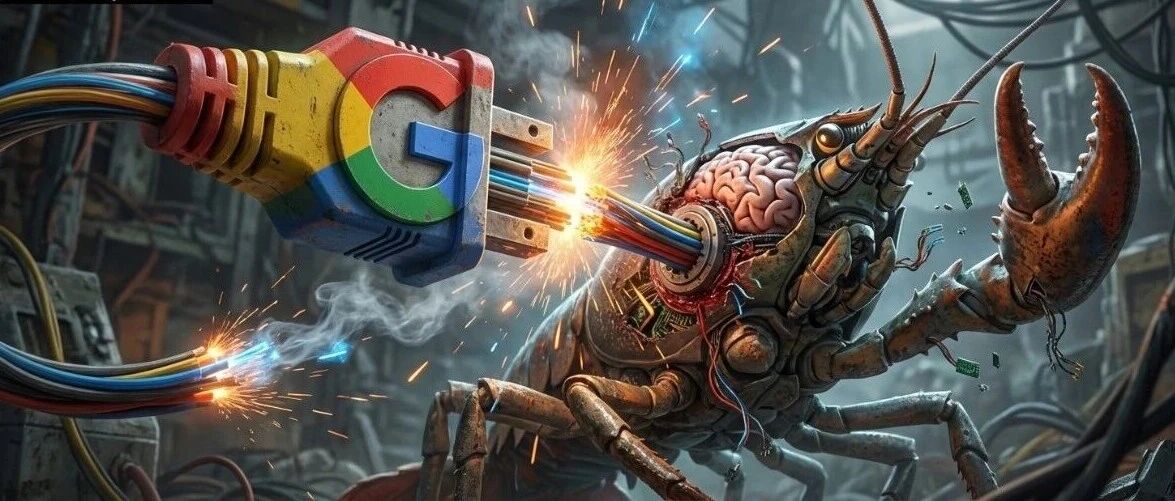
Core Viewpoint - Google has abruptly banned developer accounts using the open-source AI agent OpenClaw, which is perceived as a strategic move against the OpenAI camp, indicating a tightening grip by tech giants on AI ecosystems and posing significant supply risks for enterprises [1][11][28]. Group 1 - A large number of overseas developers' Google accounts were banned without prior warning or an appeals process [2][5]. - Users found themselves locked out not only from Google AI IDE Antigravity but also from associated core services like Gmail [6]. - Even high-paying enterprise customers, such as those on the Ultra plan paying $250 per month, were not spared from the bans [8]. Group 2 - The ban was attributed to OpenClaw, with Google DeepMind engineer Varun Mohan stating that there was a surge in malicious calls that disrupted service stability [9][10]. - The timing of the conflict is notable, as OpenClaw's creator, Peter Steinberger, had recently joined OpenAI to lead the development of the next generation of personal AI agents [12][13]. - The conflict represents a clash between emerging forces within the tech giants, with both sides now aligned with their respective corporate interests [15][17]. Group 3 - Google's action effectively cut off OpenClaw's access, blocking a low-cost pathway for OpenAI tools to utilize Google's strongest models [18]. - In response, Steinberger announced that OpenClaw would remove support for Google's architecture in future versions [19]. - OpenClaw had recently announced support for Google's Gemini 3.1 Pro just three days prior to the ban [20]. Group 4 - The incident highlights a growing trend where major AI model providers are unwilling to remain mere infrastructure providers [23]. - Companies like Anthropic have already implemented restrictions on high-frequency users of their models, indicating a shift towards tighter control [24][26]. - The open-source benefits of cross-platform interoperability are rapidly diminishing as tech giants seek to consolidate user data and revenue streams [27]. Group 5 - This situation serves as a warning for enterprises relying on third-party AI agents, as their core business logic is now at risk of sudden disruptions [28][29]. - The lack of negotiation power for companies when model providers change compliance terms poses a significant threat [30][32]. - The deep integration of account systems reveals systemic risks, where a single violation can incapacitate an entire development team's communication systems [31][32]. Group 6 - Technology executives are now compelled to reassess their existing architectures, as previously exploited low-cost access routes are being closed off [33]. - Future large-scale deployments of AI agents within enterprises may require either local private deployments or expensive official API contracts [33]. - The tightening of control by major firms indicates a shift towards a more closed ecosystem, challenging the notion of an open-source utopia [34][35].