Antigravity

Search documents
谷歌的龙虾,名叫“史密斯特工”,《黑客帝国》真降临了?
凤凰网财经· 2026-03-29 10:49
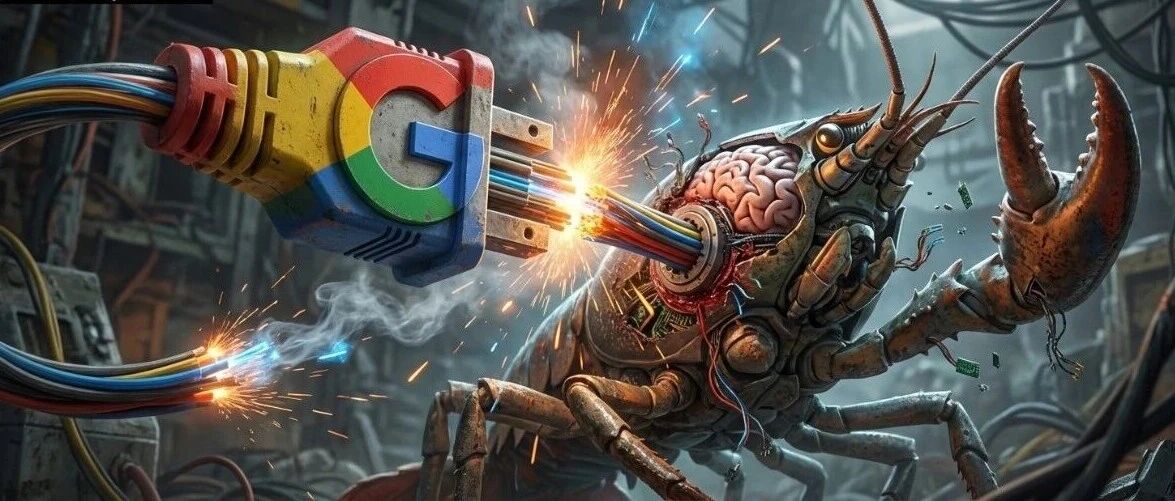
Core Insights - The article discusses Google's development of an AI agent named Smith, which is designed to integrate seamlessly with Google's existing tools and enhance productivity in workflows [4][9][10]. Group 1: Overview of Smith - Smith is not a typical prototype; it has moved beyond the proof-of-concept stage and is actively used within Google, indicating high internal demand [12][13]. - It functions as a background execution agent, capable of running tasks asynchronously even when employees are not actively using their computers [16][17]. - Smith is built on Google's Antigravity platform, allowing it to utilize various internal tools and integrate into workflows effectively [21][22]. Group 2: Capabilities of Smith - Smith can assist with software engineering tasks, call internal tools, and access documents based on employee permissions, indicating a structured capability [24][25][26]. - It is designed to operate within Google's internal communication tools, enhancing collaboration [27]. - The agent's ability to execute tasks in a more integrated manner than competitors like OpenClaw is highlighted, as it can directly access Google's ecosystem [33]. Group 3: Strategic Importance - Smith represents a significant step in Google's strategy to enhance AI usage across teams, aiming to streamline workflows and improve efficiency [33][36]. - The development of Smith aligns with Google's broader vision of creating a new infrastructure for AI, moving from merely organizing information to organizing actions [71][72]. - The success of Smith is crucial for Google's future direction, as it could determine the company's ability to scale AI solutions effectively [74][86].


谷歌开始大面积封禁OpenClaw用户账号!
猿大侠· 2026-02-28 13:31
Core Viewpoint - Google has abruptly banned developer accounts using the open-source AI agent OpenClaw, which is perceived as a strategic move against the OpenAI camp, indicating a tightening grip by tech giants on AI ecosystems and posing significant supply risks for enterprises [1][11][28]. Group 1 - A large number of overseas developers' Google accounts were banned without prior warning or an appeals process [2][5]. - Users found themselves locked out not only from Google AI IDE Antigravity but also from associated core services like Gmail [6]. - Even high-paying enterprise customers, such as those on the Ultra plan paying $250 per month, were not spared from the bans [8]. Group 2 - The ban was attributed to OpenClaw, with Google DeepMind engineer Varun Mohan stating that there was a surge in malicious calls that disrupted service stability [9][10]. - The timing of the conflict is notable, as OpenClaw's creator, Peter Steinberger, had recently joined OpenAI to lead the development of the next generation of personal AI agents [12][13]. - The conflict represents a clash between emerging forces within the tech giants, with both sides now aligned with their respective corporate interests [15][17]. Group 3 - Google's action effectively cut off OpenClaw's access, blocking a low-cost pathway for OpenAI tools to utilize Google's strongest models [18]. - In response, Steinberger announced that OpenClaw would remove support for Google's architecture in future versions [19]. - OpenClaw had recently announced support for Google's Gemini 3.1 Pro just three days prior to the ban [20]. Group 4 - The incident highlights a growing trend where major AI model providers are unwilling to remain mere infrastructure providers [23]. - Companies like Anthropic have already implemented restrictions on high-frequency users of their models, indicating a shift towards tighter control [24][26]. - The open-source benefits of cross-platform interoperability are rapidly diminishing as tech giants seek to consolidate user data and revenue streams [27]. Group 5 - This situation serves as a warning for enterprises relying on third-party AI agents, as their core business logic is now at risk of sudden disruptions [28][29]. - The lack of negotiation power for companies when model providers change compliance terms poses a significant threat [30][32]. - The deep integration of account systems reveals systemic risks, where a single violation can incapacitate an entire development team's communication systems [31][32]. Group 6 - Technology executives are now compelled to reassess their existing architectures, as previously exploited low-cost access routes are being closed off [33]. - Future large-scale deployments of AI agents within enterprises may require either local private deployments or expensive official API contracts [33]. - The tightening of control by major firms indicates a shift towards a more closed ecosystem, challenging the notion of an open-source utopia [34][35].

9万次贡献、一夜爆红!OpenClaw之父:AI 时代,一个开发者如何单挑整个生态
AI科技大本营· 2026-02-27 11:11
Core Viewpoint - Google's announcement to restrict developers' access to its "Antigravity" platform due to "malicious usage" has sparked significant backlash from the developer community, highlighting issues of communication and support [1][2][3]. Group 1: Google's Actions and Community Response - Google cited an increase in malicious usage of the Antigravity backend, which led to service quality degradation for regular users [2]. - Users expressed dissatisfaction on platforms like Hacker News and Reddit, criticizing Google's lack of warning and poor communication [3]. Group 2: Peter Steinberger and OpenClaw - Peter Steinberger, founder of OpenClaw, discussed the journey of creating the tool and its unexpected rise, emphasizing the importance of creativity and exploration in development [5][7][8]. - Steinberger's experience with AI tools, particularly Codex, led to a realization of the potential for autonomous problem-solving by AI [11][19]. Group 3: Development Philosophy and Advice - Steinberger advocates for a playful approach to development, encouraging creators to build what they desire without overcomplicating their processes [15][20]. - He emphasizes that those who embrace AI tools with a creative mindset will be more successful than those who do not [23][24]. Group 4: Community and Open Source Dynamics - The rapid growth of OpenClaw has led to community-driven events, showcasing the enthusiasm and creativity of its users [12][13]. - Steinberger noted the challenges of managing a growing number of pull requests, shifting focus from code quality to understanding the intent behind contributions [14][22].

谷歌连夜封禁,全行业集体堵截,OpenClaw 到底动了谁的蛋糕?
凤凰网财经· 2026-02-26 11:54
Core Viewpoint - The article discusses the controversy surrounding OpenClaw, an AI tool that has faced backlash from Google and other AI companies due to its perceived misuse of their services and the potential security risks it poses [2][11]. Group 1: Incident Overview - Google has initiated a ban on users of OpenClaw who were using its Antigravity service to access the Gemini model, citing "massive malicious usage" that degraded service quality for legitimate users [4][5]. - The ban peaked around February 23, with hundreds of accounts being banned overnight, leading to significant user complaints about lack of warnings and continued billing despite account suspension [8][13]. - OpenClaw's founder, Peter Steinberger, criticized Google's approach and indicated he might remove support for Google services in OpenClaw [9][10]. Group 2: Technical Aspects - OpenClaw utilizes OAuth for access, which is compliant with standard protocols, but Google’s service terms did not explicitly prohibit such integrations, leading to confusion among users [14][15]. - The "heartbeat" mechanism of OpenClaw, which checks for tasks at regular intervals, significantly increases token consumption, leading to excessive costs for users [16][20]. - Users reported that the high frequency of API calls, driven by the growing context size, resulted in costs that could reach between $1,000 to $3,600 monthly for average users [24]. Group 3: Industry Response - The actions taken by Google are part of a broader industry trend, with Anthropic also updating its terms to prohibit the use of its services through third-party tools like OpenClaw [26][32]. - Other tech companies have expressed concerns about OpenClaw, with some banning its use on company devices due to security risks associated with its high system permissions [34][36]. - The article highlights a shift in the AI industry where companies are tightening control over their services to protect their business models from tools like OpenClaw that exploit subscription pricing [39][40]. Group 4: Security Concerns - Gartner's report criticized OpenClaw for presenting unacceptable cybersecurity risks, urging companies to block its use and manage credentials carefully [46]. - Research indicated that over 42,000 instances of OpenClaw were exposed online, with many lacking proper security measures, making them vulnerable to attacks [47]. - The article emphasizes that the security issues are symptomatic of deeper conflicts regarding the business models of AI companies, as OpenClaw threatens the balance of subscription and token-based revenue [51][53]. Group 5: Future Implications - The article suggests that OpenClaw represents a pivotal moment in the AI industry, raising questions about the future of open versus closed ecosystems in AI development [60]. - The contrasting approaches of companies like OpenAI, which supports OpenClaw, versus those like Google and Anthropic, which seek to restrict it, highlight the ongoing battle for control in the AI landscape [43][58].

速递 | 谷歌急眼了!OpenClaw用户集体被封
未可知人工智能研究院· 2026-02-25 06:29
Core Viewpoint - The essence of technology is to serve people, not to become a tool for monopoly and restriction. The recent actions by Google against OpenClaw highlight the tension between platform control and user autonomy in the AI landscape [1]. Group 1: Google's Actions Against OpenClaw - Google has banned OpenClaw, an open-source AI framework, leading to account restrictions for users who integrated it with Google's Gemini, indicating a zero-tolerance policy for using third-party tools [6][11]. - The reaction from Google is not merely about limiting usage but reflects a deeper concern over the potential for users to exploit subscription services for automated, continuous production, which could disrupt Google's pricing and operational models [11][12]. - The core issue is Google's desire to reclaim control over the entry points to its services, as the use of OpenClaw threatens to shift user engagement away from Google's official channels [13]. Group 2: Implications for Domestic Users - In contrast to Google's restrictive measures, domestic players like Baidu and NetEase are lowering barriers to entry by promoting simplified deployments of similar frameworks, which could democratize access to AI tools [15]. - The emergence of domestic alternatives suggests a shift towards creating a more accessible AI ecosystem, potentially leading to a broader range of applications and services [16]. - The focus for domestic developers should be on creating compliant, reusable AI solutions that can integrate seamlessly into existing business processes, rather than merely replicating existing models [19]. Group 3: Market Dynamics and Future Opportunities - The current phase in the AI sector is characterized by a restructuring of order, where major platforms are using account bans to establish market norms, indicating a shift from technical competition to regulatory frameworks [22]. - The most valuable skills in the future will not be those of individuals who can ask questions but rather those who can effectively manage and utilize AI systems within organizational contexts [20]. - The opportunity lies in developing AI solutions that are not only functional but also compliant and adaptable, enabling businesses to leverage AI as a deliverable workforce [19].

An Inference Tsunami May Be Coming for Google Cloud
247Wallst· 2026-02-18 17:50
Core Insights - Google Cloud experienced a 48% year-over-year growth, outpacing Microsoft's cloud growth rate, while Microsoft stock fell by 27% [1] - Alphabet's stock is currently trading at 28 times trailing price-to-earnings (P/E), which is considered cheap compared to Microsoft's 25 times P/E [1] - Significant investments in AI, including a projected $185 billion in spending, are seen as necessary for maintaining competitiveness in the AI sector [1] Group 1: Company Performance - Google Cloud's growth rate of 48% year-over-year indicates strong performance and market demand [1] - Alphabet's stock is viewed as undervalued given its growth trajectory and advancements in AI technology [1] - The company's AI innovations, such as the Genie world model and Antigravity platform, are expected to disrupt various industries [1] Group 2: Market Context - The Magnificent Seven tech companies are leading the AI compute boom, with Alphabet positioned as a key player [1] - The competitive landscape is intensifying, with firms like Microsoft facing challenges due to their recent stock performance [1] - The AI-native platforms being developed by Google could lead to significant market shifts and opportunities for growth [1]
未来两年软件工程展望:从写代码到管 AI,程序员正分化成两种职业
AI前线· 2026-02-12 05:00
Core Viewpoint - The software industry is at a pivotal moment where AI programming has evolved from enhanced autocomplete to autonomous development agents, leading to a shift in hiring practices and developer roles [2]. Group 1: Junior Developer Issues - The recruitment of junior developers may decline due to AI automating entry-level tasks, but could rebound as software permeates various industries, necessitating different survival strategies [4]. - A study by Harvard found that when companies adopt generative AI, the employment rate of junior developers dropped by approximately 9-10% over six quarters, while senior developers' employment remained stable [4]. - The U.S. Bureau of Labor Statistics predicts that software jobs will still grow by about 15% from 2024 to 2034, indicating a potential demand for human developers to leverage AI opportunities [5]. Group 2: Skills Issues - As AI writes most of the code, core programming skills may degrade, or become more critical as developers need to supervise AI outputs [9]. - Currently, 84% of developers regularly use AI tools, leading to a shift in skill sets from implementing algorithms to effectively querying AI and validating its outputs [9]. - The future may see a divide among developers, with some relying heavily on AI and others advocating for foundational coding skills to handle AI-generated errors [11]. Group 3: Role Issues - Developer roles may shrink to limited auditing tasks or expand to key coordinators managing AI-driven systems, with value creation extending beyond mere coding [15]. - In a pessimistic scenario, developers may become mere auditors of AI outputs, while in a more optimistic view, they could evolve into architects or product strategists overseeing AI integration [16]. Group 4: Expert vs. Generalist Issues - Specialists in narrow fields may face risks of obsolescence due to automation, while T-shaped engineers with broad adaptability and deep expertise in one or two areas are increasingly favored [22]. - Nearly 45% of engineering roles now expect proficiency across multiple domains, highlighting the shift towards versatile skill sets [24]. Group 5: Education Issues - The traditional four-year computer science degree is being challenged by faster learning paths like coding bootcamps and employer training programs, as universities struggle to keep pace with rapid industry changes [30]. - By 2024, nearly 45% of companies plan to eliminate degree requirements for certain positions, reflecting a shift towards skills-based hiring [31].

月入9万,已经有大学生用Vibe Coding捞到第一桶金了
36氪· 2026-02-11 13:35
Core Viewpoint - The article discusses the rise of "Vibe Coding," a concept that democratizes programming by allowing individuals with little to no coding experience to create applications using AI tools, thus reshaping the landscape of technology and entrepreneurship [4][5]. Group 1: Vibe Coding and Its Impact - Vibe Coding, introduced by Andrej Karpathy, allows users to develop applications without deep coding knowledge, making it accessible to a broader audience, including children and non-technical individuals [4][5]. - The popularity of Vibe Coding has led to a surge in AI programming tools, with companies like Baidu and Tencent reporting significant portions of their code being generated or assisted by AI [11][12]. - The article highlights various success stories of individuals using Vibe Coding, such as a student who earns substantial income by leveraging AI tools for development and sharing accounts on platforms like Xianyu [19][22]. Group 2: Entrepreneurial Opportunities - The rise of Vibe Coding is seen as beneficial for "one-person companies," enabling individuals to start businesses with minimal resources and technical skills [36][39]. - Success stories include a programmer who founded a Vibe Coding company and was later acquired for a significant sum, illustrating the potential for high returns in this new landscape [37]. - However, the article also notes the challenges faced by solo entrepreneurs, such as customer service demands and the need for unique value propositions to stand out in a crowded market [40][39]. Group 3: Demographics and Perspectives - The article features a diverse range of users, from young students to middle-aged professionals, all finding value in Vibe Coding for personal and professional development [32][43]. - It emphasizes that while technical skills are becoming less critical, creativity, business insight, and resource integration remain essential for success in the AI-driven economy [45]. - The fast-paced nature of the AI industry requires continuous learning and adaptation, as many individuals are actively engaged in sharing knowledge and experiences late into the night [46].

争夺AI制高点,谷歌和Anthropic必有一战
美股研究社· 2026-01-23 10:55
Core Viewpoint - Anthropic is aggressively seeking a $25 billion funding round to enhance its competitive edge in the AI programming tools market, where developer experience and agent capabilities are becoming crucial [5][43]. Group 1: Anthropic's Position and Strategy - Anthropic's Claude Code holds a 52% market share in the AI programming tools sector, demonstrating its dominance over competitors [5]. - The company has developed Cowork, a desktop application that allows Claude to access user files and execute complex tasks, expanding its application beyond mere programming [22][25]. - Anthropic's revenue growth is significant, with projected annual revenue increasing from $1 billion in 2025 to $15.2 billion in 2026, indicating a 15-fold growth rate [45][46]. Group 2: Google's Competitive Landscape - Google is positioned as a challenger in the AI programming space, with its Antigravity tool set to launch in late 2025, which emphasizes agent-first design [6][8]. - Antigravity's adoption rates are reportedly lower than established tools like Cursor and GitHub Copilot, indicating a struggle to gain traction in the developer community [13][14]. - Despite its resources, Google's full-stack advantages have not translated into competitive strength in the programming tools market [20][26]. Group 3: Hardware and Infrastructure - Anthropic has secured a deal to purchase nearly 1 million Google TPU v7 chips for $42 billion, which will provide over 1GW of computing capacity [30][31]. - The TPU v7 offers significant cost and performance advantages over NVIDIA GPUs, with a 30-44% reduction in total ownership costs and a nearly 10-fold performance increase compared to its predecessor [33][34]. - This partnership allows Anthropic to reduce dependency on NVIDIA and ensures a stable supply chain for its AI model training needs [38][39]. Group 4: Investment and Market Dynamics - Anthropic's valuation is projected to reach $350 billion following its upcoming funding round, a significant increase from $61.5 billion in March 2024 [43]. - The investment landscape is shifting, with firms like Sequoia Capital diversifying their bets across multiple AI companies, indicating a belief in a multi-winner scenario in the AI sector [50][52]. - The capital-intensive nature of AI development is creating high barriers to entry, with only companies capable of securing substantial funding able to compete effectively [53][54]. Group 5: Future Outlook - The competition between Google and Anthropic is characterized by different strategic focuses, with Google leveraging its infrastructure and Anthropic concentrating on developer tools [59][60]. - The battle for dominance in AI programming tools is critical, as developers are key to shaping the future of software production [61].

争夺AI制高点,谷歌和Anthropic必有一战
虎嗅APP· 2026-01-20 10:17
Core Viewpoint - Anthropic is aggressively seeking a $25 billion funding round to enhance its competitive edge in the AI programming sector, particularly with its product Claude Code, which has captured a 52% market share [4][6][32]. Group 1: Competitive Landscape - The competition in AI programming has shifted from model parameters to developer experience and agent capabilities, with companies like Anthropic and Google vying for dominance [5][10]. - Anthropic's Claude Code has established itself as a leader, allowing rapid development with minimal resources, while Google is positioned as a challenger with its upcoming Antigravity tool [6][10]. - Google’s Antigravity, despite its innovative features, has not performed as expected in the market, falling behind established tools like Cursor and GitHub Copilot [13][20]. Group 2: Product Development and Strategy - Anthropic's Cowork application allows Claude to perform complex tasks directly on user computers, showcasing its versatility beyond just programming [19][20]. - Google’s Antigravity, while supporting multiple AI models, lacks the intuitive user interface that Cowork offers, limiting its appeal [10][20]. - The collaboration between Google and Anthropic on TPU chips highlights a strategic partnership that benefits both companies, with Anthropic securing essential computational resources [21][28]. Group 3: Financial Performance and Funding - Anthropic's valuation is projected to reach $350 billion following its upcoming funding round, a significant increase from $61.5 billion in March 2024 [32][34]. - The company is expected to achieve a revenue of $1 billion in 2025, growing to $15.2 billion in 2026, indicating a robust business model based on real revenue rather than subsidies [34][35]. - The funding round led by Coatue Management and GIC reflects a shift in investment strategy, with firms like Sequoia Capital diversifying their bets across multiple AI companies [36][38]. Group 4: Market Dynamics and Future Outlook - The AI programming market is characterized by high capital requirements, with costs for training advanced models reaching hundreds of millions, which limits competition to well-funded players [39][40]. - Anthropic's focus on developing Claude has allowed for rapid iterations and market capture, contrasting with Google's broader focus that may dilute its effectiveness in this niche [41][42]. - The ongoing battle for dominance in AI programming is crucial, as developers are key to shaping the future of software production [45].