
AI CEO

Search documents
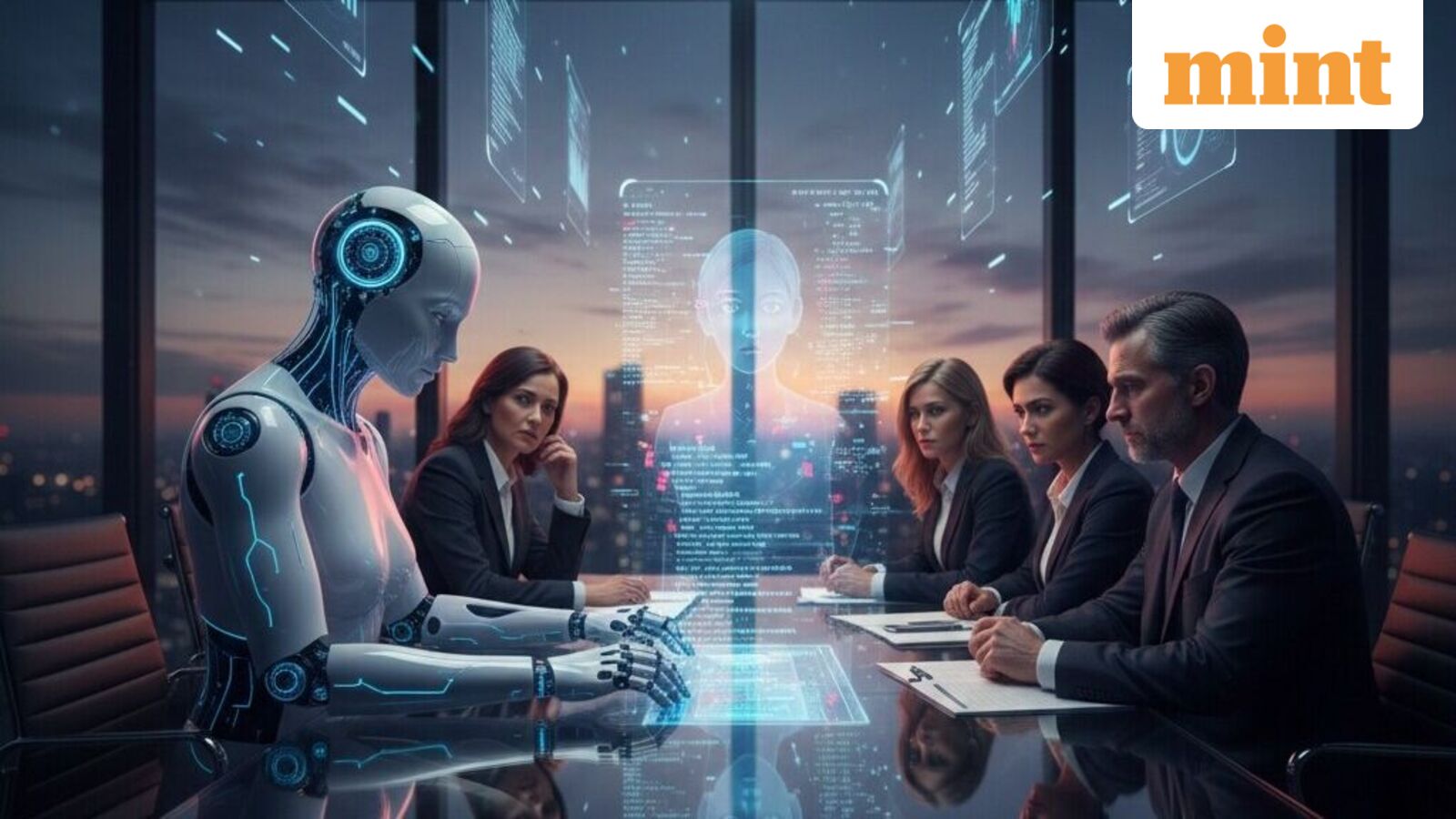
How do you feel about your next boss being an AI?
MINT· 2026-01-10 01:30
Core Insights - The article discusses the emergence of AI-led management in companies, highlighting the balance between data-driven decision-making and human leadership qualities [2][10] Group 1: AI Leadership Examples - Mika, the AI CEO of Dictador, is designed to enhance the brand's technological image while managing client identification and project management through data analysis [3][4] - Ms. Tang Yu, appointed by NetDragon Websoft, focuses on operational excellence, streamlining processes, and enhancing work quality, showcasing the potential of AI in executive roles [6][7] Group 2: Performance Metrics - After Tang Yu's appointment, NetDragon experienced a 10% increase in stock value and a 15% reduction in operational delays, demonstrating the efficiency gains from AI leadership [8] - Despite these improvements, Tang Yu could not prevent a 27.9% year-on-year decrease in total revenue, indicating limitations in AI's ability to navigate broader economic challenges [9] Group 3: Leadership Dynamics - The article emphasizes that while AI can optimize processes, it lacks the ability to inspire teams and build trust, which are essential for effective leadership [10][11] - A partnership model between AI and human leaders is suggested, where machines handle data and humans manage interpersonal relationships [11][12]

Sam Altman:OpenAI,要做第一家“AI CEO”大公司
3 6 Ke· 2025-11-07 02:32
Core Insights - OpenAI CEO Sam Altman envisions AI transitioning from a supportive tool to an autonomous organizational role, potentially managing entire departments and eventually becoming a CEO [1][2][11] - The organization is already experimenting with AI taking over internal processes, aiming for AI to manage complete departments within a few years [6][12] - Altman emphasizes that the main challenge is not technological but rather the willingness of humans to relinquish control to AI [16][25] Group 1: AI as an Organizational Role - Most companies currently view AI merely as a tool for efficiency, while Altman proposes it should actively manage tasks and make decisions [3][7] - Altman believes that AI can take over any department and eventually the entire company, highlighting that this transition is not a distant dream but a planned initiative [9][11] - The goal is to transform AI from a productivity tool into a trusted decision-making entity within organizations [14][25] Group 2: Implementation Roadmap - Altman outlines a clear roadmap for AI to gradually take over responsibilities, starting with individual departments and expanding to the entire organization [11][12] - OpenAI's internal practices include using AI agents for task collaboration and allowing human employees to focus on core tasks [13][14] - The initial steps involve AI participating in goal setting, information retrieval, and preliminary decision-making [13][14] Group 3: Trust and Organizational Change - The primary barrier to implementing AI CEOs is the lack of trust in AI compared to human managers, despite AI's superior performance in certain tasks [16][17] - Altman suggests that organizations need to rethink their structure and decision-making processes to accommodate AI management [18][24] - The challenge lies in overcoming the inertia of traditional work methods and the reluctance to change established practices [19][25] Group 4: Value of AI CEOs - Altman argues that the true value of an AI CEO lies not in cost-cutting but in enabling organizations to achieve previously unattainable goals [26][32] - AI can relieve human managers from routine decisions, allowing them to focus on strategic and creative tasks [27][28] - The future of successful companies may involve a small number of humans working alongside an AI that manages resources and operations [31][32] Conclusion - OpenAI is actively redesigning its organizational framework to integrate AI into decision-making roles, moving beyond traditional uses of AI as a tool [33] - The transition from AI as a tool to a management role is not just a vision but a concrete plan that is already in progress [33]