AI for Science(科学智能)

Search documents
AI时代,科学何以永恒
2 1 Shi Ji Jing Ji Bao Dao· 2026-02-05 14:35
Core Insights - The rise of AI for Science is fundamentally changing the paradigm of scientific research, raising questions about the value of human scientific inquiry as AI can predict protein structures and execute thousands of experimental simulations [1][2] - The World Leading Scientists Summit (WLS) reached a consensus that foundational science remains a reliable force amid uncertainty, with significant breakthroughs often arising from the unknown, which algorithms struggle to reach [1][2] Group 1: The Role of AI in Science - AI's predictive capabilities are built on vast experimental data, exemplified by DeepMind's AlphaFold, which excels in predicting known molecular structures but struggles with entirely new ones [2][3] - Scientists believe that while AI can accelerate scientific processes, it cannot replace the unique role of scientists in conceptualizing ideas and solving problems, as discovery often requires transcending existing knowledge frameworks [3][4] Group 2: The OPENSCI Initiative - The OPENSCI Initiative aims to systematically reshape the value chain and collaboration model in research through AI and blockchain technology, ensuring that science serves humanity [5][7] - The initiative features a platform that establishes a value mechanism for scientific contributions and develops AI-driven tools to support researchers, enhancing efficiency and transparency in the scientific process [5][7] Group 3: Future of Scientific Research - The OPENSCI platform consists of a robust three-layer architecture, including the Artificial Scientific Intelligence (ASCI), which signifies a shift towards AI that can autonomously generate and validate scientific knowledge [7] - The future of science is seen as a proactive endeavor, with the potential for significant breakthroughs in foundational science driven by the OPENSCI initiative [7]


生物制造的底层逻辑与产业链分析(附100佳核心企业)
材料汇· 2026-01-13 11:56
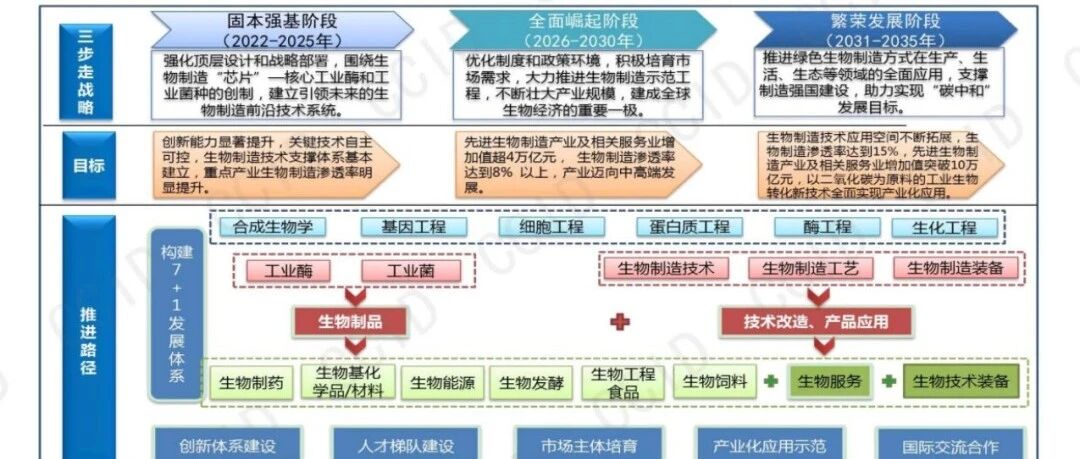
Core Viewpoint - Biomanufacturing is identified as a key future industry in China's 14th Five-Year Plan, expected to create a market worth trillions in the next decade, driven by advancements in technology and policy support [2][5]. Group 1: Industry Overview - The biomanufacturing industry in China is nearing a total scale of 1 trillion yuan, with fermentation capacity accounting for over 70% of the global total [2][4]. - Shenzhen has become a hub for biomanufacturing, with 40% of newly established companies in this sector located there in the past three years, showcasing a significant industry clustering effect [4]. - The industry is supported by a comprehensive system of policy, funding, and technological advancements as outlined in the 14th Five-Year Plan [5]. Group 2: Key Enterprises - The article identifies 100 core enterprises in biomanufacturing, spanning the entire industry chain from upstream technology development to downstream commercial applications [7]. - Notable companies include: - Huada Technology, a leader in gene sequencing technology [17]. - Kaisa Biotech, which has achieved over 80% market share in the global long-chain dicarboxylic acid market [21]. - WuXi Biologics, representing China's capabilities in the global biopharmaceutical industry [27]. Group 3: Upstream Innovations - The upstream sector focuses on providing essential tools and technologies for research and production, with a shift towards domestic innovation and smart integration [16]. - Key trends include the localization of critical tools and the rise of AI-driven platform companies that enhance research efficiency [16][17]. - Over 75% of the 20 identified upstream enterprises are private, indicating a vibrant innovation landscape [16]. Group 4: Midstream Developments - The midstream sector is characterized by a dual structure of "upgraders" and "disruptors," with companies like Meihua Biotech and Chuaning Biotech leading in traditional fermentation while others like Kaisa Biotech innovate with new bioproducts [20][21]. - This segment contains the highest number of enterprises, with 40 out of the 100 identified companies, emphasizing the importance of production capacity and cost control [20]. Group 5: Downstream Applications - The downstream sector serves as a critical market for biomanufacturing, focusing on medical, consumer, and agricultural applications [25]. - Companies like Muyuan Foods exemplify the cost-saving potential of biomanufacturing in agriculture, while WuXi Biologics and Kelaiying represent the pharmaceutical sector's output capabilities [26][27]. - Future trends indicate a broadening of applications into new areas such as biobased textiles and environmental remediation [27].