
生物反应器

Search documents
6亿融资耗尽、并购砸超11亿,多宁生物“烧钱”扩张难换盈利
3 6 Ke· 2026-02-04 12:16
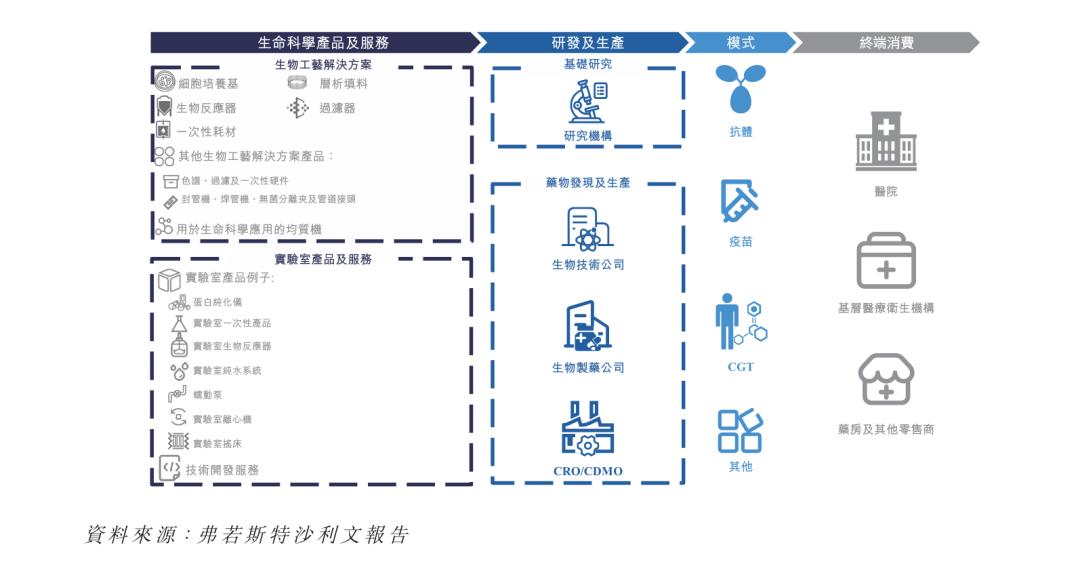
Core Viewpoint - Doning Bio, a domestic provider of serum-free culture media, is attempting its third IPO submission to the Hong Kong Stock Exchange, aiming for profitability by the third quarter of 2025, despite facing significant challenges including related party transactions, goodwill impairment risks, and short-term debt pressures [1][2][26]. Company Overview - Founded in 2005, Doning Bio started as a small technology company focused on cell culture media, which is essential for the growth of animal cells used in research and biopharmaceutical production [3]. - The company has evolved into a one-stop solution provider for biopharmaceutical processes, offering products and services that cover the entire development and commercialization process [4][5]. Business Performance - Doning Bio's revenue increased from 597 million RMB in 2021 to 840 million RMB in 2024, but the growth rate significantly slowed from 208% to 3.54% [7]. - The company reported a net profit of 234 million RMB in 2021, which plummeted to 38 million RMB in 2022, and further turned into a net loss of 310 million RMB in 2023, with a slight recovery to a loss of 24 million RMB in 2024 [7][8]. Financial Challenges - The company faces a significant financial burden with short-term borrowings of 389 million RMB against cash reserves of only 302 million RMB, indicating a tight liquidity situation [21]. - Doning Bio's goodwill stands at 843 million RMB, raising concerns about potential impairment if the performance of acquired entities does not meet expectations [1][19]. Investment and Acquisition Strategy - Since 2016, under the leadership of CEO Wang Meng, Doning Bio has pursued an aggressive acquisition strategy, spending over 1.142 billion RMB in cash for acquisitions to build a comprehensive biopharmaceutical service chain [18][19]. - The company has raised a total of 600 million RMB in financing prior to its IPO, but these funds have been fully utilized, primarily for R&D and acquisitions [14][15]. Related Party Transactions - WuXi Biologics, as the second-largest shareholder and primary customer, has raised concerns regarding the fairness of related party transactions, which accounted for significant portions of Doning Bio's revenue [26]. - In the years 2023 to 2025, WuXi Biologics contributed 1.2 billion RMB, 930 million RMB, and 800 million RMB to Doning Bio's revenue, representing 14.9%, 10.9%, and 12.1% of total revenue respectively [26]. IPO Prospects - The upcoming IPO is seen as a critical opportunity for Doning Bio to raise funds to alleviate financial pressures and support strategic expansion, but the company must demonstrate sustainable profitability and operational independence to succeed [23][24][26].

多宁生物递表港交所 摩根士丹利与华泰国际担任联席保荐人
Zheng Quan Shi Bao Wang· 2026-01-19 01:20
Core Viewpoint - Doning Bio has submitted its prospectus to the Hong Kong Stock Exchange, with Morgan Stanley and Huatai International serving as joint sponsors [1] Group 1: Company Overview - Doning Bio operates through a dual-driven model of "bioprocess solutions" and "laboratory products and services," providing high-quality media, bioreactors, single-use products, and filters to global pharmaceutical companies, CROs/CDMOs, and research institutions [1] - The company ranks sixth among all suppliers in China's bioprocess solutions market based on 2024 revenue, and second among local suppliers [1] - Doning Bio leads in several key product categories, including cell culture media, bioreactors, single-use products, and filters among domestic enterprises [1] Group 2: Business Model and Clientele - The company supports pharmaceutical companies, CROs/CDMOs, and research institutions by offering a comprehensive range of reagents, consumables, and equipment covering all major steps of bioprocessing [1] - Doning Bio has served over 3,700 clients, with approximately 80% of major clients opting for long-term cooperation [1] Group 3: Fundraising and Future Plans - The funds raised from the IPO will primarily be used for continuous product development and enhancing the competitive advantage of comprehensive solutions [1] - The company plans to establish R&D centers, production bases, and sales networks overseas to further expand its global market share [1] - There will be an enhancement of production facilities and ongoing investment in R&D to maintain technological leadership [1]
Shanghai Duoning Biotechnology Co., Ltd.(H0327) - Application Proof (1st submission)
2026-01-17 16:00
The Stock Exchange of Hong Kong Limited and the Securities and Futures Commission take no responsibility for the contents of this Application Proof, make no representation as to its accuracy or completeness and expressly disclaim any liability whatsoever for any loss howsoever arising from or in reliance upon the whole or any part of the contents of this Application Proof. Application Proof of Shanghai Duoning Biotechnology Co., Ltd. 上海多寧生物科技股份有限公司 (the "Company") (A joint stock company incorporated in the ...
生物制造的底层逻辑与产业链分析(附100佳核心企业)
材料汇· 2026-01-13 11:56
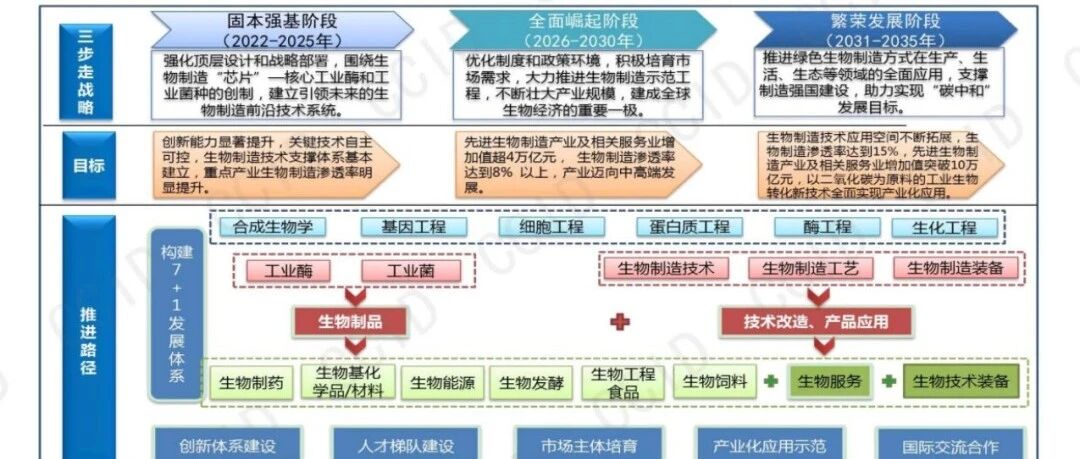
Core Viewpoint - Biomanufacturing is identified as a key future industry in China's 14th Five-Year Plan, expected to create a market worth trillions in the next decade, driven by advancements in technology and policy support [2][5]. Group 1: Industry Overview - The biomanufacturing industry in China is nearing a total scale of 1 trillion yuan, with fermentation capacity accounting for over 70% of the global total [2][4]. - Shenzhen has become a hub for biomanufacturing, with 40% of newly established companies in this sector located there in the past three years, showcasing a significant industry clustering effect [4]. - The industry is supported by a comprehensive system of policy, funding, and technological advancements as outlined in the 14th Five-Year Plan [5]. Group 2: Key Enterprises - The article identifies 100 core enterprises in biomanufacturing, spanning the entire industry chain from upstream technology development to downstream commercial applications [7]. - Notable companies include: - Huada Technology, a leader in gene sequencing technology [17]. - Kaisa Biotech, which has achieved over 80% market share in the global long-chain dicarboxylic acid market [21]. - WuXi Biologics, representing China's capabilities in the global biopharmaceutical industry [27]. Group 3: Upstream Innovations - The upstream sector focuses on providing essential tools and technologies for research and production, with a shift towards domestic innovation and smart integration [16]. - Key trends include the localization of critical tools and the rise of AI-driven platform companies that enhance research efficiency [16][17]. - Over 75% of the 20 identified upstream enterprises are private, indicating a vibrant innovation landscape [16]. Group 4: Midstream Developments - The midstream sector is characterized by a dual structure of "upgraders" and "disruptors," with companies like Meihua Biotech and Chuaning Biotech leading in traditional fermentation while others like Kaisa Biotech innovate with new bioproducts [20][21]. - This segment contains the highest number of enterprises, with 40 out of the 100 identified companies, emphasizing the importance of production capacity and cost control [20]. Group 5: Downstream Applications - The downstream sector serves as a critical market for biomanufacturing, focusing on medical, consumer, and agricultural applications [25]. - Companies like Muyuan Foods exemplify the cost-saving potential of biomanufacturing in agriculture, while WuXi Biologics and Kelaiying represent the pharmaceutical sector's output capabilities [26][27]. - Future trends indicate a broadening of applications into new areas such as biobased textiles and environmental remediation [27].


龙头股年内涨近2倍 制药装备迎来高景气
Xin Lang Cai Jing· 2025-12-25 12:40
Core Viewpoint - The pharmaceutical equipment industry is experiencing a recovery, with many listed companies showing a turning point in performance due to a resurgence in demand as the pharmaceutical sector enters an expansion phase [1][2][10]. Industry Recovery - The pharmaceutical equipment sector was previously in a downturn due to the global biopharmaceutical industry's cyclical decline, but by Q3 2025, most related companies have shown signs of recovery [2][12]. - The global capacity is entering an expansion phase, which is expected to significantly benefit the pharmaceutical equipment industry [1][15]. Company Performance - In Q3 2025, Chutian Technology reported revenues of 1.479 billion yuan and a net profit of 96.77 million yuan, with year-on-year growth of 10.17% in revenue and 192.50% in net profit [3][12]. - Dongfulong achieved revenues of 1.275 billion yuan and a net profit of 85.66 million yuan in Q3 2025, marking a significant improvement compared to the previous quarter [3][13]. - Despite a decline in revenue and net profit in the first half of 2025, Sensong International's new orders reached a historical high, driven by a surge in pharmaceutical contracts [4][14]. Contract Liabilities - Both Chutian Technology and Dongfulong have seen a continuous increase in contract liabilities, indicating a growing backlog of orders [4][13]. Capacity Expansion Plans - Major domestic companies like WuXi Biologics and Kangfang Biologics are set to initiate new capacity expansions in 2024, with significant increases in production capabilities [5][15]. - Internationally, multinational pharmaceutical companies are also advancing their global capacity layouts to enhance supply chain resilience, with substantial investments planned in the U.S. [5][16]. International Market Opportunities - The global pharmaceutical equipment market is projected to grow significantly, with domestic companies having substantial opportunities for international expansion [7][17]. - Domestic brands are increasingly competitive, with a notable shift towards local production capabilities, indicating a strong potential for import substitution [7][17]. Strategic Internationalization - Companies like Sensong International are leveraging their long-term technological expertise to enhance their international presence, aiming to capture new orders amid the ongoing industry transition [8][18]. - Dongfulong and Chutian Technology are actively expanding their overseas operations, with Dongfulong already achieving significant sales in international markets [9][19].

新方法可批量生产微型肺类器官
Ke Ji Ri Bao· 2025-12-05 01:21
Core Viewpoint - Researchers from the University of Duisburg-Essen have developed an automated method for mass-producing micro-lung organoids, which can effectively test experimental drugs and predict patient responses to treatments without using animal materials [1][2] Group 1: Development Process - The team selected stem cells and allowed them to proliferate in a culture dish before activating them to form small cell aggregates known as embryoid bodies [1] - These embryoid bodies were placed in a specialized bioreactor containing growth-promoting culture medium, while a control group of organoids was also artificially cultured [1] - After four weeks of growth in the bioreactor, the organoids were analyzed using microscopy, immunofluorescence, immunohistochemistry, and RNA sequencing to understand their development, cell types, and differences from traditionally cultured organoids [1] Group 2: Findings and Characteristics - Both groups of organoids developed lung-like structures with airway and alveolar characteristics, with RNA sequencing confirming the presence of typical epithelial and mesodermal lung cells [1] - Although the cell types in both organoid groups were similar, there were slight differences in proportions; for instance, the artificially cultured organoids contained more alveolar cells, while those in the bioreactor were larger with fewer alveolar structures [1] Group 3: Implications for Research - The bioreactor allows for the mass production of organoids, significantly reducing manual labor and potentially transforming lung disease research [2] - In the future, patients may utilize their own tissues to cultivate personalized organoids through this bioreactor, enabling pre-testing of treatment efficacy [2]
再造一个中国高技术产业,谁是未来十年引领之城?
Mei Ri Jing Ji Xin Wen· 2025-10-24 13:30
Core Insights - The upcoming "15th Five-Year Plan" emphasizes the construction of a modern industrial system and the strengthening of the real economy as a strategic priority, focusing on the development of emerging and future industries [1][2] Emerging Industries - The plan aims to cultivate new pillar industries, accelerating the development of strategic emerging industry clusters such as new energy, new materials, aerospace, and low-altitude economy, potentially creating several trillion-yuan markets [2] - Future industries like quantum technology, biomanufacturing, hydrogen energy, nuclear fusion, brain-computer interfaces, and sixth-generation mobile communication are highlighted as new economic growth points [2][4] City-Level Developments - Cities like Beijing, Shanghai, and Shenzhen continue to lead in emerging industries, while newer cities like Hangzhou and Hefei are also making significant strides [3] - Hefei is recognized as a hub for quantum technology, housing nearly one-third of the country's quantum enterprises and establishing a complete ecosystem from research to industrialization [7] Quantum Technology - Hefei's quantum technology sector is experiencing a financing boom, with companies like Benyuan Quantum and Guo'an Quantum preparing for IPOs, indicating strong market interest [7] - The city is implementing a "technology innovation + scenario application" initiative, allocating at least 30 million yuan to develop urban and industrial scenarios [7] Biomanufacturing - The biomanufacturing industry in China is nearing a total scale of 1 trillion yuan, with competitive clusters emerging in cities like Shanghai, Beijing, and Shenzhen [9][10] - Shenzhen is becoming a highland for synthetic biology, with 40% of new synthetic biology enterprises established there in the past three years [10] Hydrogen and Nuclear Fusion - Hydrogen energy and nuclear fusion are identified as key future industries, with over 20 provinces outlining long-term plans for hydrogen energy development [14] - Chengdu and Hefei are leading in nuclear fusion research, with significant advancements in experimental conditions for fusion energy [15] Brain-Computer Interfaces - The brain-computer interface market is projected to reach approximately $2.62 billion by 2024, with cities like Beijing, Shanghai, Shenzhen, and Hangzhou taking the lead in developing this technology [16][20] - Policies are being implemented to foster a competitive ecosystem in brain-computer interfaces, aiming to cultivate globally influential enterprises by 2030 [19] Embodied Intelligence - The embodied intelligence market in China reached 418.6 billion yuan in 2023, with expectations for growth driven by advancements in AI technology [21][22] - Cities are competing to establish themselves as leaders in this sector, with Beijing and Shenzhen targeting the development of a trillion-yuan industry cluster by 2027 [22][23] Sixth-Generation Mobile Communication - Nanjing is emerging as a key player in the 6G sector, having established a comprehensive experimental platform and hosting significant industry events [26][27] - Traditional communication strongholds like Beijing and Shanghai continue to maintain their advantages while developing supportive policies for 6G applications [26][27]

柏诚股份终止筹划并购:继续深耕半导体与生物制药,模块化方案聚焦客户痛点
Ge Long Hui A P P· 2025-10-13 05:13
Core Viewpoint - The company has terminated the planned acquisition of 55% of Shanghai CanShine Engineering Equipment Co., Ltd., which has drawn market attention, but this decision will not adversely affect its business operations or financial status [1][2]. Group 1: Acquisition Details - The acquisition was aimed at addressing core pain points in the biopharmaceutical sector and enhancing the company's strategic layout in this area [2]. - Shanghai CanShine possesses core capabilities in high-end biopharmaceuticals, including monoclonal antibodies and vaccines, which align well with the company's existing business [2]. - The termination of the acquisition was due to the inability to reach consensus on key terms, reflecting the company's commitment to shareholder interests and prudent decision-making [2][3]. Group 2: Strategic Focus - The company remains committed to its strategic focus in the semiconductor and biopharmaceutical sectors, emphasizing its modular overall solutions that meet overseas biopharmaceutical clients' needs for efficient delivery and compliance [3]. - Continuous investment in independent innovation has led to the establishment of a modular manufacturing base, supporting scalable and standardized development [3]. - The company plans to leverage favorable policies and market conditions to enhance its integrated solutions in biopharmaceutical cleanroom systems and core process systems, aiming to meet evolving customer demands and improve competitive strength [3].
年薪超36万,安捷伦 岛津 谱育等稀缺高薪仪器职位
仪器信息网· 2025-09-13 03:57
Core Viewpoint - The article highlights high-paying job opportunities in the laboratory instrument sales sector, emphasizing the demand for skilled professionals in various roles across different cities in China [2][3][5][10]. Job Opportunities - Positions available include Laboratory General Instrument Sales Engineer in Guangzhou with a salary range of 8k-15k, requiring a background in chemistry, pharmacy, or related fields [2]. - Sales Project Manager in Shanghai offers a salary of 10k-20k, requiring a degree in chemistry or biology and at least three years of sales experience in the instrument industry [3][4]. - CRO Industry Development Manager in Beijing with a salary range of 15k-30k, requiring familiarity with CRO operations and experience in chromatography instruments [5]. - Application Engineer for Bioreactors in Suzhou, offering 10k-20k, focusing on customer technical support and product improvement [8]. - Sales Engineer positions available at various companies, including Agilent and Anton Paar, with salaries ranging from 18k-28k and requiring relevant industry experience [10][13]. Candidate Requirements - Most positions require a bachelor's degree or higher in relevant fields such as chemistry, biology, or materials science [4][14]. - Candidates should possess strong sales experience, communication skills, and the ability to work independently [4][11]. - Specific technical knowledge related to laboratory instruments and experience in customer engagement are emphasized across various roles [5][8][14].

专家学者共探生物工程前沿科技
Zhong Guo Hua Gong Bao· 2025-08-25 02:29
Group 1 - The second academic conference on bioreactor engineering and biomanufacturing was held in Shanghai, focusing on cutting-edge technologies and industry development in the field [1] - East China University of Science and Technology aims to seize opportunities in the biomanufacturing sector, enhancing research in fine chemicals, electronic chemicals, and new energy [1] - Advanced biomanufacturing is recognized as a disruptive technology that transcends traditional disciplines, necessitating a new foundational development logic [1][2] Group 2 - Bioreactors are identified as the "core engine" of biomanufacturing, with next-generation intelligent bioreactors expected to facilitate the efficient conversion of synthetic biology achievements [1] - The importance of bioreactor engineering in the industrialization of synthetic biology outcomes is emphasized, calling for enhanced collaboration between industry, academia, and research [1] - Key figures in the field discussed various topics, including the development of synthetic biology, the application of core materials in biopharmaceutical innovation, and the upgrade of the health industry driven by food and medicine integration [2]