AI in Short Drama

Search documents
短剧继续下沉
Xin Lang Cai Jing· 2026-01-11 01:44
Core Viewpoint - The short drama industry is experiencing a shift towards the lower-tier market as the flow dividend peaks, with production companies seeking new opportunities in rural and lower-tier cities, targeting middle-aged and elderly audiences while significantly reducing production costs to the range of 100,000 to 300,000 yuan per episode [1][5][8]. Group 1: Market Trends - The trend towards lower-tier dramas is driven by the need for new audience acquisition and the pressure on mid-tier production companies to find sustainable paths due to shrinking profit margins [1][5]. - The lower-tier market is characterized by a large, untapped audience, particularly among middle-aged and elderly individuals, who have more leisure time and a willingness to pay for content [9][10]. Group 2: Production Strategies - Production costs for lower-tier dramas have been drastically reduced through various strategies, including minimizing crew size, avoiding high-priced stars, and utilizing AI in script generation, leading to costs as low as 10,000 yuan per episode [3][20]. - The production cycle has been compressed to as little as 2-3 days for filming, with some companies adopting a "batch shooting" approach to further reduce costs [20][19]. Group 3: Financial Performance - Lower-tier dramas offer a more stable return on investment, with typical earnings of 40,000 to 100,000 yuan per episode, translating to a 20% to 50% profit margin, compared to the higher risks associated with premium dramas [8][9]. - Companies are increasingly focusing on original content for lower-tier markets, as it allows for greater flexibility in distribution and potentially higher returns [13][14]. Group 4: Audience Engagement - The elderly demographic, which is rapidly growing, is becoming a focal point for the entertainment industry, with significant potential for engagement and monetization [9][10]. - The lower-tier market is seen as a new frontier, with less competition and a more stable revenue model compared to the premium drama sector [6][7].


2025短剧复盘:内容为王主导下半场,漫剧成新增长极
3 6 Ke· 2025-12-26 08:02
Core Insights - The domestic short drama industry has transitioned from a scale explosion phase to a period of stock competition and refinement by the end of 2025, with a cumulative heat value of 22.877 billion as of November 2025, but the paid segment has seen a decline for two consecutive months, with a year-on-year drop of 7% in November, marking a fundamental shift in industry competition logic [1][2] Market Trends: Genre Stratification, Head Aggregation, and Rise of Manhua - The short drama market has reached a cumulative heat value of 22.877 billion, with an average monthly heat value of 2.08 billion, but the paid segment has declined due to the increasing share of free content, indicating a shift to a stock competition phase [2] - Mainstream genres include revenge and urban themes, while female growth and family-oriented themes are emerging as new focal points for producers [2] - Three major production clusters have formed in Xi'an, Zhengzhou, and Hengdian, with Zhengzhou having 12 companies in the national top 50, highlighting the industry aggregation effect [2] - The manhua genre is expected to become a new market opportunity in 2025, with an estimated market size exceeding 15 billion, primarily led by male-oriented and historical themes [2] Short Drama's Second Half: Content as King - The industry has shifted from a focus on traffic to a "content is king" approach, emphasizing the importance of content refinement and respecting the value of all creators in the production chain [5][6] - The transition from "revenge" themes to value-oriented content such as traditional culture and red themes is necessary to balance economic returns with social responsibility [5] - The future of the industry will focus on high-quality production, with a shift from "mass production" to "fine production," where individual projects may require investments of 1.5 to 2 million [6] Cost Reduction and Efficiency Improvement in Production - The industry is exploring various methods for cost reduction and efficiency improvement, including optimizing operational processes and enhancing the quality of production elements [9][10] - Different companies are adopting tailored cost reduction strategies based on their scale, with larger firms focusing on industrialized production and smaller firms concentrating on reducing non-essential expenditures [12][13] - The core expenditure in short drama production includes actor costs (approximately 30%), staff costs (around 30%), and scene-related expenses, with significant potential for cost reduction in actor and scene costs [13] 2026 Outlook - The industry is expected to focus on three core keywords: short drama refinement, AI integration, and a move away from industrialization, with an emphasis on collaboration and resource sharing among companies [16][17] - The rise of free short dramas is leading to a concentration of power among major platforms, suggesting that smaller production companies should align closely with dominant players in the market [17] - The manhua genre, particularly AI-driven manhua, is anticipated to be a significant trend, with many production companies already pivoting towards this area [17]
36亿增量蓝海,短剧出海的“变与不变”:公域社媒崛起,体系化能力成破局关键
Sou Hu Cai Jing· 2025-12-12 05:35
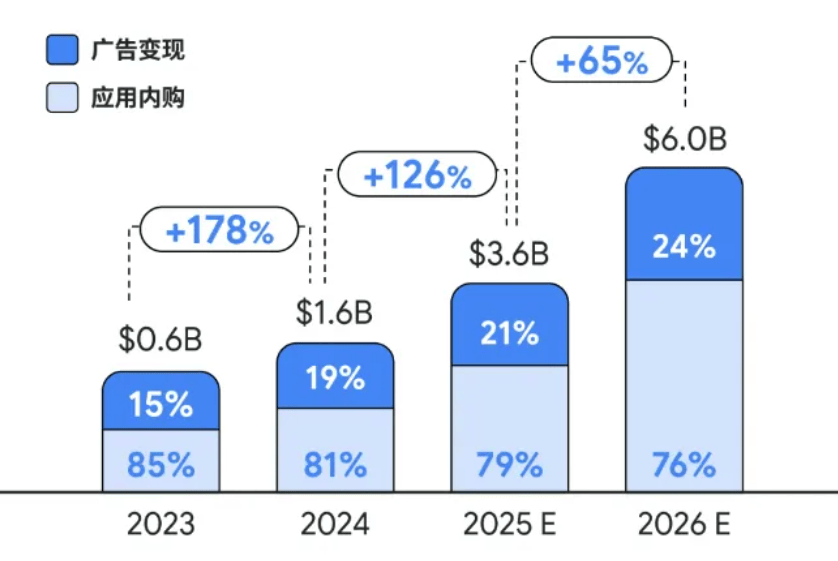
Core Insights - The overseas short drama market is projected to reach $3.6 billion by 2025, with a staggering year-on-year growth of 126%, and is expected to further increase to $6 billion by 2026, reflecting a 65% growth [2][4] - The rapid growth of the overseas market has surpassed domestic growth, presenting a significant opportunity for industry players to expand globally [2][4] Market Dynamics - The surge in demand for short dramas is driven by the fragmentation of content consumption, high production costs of long videos, and the need for quick-paced, lightweight content [4] - Platforms like YouTube and FAST are becoming key distribution channels for short dramas, providing essential support through optimized traffic mechanisms and improved distribution infrastructure [4] Challenges in Global Expansion - Short drama companies face multiple challenges in their overseas expansion, including insufficient production capacity, localization issues, and a lack of diversified monetization strategies [5][6] - The industry is experiencing pressure from both private and public domain platforms, with local competitors emerging and impacting the dominance of Chinese applications [5] Industry Trends - The industry is transitioning from a "wild growth" model to a "refined operation" phase, characterized by four major trends [6] - Trend 1: Production is shifting from "experience-driven" to "data-driven" decision-making, necessitating a deeper understanding of market preferences and ROI [7] - Trend 2: Distribution is evolving from "single-point traffic" to "full-domain refined operation," with social media platforms like YouTube becoming crucial for growth [9] - Trend 3: AI is enhancing the localization process across the entire value chain, significantly improving efficiency and effectiveness [10] - Trend 4: The monetization model is diversifying, with the IAAP model remaining central while IAP and IAA models are expected to gain traction [11][12] Future Outlook - The industry is at a pivotal point, moving from short-term traffic competition to long-term value creation, requiring a collaborative upgrade of technology, ecosystem, and methodologies [13] - Standardization of technology applications in production and localization is essential to lower barriers for global expansion [14] - A call for collaboration among content creators, platforms, and technology providers is necessary to address common industry challenges [15] - Establishing a replicable methodology for public domain operations, localization, and data-driven decision-making will facilitate efficient global expansion [16]