Workflow
Budget Deficit
icon
Search documents
Modi to bet on growth in budget amid global risks: What to watch
BusinessLine· 2026-01-30 04:05
Core Viewpoint - The Indian government's upcoming budget is expected to prioritize job creation and economic stability amid global uncertainties, with a focus on infrastructure spending and fiscal consolidation [1][2][4]. Employment and Growth - The budget is anticipated to emphasize employment support and growth initiatives, with increased spending on infrastructure such as roads, ports, and railways, alongside reforms in the import-duty regime [2][3]. - Economists project India's economic growth to be between 6.5% and 7% for the next fiscal year, with inflation expected to align with the central bank's target of 4% [8]. Fiscal Deficit and Debt - The fiscal deficit is projected to decrease to 4.2% of GDP in the upcoming fiscal year, down from 4.4% in the current year, as the government aims to adhere to fiscal consolidation [4][6]. - India's general government debt is estimated to reach 81.29% of GDP by March 2024, a significant increase from 69% in 2015, primarily due to pandemic-related borrowing [7]. Revenue Generation - The government anticipates net tax revenues of 28.3 trillion rupees (approximately $308 billion) and an additional 500 billion rupees from disinvestment [9]. - Corporate and income tax collections will need to increase by 11.7% and 43% year-on-year, respectively, to meet budgeted targets [10]. Capital Expenditure - Capital expenditure is expected to be a focal point, with an allocation of about 12.04 trillion rupees, nearly 3% of GDP, although concerns about reaching saturation in large infrastructure projects have been raised [12]. - Defense-related capital spending is projected to rise to 2.3 trillion rupees, reflecting ongoing border tensions [13]. Market Borrowing - The government is likely to engage in record bond borrowing, with gross market borrowing expected to reach 16.5 trillion rupees and net borrowing at 11.6 trillion rupees [14].
Trump's 'On-Again, Off-Again' Tariffs Damaging US Standing, Says Economist Justin Wolfers As Americans Feel 'Miserable' In B-Minus Economy - State Street SPDR S&P 500 ETF Trust (ARCA:SPY)
Benzinga· 2026-01-29 09:25
University of Michigan economist Justin Wolfers has issued a sobering “B-minus” grade for the U.S. economy, warning that inconsistent trade policies by the Donald Trump administration and a historic collapse in consumer morale are masking deeper systemic instabilities.‘Grade Inflation’ WarningAppearing on CNN, Wolfers—author of the widely used Principles of Economics textbook—offered a blunt assessment of the nation's financial health.While the data suggests the economy is “not terrible,” Wolfers argued tha ...
Dollar Retreats on US Fiscal and Political Risks
Yahoo Finance· 2026-01-27 15:33
Core Viewpoint - The US dollar index has reached a 4.25-month low, primarily influenced by speculation regarding potential currency intervention with Japan and domestic political uncertainties [1][2]. Group 1: Currency Market Dynamics - The dollar index (DXY00) has decreased by 0.79%, hitting a 4.25-month low [1]. - Speculation about US coordination with Japan for currency intervention has contributed to the dollar's decline, as it aligns with President Trump's view that a weaker dollar benefits US exports [2]. - The yen has appreciated to a 2.5-month high against the dollar, influenced by reports of US authorities checking dollar/yen prices, indicating possible intervention [2]. Group 2: Political and Economic Factors - Political risks are prompting foreign investors to withdraw capital from the US, exacerbating the dollar's weakness [3]. - President Trump's threat of 100% tariffs on US imports from Canada if Canada signs a trade agreement with China has added to the uncertainty surrounding the dollar [4]. - The potential for another partial US government shutdown is creating additional pressure on the dollar, with Senate Democrats threatening to block funding deals [5]. - Concerns regarding the Federal Reserve's independence, a growing US budget deficit, and increasing political polarization are also contributing to the dollar's decline [5]. Group 3: Economic Indicators - ADP reported that US private payrolls increased by an average of 7,750 per week in the four weeks ending January 3, marking the smallest job growth in six weeks [6]. - The Conference Board's US January consumer confidence index unexpectedly fell by 9.7 points to an 11.5-year low of 84.5, which is weaker than anticipated [6].
The U.S. debt now equals $229,000 per household—and a hefty tax hike looms as the most probable outcome
Yahoo Finance· 2026-01-21 10:00
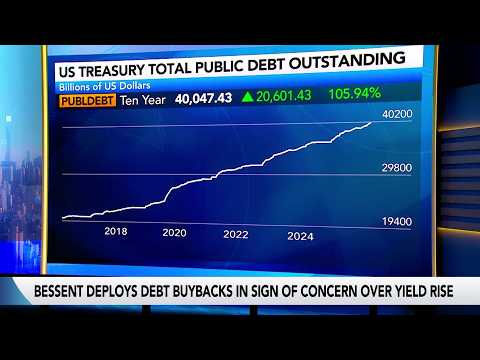
An overlooked feature of the explosion in U.S. deficits and debt that’s belatedly grabbing the attention of voters, politicians, and the media: The average American household’s share of federal borrowings is now equal to half the median price of their homes, and the figure is rising fast. Right now, teachers, nurses, store owners, and IT workers (i.e., average Americans) aren’t paying any of the interest on those tens of trillions, since the federal government is simply ramping the IOUs to cover the carryi ...
Ecuador’s National Assembly approves proposed budget for 2026
Yahoo Finance· 2026-01-12 13:00
In December 2025, Ecuador’s National Assembly approved the government’s 2026 budget proposal, with 78 votes in favour, 66 against, and four abstentions. The budget focuses on social programmes, security, and infrastructure development, with total budget spending set at $46.3bn, equivalent to 33.27% of GDP, which represents a 13% increase compared to the 2025 budget spending. It is based on projected real GDP growth of 1.8% in 2026, with nominal GDP estimated at $139.1bn. The macroeconomic framework estimat ...
Chamath Palihapitiya Says People Worth $500 Billion 'Scrambled And Left California' Over Billionaire Tax, Warns That It Will Deepen Budget Deficit
Yahoo Finance· 2026-01-03 22:30
Core Viewpoint - The proposed California billionaire tax is prompting ultra-wealthy residents to leave the state, potentially exacerbating the budget deficit rather than alleviating it [1][3][4]. Group 1: Wealth Exit - Individuals with a combined net worth of approximately $500 billion have decided to permanently leave California due to the proposed billionaire tax, which is characterized as an asset seizure-style levy [2][4]. - The immediate exit of these high-net-worth individuals is seen as a preemptive measure to avoid the tax, which could ultimately lead to lower revenue collection for the state [3][4]. Group 2: Budget Implications - The departure of wealthy residents is expected to worsen California's budget deficit, placing additional financial burdens on ordinary taxpayers [3][4]. - Lawmakers may be forced to resort to increased borrowing or broader tax hikes to compensate for the loss of revenue from high-net-worth individuals [3]. Group 3: Tax Criticism - The billionaire tax is criticized for targeting unrealized and illiquid wealth, particularly affecting startup founders who may have significant equity but modest salaries [5]. - An example highlighted involves a founder with $1.2 billion in paper equity earning a $150,000 salary, who could face substantial cash obligations under the proposed tax, risking insolvency if the company's value declines [6].
The Best WSB Surveys Of The Year
Seeking Alpha· 2025-12-31 12:20
Group 1: Market Trends and Predictions - The S&P 500 closed at 6,896, up from 6,100 at the beginning of 2025, indicating a positive market trend [2] - The best-performing AI stock in 2025 was Palantir (PLTR), which saw a 139% increase, followed by Broadcom (AVGO) at 51% and Microsoft (MSFT) at 16% [2] - A survey indicated that 2026 is the earliest expected time for lower mortgage rates to make homeownership more affordable [2] Group 2: Sector Performance - In the nuclear power sector, Oklo (OKLO) gained 28%, Constellation Energy (CEG) increased by 11%, and Cameco (CCJ) rose by 23%, while NuScale Power (SMR) experienced a decline of 64% [4] - The sentiment around Trump's trade strategy was split, with opinions divided on its effectiveness [4] Group 3: Future Outlook - The next quarterly rebalance for the S&P 500 is scheduled for March 2026, with companies like Strategy (MSTR), Reddit (RDDT), and SoFi Technologies (SOFI) being considered for inclusion [5] - Potential candidates for the next Federal Reserve Chair include Kevin Hassett, Kevin Warsh, Christopher Waller, Michelle Bowman, and Rick Rieder [5]
Stocks Could Be Getting A Santa Rally This Season
The Santa Claus rally is ready to roll into the end of the year. The Federal Reserve is starting to pump capital back into the market. Now, this Q is happening at a time where the US government's finances are improving, too.Treasury Secretary Scott Besson said yesterday the current calendar year-to-ate deficit is $1.5% trillion. But that compares to a deficit of $ 1.9% trillion for the period last year. It's a 21% drop year-over-year. Now, it's not only that it's a smaller deficit.The economy is also bigger ...
X @The Wall Street Journal
With its budget deficit worsening, California is pulling back on a policy that extended government-supported healthcare to immigrants living in the country unlawfully https://t.co/lCx3JwG2RF ...
X @Bloomberg
Bloomberg· 2025-12-19 11:38
The head of Poland’s newly created Fiscal Council wants to inject more reality into the budget debate as the country becomes the biggest offender of EU public-sector deficit rules https://t.co/pXK425VM0Z ...