Chinese Brands Going Global

Search documents
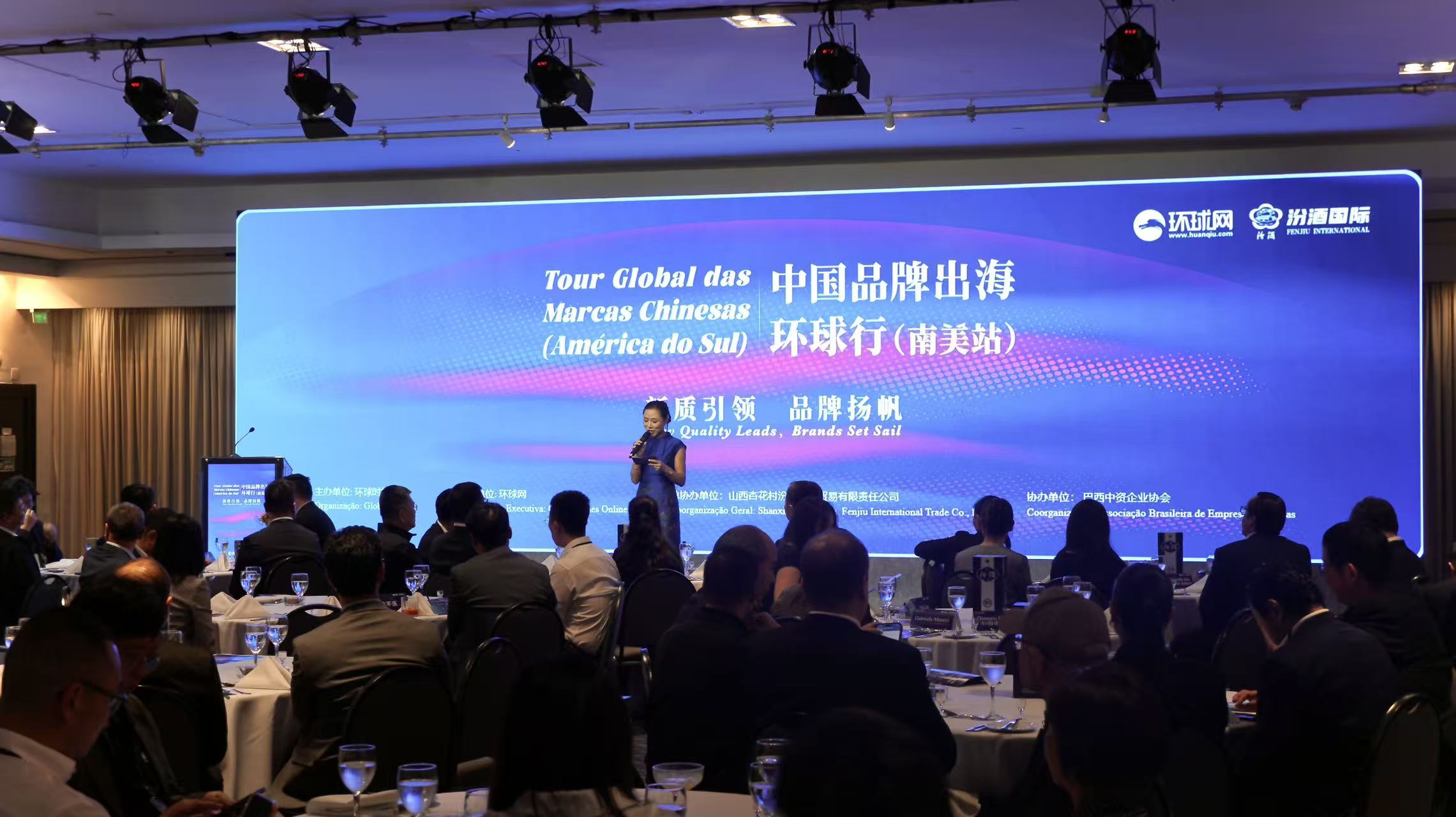
2026 ‘Chinese Brands Going Global · Worldwide Tour’ (South America Stop) kicks off in São Paulo, Brazil
Globenewswire· 2026-03-16 02:53
Core Viewpoint - The "Chinese Brands Going Global · Worldwide Tour" event in São Paulo aims to enhance the presence of Chinese brands in South America and foster mutual development between Chinese and Brazilian enterprises [1][3]. Group 1: Event Overview - The event was held on March 10, 2026, and was themed "New Quality Leads, Brands Set Sail," focusing on sustainable growth pathways in the region [1]. - It was organized by the Global Times and included participation from diplomatic envoys and business leaders from both China and Brazil [1][10]. Group 2: Importance of Chinese Brands - Zhang Xi, deputy consul general of the Chinese Consulate General in São Paulo, highlighted the event as a platform for showcasing Chinese brands and building mutual trust [3]. - Li Liushen, deputy general manager of Global Times Online, noted that the outlet has over 330 million global users, serving as a bridge for Chinese brands to engage with international markets [4]. Group 3: Market Engagement Strategies - Li Dongcheng from the China Council for the Promotion of International Trade emphasized the need for Chinese brands to establish local supply chains and understand consumer psychology in Brazil [5]. - Fenjiu, a prominent Baijiu producer, showcased its new product line in Brazil, reflecting its long-standing relationship with the Americas [6]. Group 4: Local Insights - Brazilian CEO Admar Pereira expressed optimism about the entry of more Chinese brands into the market, urging them to better understand local consumer needs [9].


【专访】Chinese Brands Take Just Three to Five Years to Go Global - Yicai Global
科尔尼管理咨询· 2026-02-04 12:28
Core Insights - The report by Kearney highlights a significant reduction in the time required for Chinese brands to establish recognition overseas, from a decade to just 3-5 years, driven by cross-border e-commerce, social media, and advanced supply chain systems [1][4]. Brand Evolution - Chinese brands are no longer just exporting products but are also effectively conveying cultural expressions and lifestyles, redefining the global consumer landscape [3][4]. - The success of brands like Pop Mart and Florasis illustrates a shift in the paradigm of Chinese consumer goods going global, reflecting a transformation in consumer engagement [3][4]. Strategic Shifts - There has been a notable upgrade in strategic thinking among Chinese companies, with global expansion now viewed as a necessity rather than an option, leading to organizational changes such as the establishment of independent overseas divisions [5][12]. - The traditional linear business model is evolving into an agile approach that emphasizes iterative testing and rapid market feedback, allowing for quicker strategic adjustments [6][12]. Brand Positioning - The fundamental change in brand positioning sees Chinese brands moving away from competing solely on value-for-money to establishing premium pricing and cultural narratives that resonate with global consumers [7][8]. - Successful cultural exports, such as the games Black Myth: Wukong and Ne Zha, demonstrate the potential for Chinese cultural elements to gain international recognition through innovative storytelling [7][10]. Categories of Brands - Kearney categorizes Chinese consumer brands into three types: 1. Home appliances and consumer electronics, facing challenges in maintaining growth and profit margins [8]. 2. Fashion apparel and cultural products, which are experiencing high growth but must build user loyalty and cultural connections [8][9]. 3. Toys, beauty, and personal care products, showing explosive growth potential, exemplified by brands like Florasis [9]. Lessons from Other Markets - Insights from Japan and South Korea highlight the importance of maintaining quality and responsiveness in global markets, with Japanese brands serving as a cautionary tale against centralized decision-making and over-reliance on specific markets [10][11]. Future Trends - The integration of artificial intelligence is expected to enhance product iteration and supply chain efficiency, while the cultural content industry will provide brands with greater pricing power [12]. - Companies face challenges such as management inertia, talent pipeline issues, and compliance costs, necessitating localized decision-making and talent cultivation [13]. Confidence in Chinese Brands - There is a strong belief in the potential of Chinese brands, bolstered by supply chain advantages and strengths in product design and localized marketing, although global expansion remains a high-risk endeavor [14].


出海看拉美:当下最值得重新审视的战略级市场
Sou Hu Cai Jing· 2026-01-12 07:41
Core Insights - Latin America is emerging as a significant consumer market with structural growth potential, contrasting with the saturated and slow-growing markets of Europe and North America [2][3] - The region is characterized by a large population and real consumer demand, yet it remains underappreciated and misunderstood by many foreign brands [4][5] Market Characteristics - Latin America encompasses a population of approximately 670 million, with urbanization concentrated in major cities, providing a viable environment for brands to scale operations [6] - The region's retail and digital consumption is among the highest in emerging markets, with online retail sales projected to reach $228 billion by 2028, growing over 20% annually [6] - The market is not a high-speed growth area but rather a medium-speed market that consistently releases demand over the long term [6] Consumer Behavior - The population is predominantly young, with a median age in the early 30s, and the middle class is experiencing a slowdown in expansion, leading to price sensitivity and a focus on product functionality [7][8] - There is a stable demand for mid-range, practical, and cost-effective products, rather than a significant shift towards high-end goods [8] Infrastructure and Regional Differences - Latin America exhibits a dichotomy of advanced digital front-end capabilities and underdeveloped commercial infrastructure, leading to high logistics costs and weak service systems [9][10] - The economic conditions vary significantly across the region, making it essential for brands to adopt country-specific strategies rather than a one-size-fits-all approach [11] Business Risks and Management - The risks in Latin America are overt and well-anticipated, allowing companies with strong risk management and cash flow planning to establish stable operations [12][13] - Key challenges include complex tax systems, fluctuating exchange rates, and inconsistent policy continuity [13] Entry Challenges for Chinese Brands - Many Chinese brands have struggled in Latin America due to systemic misjudgments about the market, often treating it as a second Southeast Asia [15][16] - Common pitfalls include underestimating local complexities, over-reliance on price advantages, and neglecting logistics and service issues [20][22] Strategic Pathways for Market Entry - There is no standardized success template for entering Latin America, but a reusable entry logic exists, focusing on validation, scaling, and long-term establishment [32] - The initial phase should prioritize market validation in a single country or city before expanding [33] - Once validated, brands should focus on scaling capabilities rather than spreading resources too thinly across multiple markets [36] Long-term Development Focus - As businesses stabilize, the focus should shift from rapid growth to building local partnerships, optimizing logistics, and enhancing brand communication [37][39] - The principles of prioritizing pathways over scale, capabilities over industry, and rhythm over speed are crucial for success in the region [40][41][42] Conclusion - Latin America presents significant opportunities for Chinese brands, but success requires a long-term strategic approach that emphasizes stability and adaptability rather than quick wins [49]