Cultural Identity

Search documents
The bridge named me | Trinity Kamugisha | TEDxYouth@BrookhouseSchool
TEDx Talks· 2026-03-17 15:40
They say that home is where the heart is. But what happens when your heart belongs to more than one space. when your heart has learned to live in multiple places at once.I spent my life moving between countries, cultures, and expectations, questioning my sense of belonging. Over time, I realized maybe I was never meant to identify as a single country, but to connect them. The strongest bridges aren't built from concrete or steel.They're built from people. People that are able to stand between differences an ...

The art of accepting yourself | Dana Salah | TEDxGeorgetown U Qatar
TEDx Talks· 2026-03-12 15:43
My name is Donna Salah. I was born and raised in Aman, Jordan. And for as long as I can remember, I always knew I wanted to sing.Growing up, I used to spend my summers in Michigan where my mom grew up to visit my grandparents. I used to love it up until the age of nine. I got to spend summers on the lake, water parks. I got to enjoy the greenery.And most of all, I didn't have to worry about speaking Arabic, which up until that point was a little bit of a struggle. My mom, when she had me, had just moved bac ...
Difference is not a weakness | Rachel Linton | TEDxChadwick International School
TEDx Talks· 2026-03-11 15:41
Hello everyone. My name is Rachel Linton. I was born between two flags.One side of me is American, the other side is Korean. Most people assume they know who I am the moment they see my face. But my life has never fit into a simple story.Because wherever I went, I always look for enough to be treated like an outsider. Until third grade, I attend a typical Korean school. But in fourth grade, I moved to an international school.I thought it would be star of an adventures with new friends from diverse backgroun ...
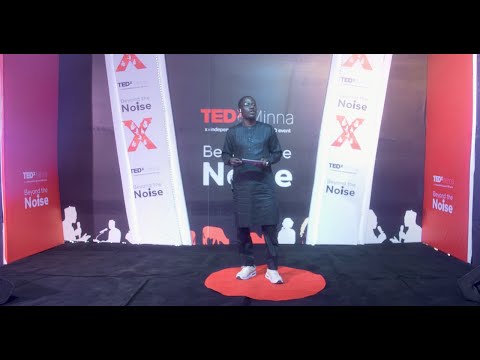
On Misrepresentation of Identities | sada malumfashi | TEDxMinna
TEDx Talks· 2026-03-04 16:46
Um, I'll be speaking on representation of identities. My name is Zadam Al Malumpi. I'm a writer, filmmaker, and curator.I've been curating the House International Book and Arts Festival and my work is dedicated to documenting who we are, where we come from, and what we're going to be as a people. Um I would like to engage with the audience a little bit. So indulge me.Um please show of hands if you are able to speak house in this space. Okay. Good.So listen to this. How many of us understand this dialect. A ...
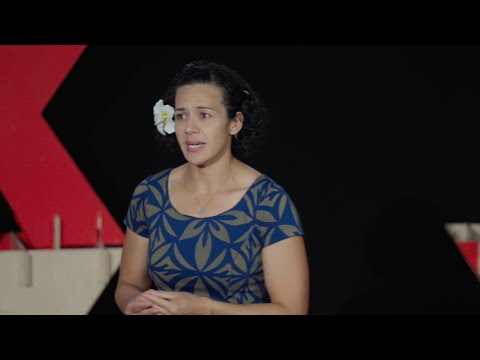
How Ancestral Knowledge Took Me to the Olympics | Vaimo'oi'a Astrid Ripley | TEDxSydney GIS
TEDx Talks· 2026-03-02 17:54
When I was 8 years old, I pushed a little patch boat into the Pacific Island. The sail was old, the wood was also old, and the salt stung my eyes. Within the safety of the reef, I could hear the waves breaking against the hole.Slow, steady, ancient. And in that stillness, I felt something bigger than me. The ocean was endless.I didn't know it then, but I was starting to learn what my ancestors knew. That courage doesn't come from what you own, but from what you remember. We live in a world that tells us suc ...
X @Nick Szabo
Nick Szabo· 2026-03-02 02:07
RT Lewis.B.Rendell Official (@Lewisrendell1)The English are not a “values-based” civic club, nor a passport stamp, nor a postcode lottery where popping out on the right bit of soil auto-magically grants you membership.We are an ancient ethnos, a distinct people forged over fifteen centuries from the Angles, Saxons, Jutes, and related Germanic stocks who crossed the North Sea, mingled with the remaining Romano-Britons, absorbed later Danish and Norse infusions, and became one recognisable folk long before th ...
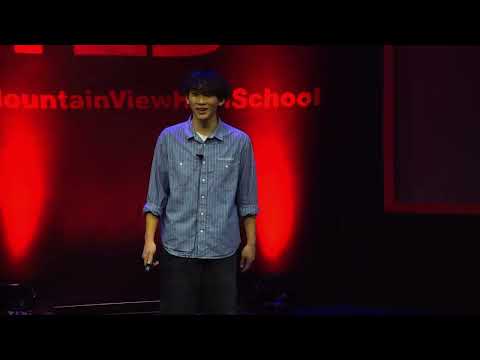
The Language of Belonging | Ethan Louie | TEDxMountainViewHighSchool
TEDx Talks· 2026-02-19 17:13
Growing up as a Chinese kid with flat hair for most of his life, cut by only the best barber in town, my dad, still huge forehead and focus on those A++ grades. There's absolutely no way you can tell that I actually don't fit into the AsianAmerican community. Oh, except I don't speak Chinese.Am I a bad Asian. I ask myself this question whenever my family eats at an authentic Chinese restaurant, like the ones where the walls are as old as the grandpa's eating there, and the decor is non-existent. The waiters ...
X @Nick Szabo
Nick Szabo· 2026-02-15 06:08
RT Kaiser Von Lohengramm (@KaiserLoengramm)The murders, rapes and gang activity of foreigners gets the most attention. But it’s the banality of it that affects us every day that we ignore that has the most impact on us day to day.That we can hardly use public services because of them.That hospitals are crowded and the doctors and nurses are likely to speak in thick indiscernible accents.That they act in a manners that is uncouth for our civilization and simply do not care to do as Romans do.That they insert ...
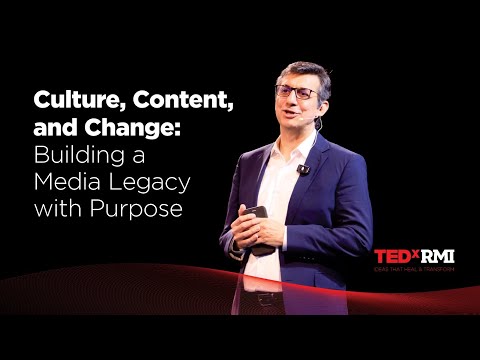
Culture, Content and Change | Duraid Qureshi | TEDxRMI
TEDx Talks· 2026-02-11 17:18
Asalamaikkum. It's a very difficult topic. I think the first topic that was given to me was much easier and that was about how media has transformed Pakistan into.But when you say re-imagining culture, we have to define what culture is. And I think as I was preparing for this topic, the more I read about culture and the culture of Pakistan, it was so difficult for me to assess what is the culture of Pakistan. Culture basically means shared values and belief that a group of people or individuals have.Is Pakt ...
Beyond the West: The Forgotten Voices of History | Anelia Mkrtchyan | TEDxUWCDilijan Youth
TEDx Talks· 2026-02-11 16:14
Does this work. Yes. How many of you know this theorem.Just raise your hands. Okay, so almost everybody. You probably learned in school that Pythagoras, the Greek mathematician and philosopher, discovered this theorem.But what if I told you that wasn't the full story. that this theorem was known in Babylon, ancient Egypt and ancient India thousands of years before that. Let me give you a few more.The quadratic formula which is a fundamental part of schooling was discovered by Alarismi, an Arab mathematician ...