Photography

Search documents
Nifty Fifty: When the safest U.S. stocks became the most dangerous bet
The Hindu· 2026-03-27 07:34
Core Concept - The Nifty Fifty refers to a group of 50 large-cap stocks on the New York Stock Exchange that were highly regarded for their stability and long-term growth potential, often termed 'one-decision' stocks by investors [3][5]. Group 1: Characteristics of Nifty Fifty - The Nifty Fifty included prominent companies such as American Express, IBM, and Coca-Cola, which were favored for their consistent earnings and dividend growth [3]. - These stocks were characterized by high price-to-earnings (P/E) ratios, with investors believing that future earnings would justify these inflated valuations [4]. - Institutional investors viewed these stocks as a guarantee of future dominance, leading to a psychological trap where high valuations were accepted as normal [4][5]. Group 2: Market Dynamics and Collapse - The collapse of the Nifty Fifty was triggered by the 1973 oil crisis, which led to inflation and high interest rates that eroded the value of future growth [6][7]. - The assumption of cheap energy and low inflation was shattered, resulting in a significant market correction where some stocks, like Polaroid, lost up to 90% of their value [7]. - Despite many companies in the Nifty Fifty continuing to perform well, the prices investors were willing to pay became unjustifiable, highlighting the disconnect between price and value [8][9].



Top Wall Street Forecasters Revamp Getty Images Price Expectations Ahead Of Q4 Earnings
Benzinga· 2026-03-16 12:42
Core Viewpoint - Getty Images Holdings, Inc. is set to release its fourth-quarter earnings results on March 16, with expectations of stable earnings per share compared to the previous year [1]. Financial Performance - Analysts predict Getty Images will report quarterly earnings of 2 cents per share, unchanged from the same period last year [1]. - The consensus estimate for quarterly revenue is $246.17 million, a slight decrease from $247.32 million a year earlier [1]. Merger and Market Reaction - On February 23, Getty Images announced it received clearance from the DOJ for its merger with Shutterstock [2]. - Following the merger announcement, Getty Images shares fell by 5.7%, closing at $0.7267 [2].


Eastman Kodak(KODK) - 2025 Q4 - Earnings Call Transcript
2026-03-12 22:02
Financial Data and Key Metrics Changes - Fourth quarter revenues reached $290 million, an increase of 9% year-over-year, with a gross profit percentage of 23%, up four percentage points from the prior year [8][19] - Full year consolidated revenues were $1.069 billion, an increase of $26 million or 2%, with a gross profit percentage of 22%, up from 19% in the previous year [9][24] - GAAP net loss for the fourth quarter was $108 million compared to a net income of $26 million in the fourth quarter of 2024, primarily due to excise tax expenses and a loss on early debt extinguishment [20][25] - Operational EBITDA for the fourth quarter was $22 million, up 144% year-over-year, driven by improved pricing and higher volume [22] Business Line Data and Key Metrics Changes - The AM&C segment saw a revenue increase of 25% in the fourth quarter, attributed to the launch of a direct distribution brand of still films [10] - The print division experienced growth in North America, particularly in the plates division, with the PROSPER 520 moving to full production [11] - Brand licensing continues to grow, contributing significantly to profit and increasing awareness of Kodak, especially in Asia [11] Market Data and Key Metrics Changes - The company reported a strong performance despite global economic and geopolitical uncertainties, with revenue increases across both AM&C and print segments [19] - The film group has seen a resurgence, with several Oscar nominees shot on Kodak film, indicating a positive market response [10] Company Strategy and Development Direction - Kodak's long-term plan remains on track, focusing on growth following a strong 2025, with a commitment to customer-first strategies [5][29] - The company has streamlined operations and reduced operating expenses by over $200 million, positioning itself for future growth [7][8] - Investments in new products and infrastructure are ongoing, with a focus on the pharma division and battery coating technologies [30][31] Management's Comments on Operating Environment and Future Outlook - Management expressed confidence in the company's strong balance sheet and operational improvements, which are expected to support future growth [6][29] - The leadership team has undergone significant changes to enhance the company's fundamentals and drive growth [32] Other Important Information - Kodak completed a pension reversion process that generated approximately $1.023 billion, significantly strengthening its balance sheet and reducing ongoing interest expenses [13][14] - The company ended 2025 with $337 million in unrestricted cash, reflecting operational improvements and proceeds from the KRIP settlement [27] Summary of Q&A Session - There was no formal Q&A session during the call, but the investor relations team is available for follow-up inquiries [4]

Getty Images Set to Capture Stunning Moments from the Milano Cortina 2026 Paralympic Winter Games
Globenewswire· 2026-02-24 13:55
Core Insights - Getty Images has been appointed as the Official Photographic Agency for the International Paralympic Committee (IPC) for the Milano Cortina 2026 Paralympic Winter Games, showcasing its commitment to enhancing visibility for people with disabilities globally [3][4] Group 1: Event Coverage - Getty Images will deploy a team of 30 photographers, editors, and operations staff to capture live coverage of all six Paralympic winter sports at five competition venues across three regions [3] - The company aims to deliver over 25,000 images from the Opening Ceremony on March 6 to the Closing Ceremony on March 15 [3] Group 2: Commitment to Disability Representation - Getty Images has a longstanding commitment to disability representation through initiatives like The Disability Collection, which aims to break stereotypes and authentically portray individuals within the disability community [6] - The Milano Cortina 2026 Paralympic Winter Games will feature approximately 550 athletes from 50 National Paralympic Committees (NPCs) competing in 79 medal events across six sports [6] Group 3: Historical Context and Partnerships - The 2026 event marks the 50th anniversary of the first Paralympic Winter Games, highlighting the historical significance of the occasion [4] - Getty Images supports the U.S. Olympic Movement and Paralympic Movement as the Official Photographic Licensee of Team USA and the Official Licensee for the LA28 Olympic and Paralympic Games [4]
Getty Images and NASCAR Renew Multi-Year Agreement
Globenewswire· 2026-02-12 13:00
Core Insights - Getty Images has renewed its partnership with NASCAR, continuing its role as the Official Photography Partner since 2006 [2][3] Company Overview - Getty Images is a leading global visual content creator and marketplace, providing a wide range of content solutions to customers worldwide [7] - The company collaborates with nearly 600,000 content creators and around 360 content partners, covering over 160,000 events annually [7] Partnership Details - The renewed agreement allows Getty Images to provide high-quality imagery from all NASCAR events, including the NASCAR Cup Series™, O'Reilly Auto Parts Series™, and CRAFTSMAN Truck Series™ [3][4] - Getty Images will produce creative editorial assets, including official driver portraits and imagery from NASCAR's broader calendar of events, distributed exclusively through gettyimages.com [4] Content Archive - Getty Images' motorsport collection includes 190,000 NASCAR-owned assets and 1.2 million NASCAR images, making it one of the most comprehensive visual archives of NASCAR history [6] Technological Advancements - Getty Images is adopting generative AI technologies to enhance its content offerings, allowing customers to create commercially safe visuals through text-to-image generation [8]
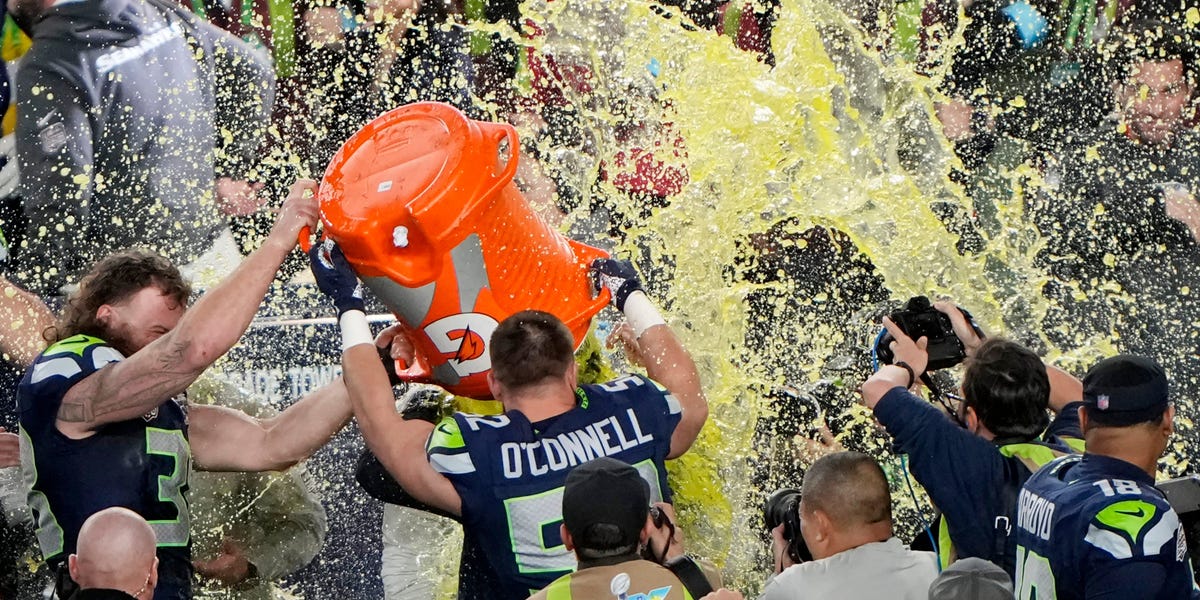
The best photos of the 2026 Super Bowl
Business Insider· 2026-02-09 17:04
Game Summary - The Seattle Seahawks won Super Bowl LX against the New England Patriots with a final score of 29-13 [1][53] - Seahawks placekicker Jason Myers set a record by kicking five field goals during the game [1][43] - The game featured a halftime show headlined by Bad Bunny, marking a historic moment as he became the first Latino and Spanish-speaking solo artist to perform at the Super Bowl [1][21][29] Key Events - Jason Myers scored the first points of the game with a field goal in the first quarter, leading to a 9-0 score by halftime, which was notable for being one of only five Super Bowls without a touchdown in the first half [9][18] - The first touchdown of the game was scored by Seahawks tight end AJ Barner, extending their lead to 19-0 [36] - The Patriots managed to score their first touchdown through Mack Hollins, bringing the score to 19-7 [38] Halftime Show - Bad Bunny's performance included surprise appearances by Lady Gaga and Ricky Martin, energizing the crowd [21][27] - The show concluded with a powerful message displayed on a billboard: "The only thing more powerful than hate is love" [29] Final Moments - The Seahawks' lead was further extended by a touchdown from linebacker Uchenna Nwosu, making the score 29-7 [47] - The Patriots scored a late touchdown by Rhamondre Stevenson, finalizing the score at 29-13 [49] - Seahawks running back Kenneth Walker III was named MVP of the game, contributing over 160 scrimmage yards [65]

American street photographer captures fashion of Milan
NBC News· 2026-02-06 21:37
Ahead of the Winter Games, NBC News' Claudio Lavanga speaks with Scott Schuman in Milan, the fashion capital of the world, about his popular photography of pedestrians with a dress sense. For more context and news coverage of the most important stories of our day, click here: https://www.nbcnews.com » Subscribe to NBC News: http://nbcnews.to/SubscribeToNBC » Subscribe to Here's the Scoop podcast: https://www.nbcnews.com/heres-the-scoop-daily-podcast Every day, NBC News helps people understand what’s happeni ...

America's 50 most iconic brands, from Main Street to Silicon Valley
Yahoo Finance· 2026-02-02 17:43
Core Insights - The article highlights the significant American companies that have shaped the nation's identity and economy as it approaches its 250th birthday, emphasizing their cultural and historical impact rather than just financial metrics [1][2]. Group 1: Visa - Visa was established in 1958 as BankAmericard, launching the first consumer credit card in the U.S. [3][6] - The company rebranded as Visa in 1976 and went public in 2008, currently holding a market cap of $632 billion [4][6]. - Visa operates in over 220 countries and territories, accepted at more than 175 million merchants [7]. Group 2: Meta (Facebook) - Facebook was founded in 2004 by Mark Zuckerberg and quickly grew to 1 billion users by 2012, later rebranding to Meta in 2021 [9][13][14]. - The platform has faced controversies regarding user data and misinformation but remains a dominant social media service with over 3 billion regular users [15]. Group 3: Boeing - Boeing, established in 1916, is a leading aerospace company known for producing commercial jets and military aircraft [15][16]. - The company has faced challenges in recent years, including safety allegations and COVID-19 impacts, but continues to be a major player in the industry with a market cap of $185 billion [20][21]. Group 4: Tesla - Tesla was founded in 2003, with Elon Musk joining in 2004, and has become synonymous with electric vehicles, launching the Model 3 in 2017 as the best-selling electric car [23][27]. - The company has a market cap of $1.4 trillion and is recognized for driving electric vehicles into the mainstream [28]. Group 5: Patagonia - Patagonia was founded in 1973 by Yvon Chouinard, known for its commitment to sustainability and donating 1% of sales to environmental causes [30][33]. - The company has expanded from climbing gear to a wide range of outdoor apparel and is estimated to have a market cap of $3 billion [33]. Group 6: Intel - Intel was founded in 1968 and became a leader in semiconductor technology, introducing the first programmable microprocessor in 1971 [34][35]. - The company has maintained a significant market presence, controlling approximately 75% of the CPU market as of 2025 [38]. Group 7: HP - HP was established in 1939, initially focusing on sound equipment and later becoming a leader in personal computers and printers [40][42]. - The company split into HP Inc. and Hewlett Packard Enterprises in 2015, with HP Inc. having a market cap of $18 billion [45]. Group 8: Nike - Nike was founded in 1964 as Blue Ribbon Sports and rebranded in 1971, becoming a dominant player in the sportswear market with a 14% share in 2024 [46][50]. - The company gained fame through its endorsement deal with Michael Jordan, significantly boosting its brand recognition [48]. Group 9: Kodak - Kodak was founded in 1888 and became a pioneer in photography, introducing innovations like roll film and the first digital camera [51][54]. - The company filed for bankruptcy in 2012 and now focuses primarily on commercial printing and imaging [56]. Group 10: IBM - IBM was established in 1911 and became synonymous with computing, initially focusing on tabulating machines and later dominating the PC market [59][62]. - The company has shifted its focus to consulting, software, and cloud computing, with a market cap of $291 billion [67]. Group 11: Paramount Pictures - Paramount Pictures, founded in 1912, is recognized as the longest-operating major studio in Hollywood, producing numerous iconic films [68][70]. - The studio has undergone various mergers and continues to be a significant player in the entertainment industry with a market cap of $12 billion [74]. Group 12: Netflix - Netflix was founded in 1997 as a DVD rental service and transitioned to streaming in 2007, becoming a leader in the industry [77][80]. - The company has a market cap of $351 billion and announced plans to acquire Warner Bros. Discovery in 2025 [81]. Group 13: FedEx - FedEx was founded in 1971, revolutionizing overnight delivery with a centralized hub model [83][84]. - The company has introduced several innovations in the shipping industry and has a market cap of $74 billion [88]. Group 14: Motown - Motown Records, established in 1959, played a crucial role in integrating Black artists into mainstream pop music [91][92]. - The label produced numerous hits and helped launch the careers of many iconic artists, although it faded in prominence during the 1970s [94][96]. Group 15: PepsiCo - PepsiCo was formed in 1965 through the merger of the Pepsi-Cola Company and Frito-Lay, becoming a leading global food and beverage brand [99][100]. - The company is known for its innovative marketing strategies and has a significant rivalry with Coca-Cola [101]. Group 16: Levi Strauss - Levi Strauss, founded in 1853, is known for creating the first riveted blue jeans, which have become a cultural staple [104][106]. - The company continues to sell a wide range of apparel and remains a significant player in the fashion industry [106]. Group 17: Microsoft - Microsoft was founded in 1975 and became a leader in software development, particularly with its Windows operating system [109][110]. - The company has expanded into gaming, cloud services, and AI, with a market cap of $7.8 billion [112]. Group 18: The Home Depot - The Home Depot was established in 1978, focusing on providing a wide range of building supplies and home improvement products [115][116]. - The company has a strong commitment to community initiatives, particularly supporting veterans, and has a market cap of $3.2 trillion [118]. Group 19: WK Kellogg Company - WK Kellogg Company was formed from the original Kellogg's brand, known for its iconic cereals and snacks [121][123]. - The company underwent a reorganization in 2023, with its cereal business spun off into a new entity [123].
The Cost of Corporate Complacency: How Refusal to Modernize Leads to Technological Decay and Competitive Backlog
Medium· 2025-10-29 17:34
Core Insights - The article discusses the dangers of organizational complacency, highlighting how refusal to modernize can lead to technological decay and competitive disadvantages [2][3][30] Group 1: Japan's Bureaucratic Complacency - Japan's reliance on fax machines in 2025 exemplifies a significant technological disconnect, with thousands of government procedures still dependent on outdated technology [2][5] - The cultural and bureaucratic inertia in Japan is rooted in established workflows that require physical documentation and personal seals, making modernization a complex challenge [6][11] - The COVID-19 pandemic exposed the vulnerabilities of this complacency, as the reliance on fax machines hindered timely information flow, impacting public health [9][10] Group 2: Kodak's Downfall - Kodak's failure to embrace digital technology, despite inventing the first digital camera in 1975, illustrates the consequences of short-term thinking and fear of cannibalization [12][14] - The company's management prioritized immediate profit margins over long-term innovation, leading to its eventual bankruptcy in 2012 [15][16] - Kodak's story serves as a cautionary tale about the risks of ignoring disruptive technologies and the importance of adapting to market changes [29] Group 3: U.S. Banking System and COBOL Crisis - The U.S. banking system's reliance on COBOL, a programming language from 1959, highlights systemic technological decay, with 220 billion lines of COBOL code still in use [17][18] - The aging workforce of COBOL programmers poses a significant risk, as their knowledge and expertise are disappearing, leading to a talent black hole [19] - The inflexibility of COBOL systems complicates modernization efforts, as banks face astronomical costs and risks associated with replacing outdated technology [20][22] Group 4: The Anatomy of Complacency - Complacency is characterized by denial, cultural inertia, and short-termism, which hinder organizations from recognizing the need for change [23][24][25] - The article emphasizes that modernization is not merely a technical choice but a cultural and strategic imperative for organizations to thrive [26][27] - The true cost of complacency is ultimately bankruptcy, as organizations that fail to adapt do so at their own peril [28][30]

Can You Tell Someone Else's Story? | Peter Decherney | TEDxPenn
TEDx Talks· 2025-10-28 15:39
Storytelling & Partnership - The speaker emphasizes the importance of collaborative storytelling across global connections and differences, particularly with marginalized communities [1][2] - The speaker partners with African Jewish communities to amplify their stories, fostering cross-cultural understanding and connection [2][3] - The speaker's work involves a feedback loop, sharing pictures and films with the communities and building global relationships that provide spiritual and material benefits [5][6] Community Focus - The report highlights the existence and growth of African Jewish communities across sub-Saharan Africa, including Ethiopia, Nigeria, Kenya, Tanzania, and Uganda [3][4][15] - The Ethiopian Jewish community in Gander faces economic hardship and challenges related to immigration to Israel [7][8][9] - The Abu Dhaya Jews of Uganda have a unique history, including resilience in the face of persecution and a commitment to community building [15][16][17][18] Cultural & Religious Identity - The speaker's personal journey of reconnecting with their Jewish heritage is intertwined with their work with African Jewish communities [2][3] - The report showcases the diversity of Jewish experiences and practices in Africa, challenging preconceived notions of what it means to be Jewish [3][4] - The communities maintain their religious practices, sometimes prioritizing them over other activities, such as the soccer team observing Shabbat [12] Global Connection & Impact - The speaker's projects aim to connect these communities with each other and with global Jewish communities [5] - Technology, such as WhatsApp, facilitates ongoing communication and support between the speaker and community members [14] - The speaker emphasizes the responsibility involved in telling someone else's story accurately and respectfully [25][26]