Currency Volatility

Search documents
Will Currency & Tariff Pressures Derail PepsiCo's Flat EPS Target?
ZACKS· 2025-11-24 18:01
Core Insights - PepsiCo is facing significant external challenges, including currency volatility and rising tariff-related costs, which are impacting profit conversion as it approaches the end of 2025 [1][8] - The company aims to maintain core constant-currency EPS flat year-over-year, but achieving this will require navigating a difficult macroeconomic environment [1][8] Currency Impact - Currency translation is expected to negatively affect reported revenues and core EPS by approximately 0.5 percentage points, which, while an improvement, still poses a significant challenge [2][8] - The company's large global footprint makes it particularly susceptible to currency fluctuations, which can erode profit gains from local markets [2] Tariff Pressures - Tariff impacts and rising costs of sourcing global inputs created a three-percentage-point headwind in the most recent quarter, further pressuring margins [2][8] - These tariff-related costs limit the benefits of pricing actions and productivity savings, making it crucial for PepsiCo to manage these challenges effectively [2] Strategic Actions - To defend its EPS target, PepsiCo is implementing cost cuts, optimizing sourcing, and tightening revenue management [3] - The company is streamlining SKUs, enhancing manufacturing and distribution efficiency, and increasing automation to mitigate higher operating costs [3] Competitive Landscape - Coca-Cola and Keurig Dr Pepper are also experiencing currency and tariff pressures, but the scale and impact vary based on their geographic presence and supply chain structures [4] - Coca-Cola faces notable currency pressure due to its extensive global operations, while Keurig's exposure is more limited but still significant due to tariff-related challenges [5][6] Financial Performance - PepsiCo shares have decreased by 1.2% over the past three months, contrasting with the industry's growth of 2.6% [7] - The forward price-to-earnings ratio for PepsiCo is 17.15X, slightly below the industry average of 18.07X [9] - The Zacks Consensus Estimate indicates a year-over-year decline of 0.7% in 2025 earnings, with a projected growth of 5.9% for 2026 [10]


X @Bloomberg
Bloomberg· 2025-10-29 00:40
Monetary Policy & Currency - US Treasury Secretary Scott Bessent emphasized the importance of allowing the Bank of Japan (BOJ) autonomy in its policy decisions [1] - The aim is to anchor inflation expectations and prevent currency volatility [1] - The statement was directed towards Prime Minister Sanae Takaichi, who favors low interest rates [1]
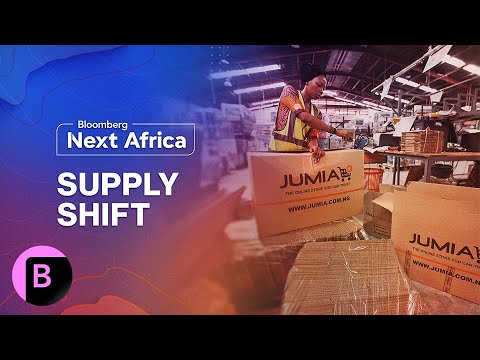
Africa's E-Commerce Platform Jumia Rides Trade War Tailwind
Bloomberg Television· 2025-10-04 05:00
Macroeconomic Challenges & Recovery - The company faced significant challenges in its African markets due to currency volatility, high inflation (e g, 50% in some countries), and pressure on consumers [1][2] - Currency stability is now improving the situation, leading to easier supply and increased confidence among consumers [3] - The trade war between China and the US is indirectly benefiting the company by increasing the supply of goods from Chinese manufacturers [4] Strategic Focus & Market Position - The company is focusing on e-commerce for physical goods targeting the African middle class with income between hundreds and $400-500 per month [6] - The company exited South Africa due to intense competition from local players like Takealot and international platforms like Amazon, Shein and Temu [7][8] - The company claims to be the number one player in eight of the nine markets it operates in, focusing on markets with a GDP per capita between $1,000-4,000 per year [9] Competition & Future Outlook - The company anticipates increased competition from non-resident platforms like Temu and Shein in markets like Nigeria [12] - Despite competition from Temu in Nigeria, the company believes it can effectively compete due to its adaptation to the local market [12]

X @Bloomberg
Bloomberg· 2025-09-28 22:20
Market Reform - Vietnam's plan to loosen the state's grip and reform the gold market [1] - The reform aims to reduce currency volatility [1] - The reform aims to narrow the gap between domestic and global gold prices [1]
Rupee shielded by central bank intervention even as pressure lingers
The Economic Times· 2025-09-24 10:38
Core Viewpoint - The Indian rupee closed at 88.69 against the U.S. dollar, nearing its all-time low, with the Reserve Bank of India (RBI) likely intervening to support the currency amid increasing dollar strength and concerns over U.S. tariffs and visa fee hikes [1][7]. Currency Market Dynamics - The RBI's intervention was noted across various segments, including non-deliverable forwards (NDF), currency futures, and the OTC spot market, which helped to stabilize the rupee despite ongoing pressures [2][7]. - A trader indicated that the RBI's presence led to muted price action, although the rupee's trajectory appears to lean towards further weakening [2][7]. Central Bank Strategy - The RBI has increased its activity in the offshore NDF market to support the rupee, allowing for a gradual weakening while selectively intervening to manage volatility rather than maintaining a fixed exchange rate [5][7]. - Abhishek Goenka from IFA Global noted that the RBI's approach is to smooth out volatility rather than defend a specific level for the rupee [5]. Economic Influences - Dollar demand related to gold imports and concerns over the H-1B visa fee hike have contributed to the pressure on the rupee [6][7]. - The dollar gained 0.3% against a basket of peers, while India's benchmark 10-year bond yield increased to 6.486% [6][7].

X @Bloomberg
Bloomberg· 2025-09-10 19:38
Inflation - Argentina's monthly inflation climbed less than expected [1] Political Context - A crucial vote in Buenos Aires province stirred up currency volatility [1]
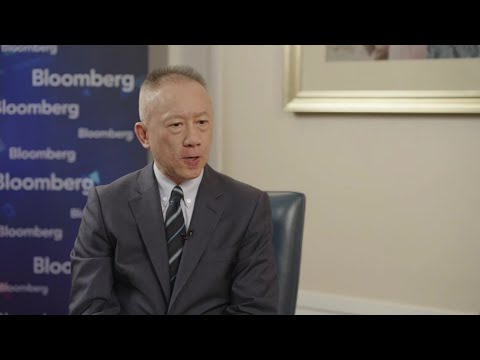
TSMC CFO Discusses Currency Volatility Impact on Business
Bloomberg Technology· 2025-07-21 17:39
Foreign Exchange Risk Management - The company acknowledges the Taiwan dollar's exchange rate as one of six factors impacting profitability, but emphasizes its inability to control it [1] - The company aims to leverage other controllable factors to maintain profitability despite unfavorable exchange rate fluctuations [1][2] - The company has contingency plans in place to address potential rapid appreciation of the Taiwan dollar [1] Hedging Strategies - The company employs multiple strategies to manage US dollar exposure, including spot market sales, forward contracts, and transferring US dollar cash to an offshore holding company [3] - The offshore holding company's financial statements are denominated in US dollars, reducing hedging costs [3] - The company prioritizes a combination of tools, considering market appetite and hedging costs for each [4] - The company has been using capital injection to the offshore company for years as part of its hedging strategy [4]