DRAM微缩

Search documents
DRAM,如何微缩?
半导体行业观察· 2025-05-26 00:50
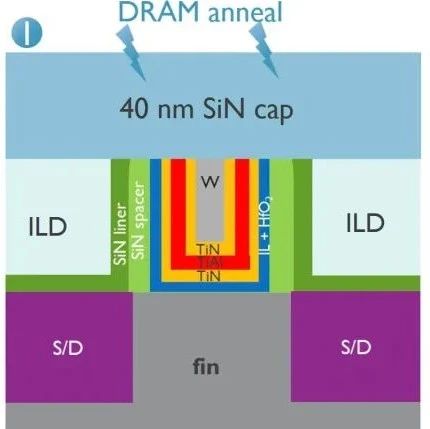
Core Insights - The article discusses the evolution and future of DRAM technology, emphasizing the need for innovation in capacitor, access transistor, and bit cell architecture to meet the growing demand driven by artificial intelligence [2][17]. Group 1: DRAM Technology Overview - DRAM has been the primary memory architecture for decades, relying on dynamic random access memory for temporary data storage due to its high speed, integration, cost-effectiveness, and reliability [1]. - The current generation of DRAM chips operates at the "10nm level," with active area half-pitch ranging from 19nm to 10nm, indicating a shift towards smaller and more efficient designs [2]. Group 2: Peripheral Circuitry - DRAM chips require additional transistors for functions such as address decoding and sensing amplification, known as peripheral transistors, which are traditionally manufactured adjacent to the memory array [3][5]. - Peripheral transistors are categorized into three types: conventional logic transistors, sensing amplifiers, and row decoders, each with distinct performance requirements [5][7]. Group 3: Innovations in Peripheral Transistors - The article highlights the need for a unified, cost-effective, and thermally stable technology platform for peripheral transistors, addressing the unique requirements of each type [7][9]. - Innovations include high-k/metal gate integration and the transition from planar to FinFET architectures to enhance performance and power efficiency [10][17]. Group 4: Future Directions - The future of DRAM technology may involve constructing peripheral circuits on separate wafers, utilizing advanced wafer bonding techniques to reduce thermal stability requirements [27]. - The development of thermally stable FinFET platforms is expected to improve power, performance, and area efficiency, catering to the stringent demands of applications like automotive and AI [17][18].