DiT(Diffusion Transformer)

Search documents
国产AI视频三国杀:可灵、即梦、Vidu,谁会是最大赢家?
3 6 Ke· 2025-07-30 00:16
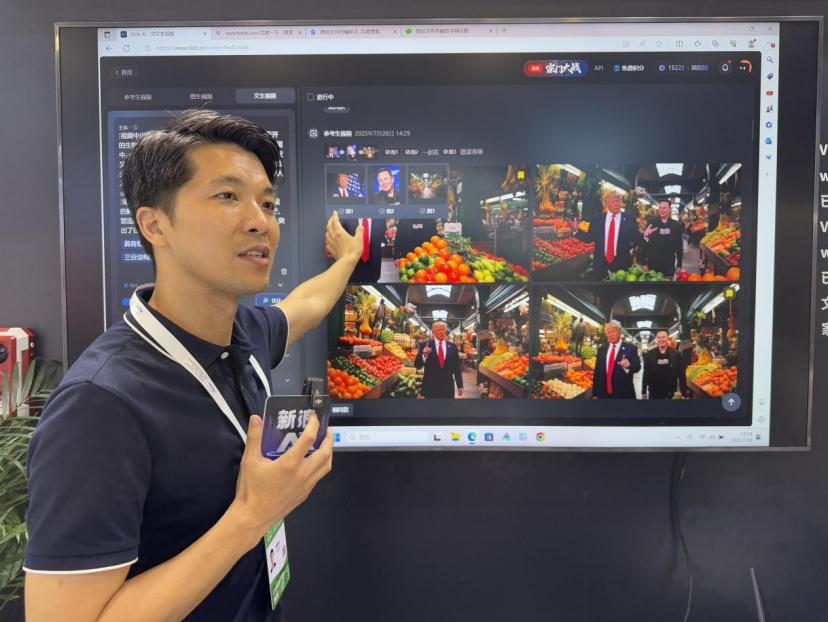
Core Insights - The article analyzes three leading domestic players in AI video generation: Jimeng, Keling, and Vidu, focusing on their product performance, technical routes, and commercial prospects [1][2][6]. Product Performance - Keling's AI shows strong expressiveness but tends to be overly dramatic; Vidu's AI is realistic and detailed but lacks pace; Jimeng's AI is balanced and controllable but somewhat mediocre [2][12][18]. - Keling has over 45 million global creators and has generated over 200 million videos and 400 million images [2]. Technical Routes - The key technology behind AI video generation is the Diffusion Transformer (DiT) [3][20]. - Keling adopts a DiT architecture similar to Sora, while Vidu uses a U-ViT model that integrates Transformer mechanisms into U-Net [3][26]. - Jimeng relies on its self-developed Seedance 1.0 model for video generation [31][34]. Commercial Prospects - Keling benefits from its integration with Kuaishou's vast short video ecosystem, which provides a significant user base and data for model iteration [35]. - Vidu, backed by a strong technical foundation, aims to serve the B2B market but faces challenges in productization and market penetration [36]. - Jimeng, supported by ByteDance's ecosystem, aims to redefine the creator experience by integrating AI video generation into tools like Jianying [36][38]. Conclusion - The ultimate winner in the AI video generation space is likely to emerge between Keling and Jimeng, as the battlefield for AI video lies in application and ecosystem integration [4][37].