AI视频生成

Search documents
快手难讲新故事:“老铁红利”见顶,可灵未挑大梁
Guo Ji Jin Rong Bao· 2026-03-28 07:17
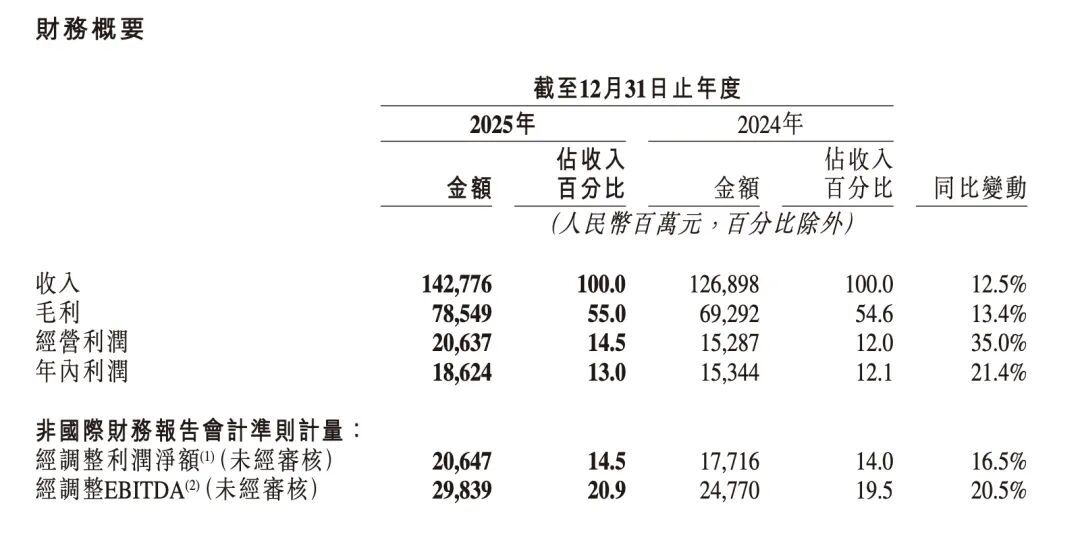
Core Viewpoint - Kuaishou's revenue and net profit both increased in 2025, but concerns about the saturation of the "Lao Tie Economy" and slowing e-commerce growth have emerged, leading to a significant drop in stock price after the earnings report [2][12]. Financial Performance - In 2025, Kuaishou's total revenue grew by 12.5% year-on-year to 142.8 billion RMB, with adjusted net profit reaching 20.6 billion RMB, up 16.5% year-on-year, and an adjusted net profit margin of 14.5% [2][3]. - For Q4 2025, Kuaishou's quarterly revenue increased by 11.8% year-on-year to 39.6 billion RMB, with adjusted net profit rising by 16.2% to 5.5 billion RMB [2][3]. Business Segments - Kuaishou's revenue structure includes online marketing services, live streaming, and other services, with the latter being the fastest-growing segment, increasing by 27.6% year-on-year to 22.2 billion RMB [4]. - Live streaming revenue was 39.1 billion RMB, showing only a 5.5% year-on-year increase, indicating a slowdown compared to overall revenue growth [4][8]. User Growth - Kuaishou's average daily active users (DAU) reached 410.2 million in 2025, a slight increase of 2.76% year-on-year, while average monthly active users (MAU) were 724.6 million, up 2.11% year-on-year [7][8]. - The growth rate of DAU and MAU has significantly slowed from previous years, indicating a potential user growth ceiling [5][8]. E-commerce Performance - Kuaishou's e-commerce GMV for 2025 was approximately 1.6 trillion RMB, with a year-on-year growth of 12.93% in Q4, but this growth rate has been declining compared to earlier quarters [8][9]. - The company plans to stop separately disclosing quarterly and annual e-commerce GMV starting in 2026, reflecting the pressures faced by its e-commerce business [9]. Regulatory Challenges - Kuaishou has faced regulatory scrutiny, including copyright infringement cases and content management issues, which have impacted its content ecosystem and user engagement [10][12]. AI Initiatives - Kuaishou is heavily investing in its AI initiative, Keling AI, which generated 340 million RMB in revenue in Q4 2025, but this still represents less than 1% of total revenue [11][12]. - The company aims for Keling AI to achieve over 100% year-on-year growth, but the overall contribution to revenue remains limited [11][12]. Competitive Landscape - Kuaishou faces competition from ByteDance's Seedance 2.0, which has gained significant market attention and could impact Kuaishou's growth prospects in the AI video generation space [13].


快手高管解读Q4财报:有信心在今年实现可灵收入超过100%的同比增长
Xin Lang Ke Ji· 2026-03-25 13:17
Core Viewpoint - Kuaishou Technology reported a solid performance for Q4 2025, with total revenue increasing by 11.8% year-on-year to RMB 39.6 billion and adjusted net profit reaching RMB 5.5 billion. Core business revenue, including online marketing services, grew by 17.1% year-on-year [1] Group 1: Financial Performance - In Q4 2025, Kuaishou's total revenue was RMB 39.6 billion, reflecting an 11.8% year-on-year growth [1] - Adjusted net profit for the same quarter was RMB 5.5 billion [1] - Core business revenue, which includes online marketing services, saw a year-on-year increase of 17.1% [1] Group 2: AI Development and Strategy - The recent updates in video generation models, such as Seedance 2.0, have positively impacted the industry by lowering the creation barrier for ordinary users and increasing the penetration of "AI video generation" in various application scenarios [2] - Kuaishou's Keling AI remains a global leader in model and product capabilities, with its Keling 3.0 model showing superior performance in aspects like character consistency and physical realism [2] - Keling AI's annual recurring revenue (ARR) exceeded USD 300 million in January, with expectations of over 100% year-on-year growth in revenue this year [2] Group 3: Model Iteration and Future Plans - Keling AI has focused on a unified, native, and multimodal direction for model evolution, introducing the concept of Multimodal Visual Language (MVL) to enhance creative expression [3] - The company plans to expand the model to include more modalities, such as actions and expressions, while addressing complex scene settings and consistency issues [3] - Keling AI aims to enable autonomous full-process creation through intelligent agent capabilities, enhancing user experience in storyboard arrangement and scene consistency [3]
直面Seedance2.0挑战?快手可灵想要年内收入翻倍
Hua Er Jie Jian Wen· 2026-03-25 13:01
Core Insights - Sora, a prominent player in AI video generation, announced its exit from the market just two years after launch, highlighting the challenges in the video generation sector even for leading AI companies [2][3] - Kuaishou Technology reported a 11.8% year-on-year revenue growth to 39.6 billion RMB in Q4 2025, with adjusted net profit increasing by 16% to 5.5 billion RMB, and a full-year revenue growth of 12.5% to 142.8 billion RMB [3][4] Company Performance - Kuaishou's AI video generation platform, Keling AI, generated 340 million RMB in revenue for Q4, slightly below initial expectations, with annual revenue reaching 1.04 billion RMB (approximately 150 million USD) [5][6] - The annual recurring revenue (ARR) for Keling AI exceeded 300 million USD as of January, with expectations for over 100% year-on-year growth in 2026 [7] AI Strategy and Development - Kuaishou's AI strategy has transitioned from storytelling to significant commercialization, with ongoing investments in AI technology and model development [7][13] - The company has launched several models, including Keling O1 and Keling 3.0, which enhance its competitive edge in the AI video generation market [7][8] Market Trends and Competition - The AI video generation market is expected to grow tenfold over the next five years, reaching approximately 29 billion USD by 2030, allowing for multiple leading players to coexist [11] - Kuaishou's models are recognized for their competitive pricing and quality, maintaining a leading position in global benchmarks [10] Financial Investments - Kuaishou plans to increase its capital expenditures to approximately 26 billion RMB in 2026, focusing on supporting Keling's large models and infrastructure [12] - Online marketing services remain a significant revenue source, contributing over half of Kuaishou's income, with Q4 revenue from these services reaching 23.6 billion RMB, a 14.5% increase year-on-year [15]

为什么Sora还是“死了”
投中网· 2026-03-25 07:33
Core Viewpoint - OpenAI's decision to shut down the Sora application reflects a strategic shift towards prioritizing enterprise solutions over consumer-facing products, driven by the need to optimize resources for profitability and growth [8][16][30]. Group 1: Sora's Performance and Challenges - Sora experienced a rapid decline in user engagement, with app downloads dropping by 32% in December 2025 and a further 45% in January 2026, indicating that while users remained, their enthusiasm waned [11]. - The primary appeal of Sora's feature, which allowed users to insert themselves into movie scenes, proved to be a novelty rather than a sustainable use case, leading to a lack of ongoing user interest [11][12]. - Trust issues regarding the handling of personal images by AI applications contributed to user reluctance to engage with Sora, highlighting a significant barrier to its success [11]. Group 2: Strategic Partnerships and Financial Implications - Disney's abrupt termination of its partnership with OpenAI, including a planned $10 billion investment, underscored the fragility of content licensing agreements and the shifting landscape of AI collaborations [13][14]. - OpenAI's recent $11 billion funding round raised its valuation to $730 billion, prompting a reevaluation of resource allocation towards more profitable ventures, such as Codex, which has seen significant user growth [16][18]. Group 3: Market Dynamics and Future Directions - The competitive landscape for AI video generation remains active, with other companies like ByteDance and Google DeepMind continuing to develop similar technologies, suggesting that the market for AI video is not entirely closed off [22][23]. - OpenAI's decision to withdraw Sora from the consumer market does not imply a retreat from AI video generation as a whole, but rather a strategic pivot towards more lucrative enterprise applications [21][23]. - The broader AI industry is learning that while consumer engagement is valuable, enterprise clients provide more reliable revenue streams, as evidenced by competitors like Anthropic, which reported significant income from business customers [19][30].

Sora关停背后:为啥它没跑成“视频版ChatGPT”?
AI前线· 2026-03-25 04:22
Core Viewpoint - OpenAI's video generation AI, Sora, has been shut down, leading to mixed reactions on social media, with some users lamenting its realistic output while others criticize its copyright and content risks [2][3][8]. Group 1: Sora's Shutdown and Reactions - Sora's closure has garnered over 11 million views on social media, indicating significant public interest [2]. - User comments reflect a divide, with some appreciating Sora's capabilities and others expressing relief at its shutdown due to concerns over copyright and misinformation [3][8]. - The anticipated partnership with Disney, which involved a $1 billion investment and the use of over 200 IPs for Sora, has been jeopardized by the app's closure [13][14]. Group 2: Reasons for Sora's Failure - Sora struggled to achieve the same success as ChatGPT, primarily due to challenges in usage frequency, cost structure, and product form [15][17]. - Despite initial success, with over 1 million downloads in five days, Sora's usage declined significantly, with a 45% drop in downloads by January 2026 [23]. - The cost of video generation is substantially higher than text generation, with estimates suggesting that generating one minute of AI video requires over ten times the computational resources of generating a thousand-word text [26][29]. Group 3: OpenAI's Strategic Shift - OpenAI's decision to shut down Sora may be linked to its preparations for an IPO, with a current valuation of approximately $730 billion and a focus on core products that generate sustainable revenue [32][33]. - The company plans to consolidate its offerings, integrating ChatGPT, Codex, and Atlas into a single desktop application, indicating a shift towards a more streamlined product strategy [36][37]. - The closure of Sora signals OpenAI's intent to prioritize high-frequency, revenue-generating products over experimental ones that incur high costs [35][37].

OpenAI关停Sora!25个月从封神到退场
量子位· 2026-03-24 23:52
Core Viewpoint - OpenAI has announced the discontinuation of its Sora video generation platform, which has led to significant backlash and skepticism regarding the reliability of AI products from the company [1][3][6]. Group 1: Sora's Development and Termination - Sora was initially launched with high expectations, showcasing advanced video generation capabilities based on over 200 IPs from Disney, Marvel, Pixar, and Star Wars [5][10]. - The platform experienced rapid growth, reaching the top of the App Store in the US shortly after its launch, but faced declining interest as competition increased and copyright issues arose [11][12]. - OpenAI's decision to shut down Sora is part of a broader strategic shift as the company prepares for an IPO, focusing on commercial and code development functionalities [18][21]. Group 2: Impact on Partnerships and Future Directions - Following the termination of Sora, Disney has ended all collaborations with OpenAI, including a planned $1 billion investment [6][7]. - OpenAI is reallocating resources towards developing productivity tools for businesses and individuals, indicating a shift in focus away from consumer-facing video generation [21][22]. - The research efforts related to Sora will now pivot towards long-term studies in robotics and world simulation, with the product department rebranded as "AGI Deployment" [23]. Group 3: The AI Video Landscape in China - Despite Sora's closure, the AI video generation sector is thriving in China, with companies like ByteDance and Kuaishou leading the market [24][25]. - Kuaishou's AI video platform has reported monthly revenues exceeding $20 million, demonstrating strong user engagement and a successful business model [26]. - The Chinese market is characterized by a dense ecosystem of short video and e-commerce industries, providing a rich data environment for AI development [31][32].

CVPR 2026 | 让AI视频不再「串戏」:免训练精准控制多段动作,SwitchCraft一招破解逻辑崩坏
机器之心· 2026-03-24 01:31
Core Insights - The article discusses the rapid advancements in AI video generation, particularly focusing on the capabilities of models like Sora and Seedance 2.0, which have achieved breakthroughs in visual fidelity and dynamic representation [2] - A significant technical bottleneck exists in current open-source video diffusion models, which struggle with generating complex narratives involving multiple events due to a lack of explicit temporal constraints [2][8] - The introduction of the SwitchCraft framework by the Westlake University AGI Lab aims to overcome these challenges by implementing a training-free multi-event video generation approach that enhances temporal attention control without modifying the underlying model parameters [3][13] Technical Challenges - Existing video diffusion models optimize for "single event" generation, leading to performance degradation when handling prompts with multiple events, resulting in semantic entanglement and event omissions [2][8] - Traditional methods of segmenting and stitching videos often result in a loss of coherence and visual consistency during scene transitions [8][9] SwitchCraft Framework - SwitchCraft introduces two core components: Event-Aligned Query Steering (EAQS) and Auto-Balance Strength Solver (ABSS), which work together to ensure precise temporal guidance and maintain high visual fidelity [13][14] - EAQS allows for semantic isolation of events by controlling the attention mechanism, while ABSS dynamically adjusts the intervention strength to balance between generating actions and preserving the original feature distribution of the model [13][14][16] Performance and Evaluation - SwitchCraft has demonstrated superior performance in multi-event video generation tasks, achieving high alignment with textual prompts, visual fidelity, and motion smoothness compared to existing baseline methods [23] - The framework's unique ability to create seamless transitions through creative occlusion further enhances its effectiveness in maintaining narrative coherence [21][23] Conclusion - SwitchCraft represents a novel approach to complex video generation, emphasizing the importance of precise temporal attention control without the need for model retraining, with potential applications in long-form video narratives and dynamic storyboarding [26]

CVPR 2026 | 从「单帧」到「分镜」:STAGE重新定义AI电影叙事
机器之心· 2026-03-22 01:17
Core Insights - The article discusses the evolution of AI video generation, highlighting the transition from simple animations to complex storytelling, emphasizing the importance of narrative coherence [3][6] - The proposed framework, STAGE, focuses on generating structured narratives through a "start-end frame pair" approach, which enhances the storytelling capability of AI [8][12] Technical Framework - STAGE introduces a new workflow that allows for the prediction of both the starting and ending frames of each shot, providing a more coherent narrative structure [8][10] - The core model, STEP2, acts as an AI director, translating scripts into executable visual storyboards [10][12] Key Features of STAGE - The framework includes a multi-shot memory pack to maintain character consistency across shots, ensuring that characters do not appear inconsistent [13] - A dual-encoding strategy is employed to ensure smooth transitions within individual shots, preventing abrupt movements [14] - The two-stage training scheme mimics film school training, first teaching the model basic shot language and then refining it with human-selected examples of good transitions [15] Data Foundation - A large-scale dataset, ConStoryBoard, has been created to train the model, consisting of 100,000 high-quality multi-shot segments with detailed annotations [17] Experimental Results - STAGE has been compared with various state-of-the-art multi-shot generation methods, demonstrating superior coherence and a better understanding of cinematic storytelling [19][22] - The results indicate that structured narrative control is essential for the future of multi-shot video generation, moving beyond mere pixel manipulation [24] Significance and Outlook - The article concludes that as AI learns to create films rather than just animations, a new era of AI-assisted storytelling will emerge, making filmmaking accessible to everyone [25]

AI大牛刘威创立的Video Rebirth,刚刚又完成8000万美元融资
机器之心· 2026-03-18 03:35
Core Insights - Video Rebirth, an AI video generation company, has successfully completed a financing round totaling $80 million, attracting investments from industry giants like AMD Ventures and Hyundai [2] - The newly raised funds will primarily accelerate the commercialization and global market expansion of its core video model, Bach [2] - The company aims to establish an industrial-grade infrastructure for digital content production and interaction, connecting imagination with creation [2][4] Investment and Strategic Partnerships - The financing round was supported by top venture capital firms, including Openspace Capital, and was exclusively advised by Taihe Capital [2] - Video Rebirth's co-founder emphasized the importance of global development and the strategic backing from top-tier investors, which validates their technological direction [4] - AMD Ventures expressed alignment with Video Rebirth's vision of building world models through native video technology, providing robust computational support [6] Technological Advancements - Video Rebirth has developed a unique Dual Diffusion Transformer architecture that ensures precise adherence to instructions and utilizes a Physics Native Attention mechanism for seamless video generation [2] - The company claims to have achieved unprecedented visual coherence and controllability in video generation, breaking down traditional boundaries between film and interactive content [5] - The ultimate goal is to transform passive viewers into active creators by enabling instant conversion of imaginative ideas into interactive digital spaces [5] Market Positioning - The company positions itself as a key player in the next-generation digital content ecosystem, focusing on creating a foundational infrastructure that is not limited to a single market [4] - Industry leaders from various sectors, including automotive and entertainment, recognize the potential of Video Rebirth's technology to revolutionize content production and enhance user experiences [6]

0产品获苏妈投资!前腾讯AI大牛刘威视频创业,又融了8000万美元
量子位· 2026-03-18 00:21
Core Viewpoint - Video Rebirth, an AI video startup founded by former Tencent AI expert Wei Liu, has successfully raised $80 million (approximately 550 million RMB) in funding, indicating strong investor confidence in its technology and market potential [2][5][12]. Group 1: Company Overview - Video Rebirth was established over a year ago and has quickly attracted significant investment from top venture capital firms and strategic giants like AMD Ventures and Hyundai [3][5]. - The company is headquartered in Singapore and currently focuses on overseas markets, targeting enterprise and professional individual users [7]. Group 2: Funding Details - The recent $80 million funding round will be utilized for the commercialization of Video Rebirth's advanced video generation product line, the Bach series models, and for global market expansion [6][8]. - The funding round began in November 2025, with multiple institutions expressing investment interest while the company's products were still in development [8]. Group 3: Technology and Product Development - Wei Liu is leading the development of an industrial-grade video generation model named Bach, which has not yet been publicly released [4][22]. - The Bach engine employs a physics-native attention mechanism (PNA) to ensure continuity in character and physical logic throughout long shots, addressing common issues in existing AI models [22]. - The engine's unique Dual Diffusion Transformer (DDiT) architecture allows for precise instruction adherence, alleviating the time-consuming generation process faced by professional creators [23]. Group 4: Market Position and Future Prospects - The AI video generation sector is transitioning from a technology validation phase to a critical stage of commercialization and scaling, with increasing interest from various industries [12][13]. - Video Rebirth is positioned at the forefront of this technological wave, with its products expected to compete with established models like OpenAI's Sora [24]. - The company is planning another significant funding round by the end of the month, indicating ongoing investor interest and potential for further growth [25].