
Digital Empowerment

Search documents
年味里的“鲜”力量 “水产航母”擎起“广货行天下”
Xin Lang Cai Jing· 2026-02-16 00:27
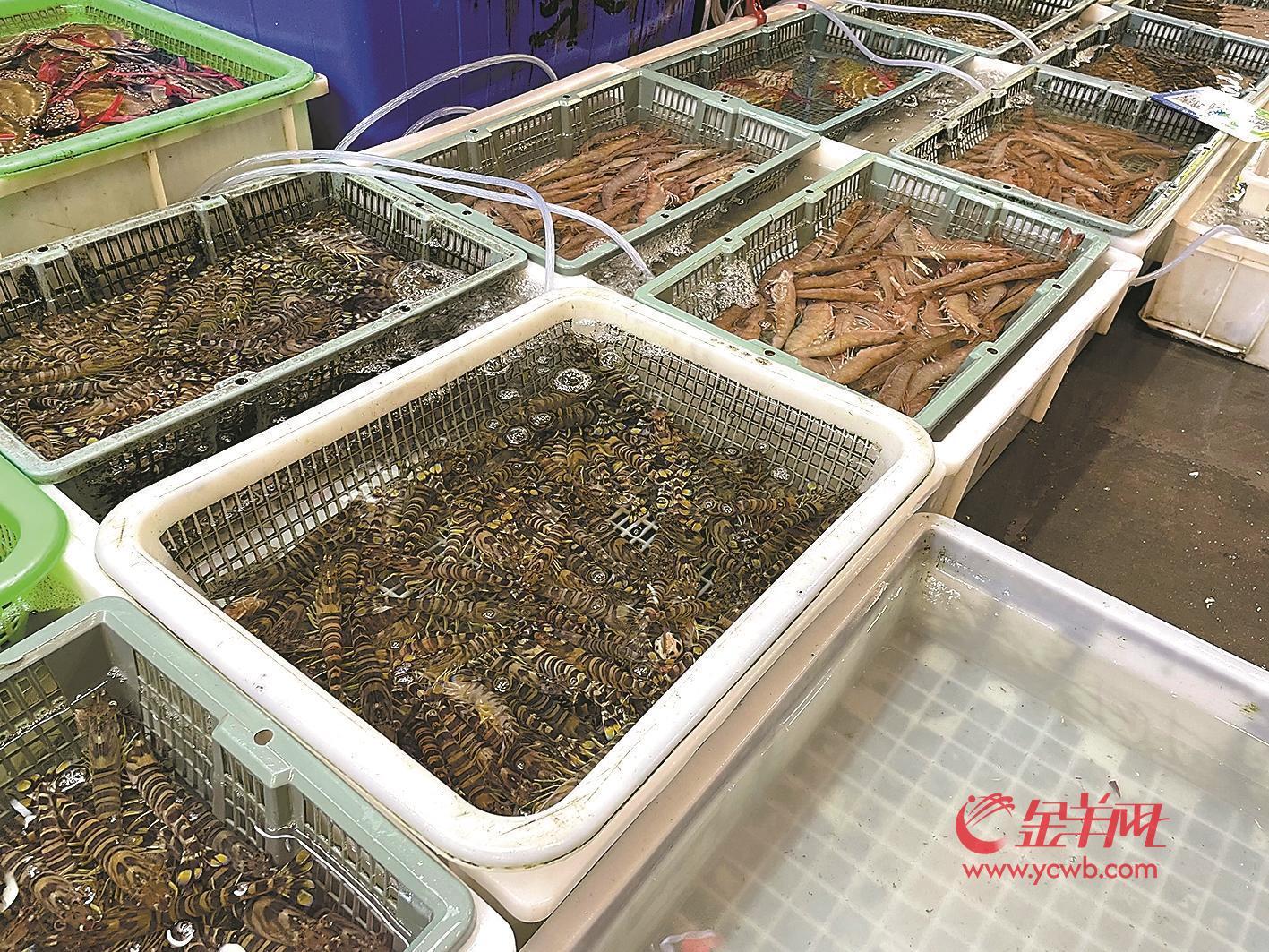
Core Insights - The Huangsha Aquatic Center in Guangzhou has successfully transitioned to a modernized market, marking its first Spring Festival peak season post-upgrade, which is crucial for the local seafood supply chain [2][4] - The market is positioned as a key hub for seafood distribution, with a daily trading volume exceeding 600 tons during the Spring Festival, peaking at 1,000 tons [4][7] Group 1: Market Operations - The upgraded Huangsha Aquatic Center features advanced facilities, including centralized cooling, oxygen supply, and seawater systems, with a total investment of nearly 2 billion yuan [7] - Approximately 800 merchants have entered the market, achieving over 90% completion in recruitment, with an 85% operational rate among merchants [7] - The market has seen an average of 4,700 vehicle entries daily since the transition, indicating robust operational capacity [7] Group 2: Product Offerings and Sales - The market offers a wide variety of seafood, including Canadian lobsters, Russian king crabs, and Norwegian salmon, catering to diverse culinary needs [2][4] - Merchants are reporting significant sales, with some achieving daily sales of over 4,000 pounds of king crabs and 1,000 pounds of Canadian razor clams [4][3] - The average daily sales volume during the Spring Festival is reported to be over 600 tons, with peak days reaching 1,000 tons, reflecting strong demand [4][7] Group 3: Industry Transformation - The Huangsha Aquatic Center exemplifies the shift from traditional stall-based operations to modern brand-oriented business models, emphasizing quality and branding [8] - Many vendors are now creating their own brands, focusing on unified packaging and online sales through e-commerce platforms, indicating a significant evolution in the market's operational strategy [8] - This transformation reflects broader changes in Guangzhou's commercial landscape, moving towards a modern supply chain hub that prioritizes quality and brand strength over mere volume [8]

促进人工智能技术与制造业应用“双向赋能”
Ke Ji Ri Bao· 2026-01-09 01:17
Core Viewpoint - The "Artificial Intelligence + Manufacturing" Special Action Implementation Opinion aims to deeply integrate AI technology with the manufacturing industry, promoting innovation and application in both sectors by 2027 [1] Group 1: Key Objectives - By 2027, China aims to achieve secure and reliable supply of key AI technologies, maintaining a leading position in industry scale and empowerment levels [1] - The plan includes the application of 3-5 general large models in manufacturing, the launch of 1,000 high-level industrial intelligent entities, and the creation of 100 high-quality industrial data sets [1] - The initiative seeks to cultivate 2-3 globally influential ecosystem-leading enterprises and a number of specialized small and medium-sized enterprises [1] Group 2: Major Tasks - The implementation outlines seven major tasks including innovation foundation, intelligence upgrade, product breakthroughs, entity cultivation, ecosystem expansion, safety assurance, and international cooperation [1] - Specific measures include enhancing AI computing power, supporting the development of intelligent chips, and creating high-performance algorithm models tailored for manufacturing [2] - The initiative emphasizes the need for deep integration of AI in production processes and encourages leading enterprises to pioneer AI applications [2] Group 3: Product Development - The plan promotes the integration of AI technology in major equipment development such as aircraft and ships, and supports testing of smart connected vehicles [3] - It aims to accelerate the upgrade of smart terminals and foster innovation in AI-enabled products like smartphones and smart home devices [3] - The initiative includes policy support to guide enterprises in differentiated development and prevent excessive competition within the industry [3]
滨州市财政局:数字赋能高效履职 助力财政高质量发展
Qi Lu Wan Bao· 2025-12-17 11:11
Group 1: Budget Management Innovations - The financial management in Binzhou is transitioning from "experience-driven" to "data-intelligent" through digital empowerment and systematic reforms in budget management, tax source control, and public service [1] - The integrated budget management system upgrade has resulted in a closed-loop management covering 1,388 budget units, processing an average of 3,989 transactions daily, significantly enhancing efficiency [1] - Establishment of a financial data standard system has improved the scientific allocation of funds by breaking down data barriers between business modules [1] Group 2: Tax Control Innovations - The introduction of digital tax control at gas stations has created a collaborative governance structure involving tax, big data, and local government departments, enhancing tax source monitoring [2] - A data collection platform has been established, achieving a 100% software access rate and 93.41% hardware access rate, marking a shift from manual to data-driven tax management [2] - The "Binzhou model" of tax management has been recognized for its effectiveness and is being promoted across the province [2] Group 3: Electronic Invoice Innovations - The electronic invoice reform aims to simplify the cumbersome cross-province reimbursement process, addressing issues faced by patients seeking medical reimbursements [3] - Binzhou has become one of the first cities in the country to implement a comprehensive upgrade for public hospitals, completing system upgrades for 25 medical units [3] - The establishment of a national interface standard has facilitated the first cross-province electronic invoice reimbursement settlement, achieving direct data transfer and minimizing the need for citizen travel [3]
中国保险行业十四五大盘点③:百万代理人的演化逻辑,指向何方?
Sou Hu Cai Jing· 2025-11-20 08:38
Core Insights - The transformation of the agent channel is a key theme in understanding the changes in the life insurance industry during the "14th Five-Year Plan" period [2] - The traditional agent model is facing significant challenges due to changing consumer demands, market environments, and the evolving roles of insurance institutions [2][7] - The future of the agent channel must be built on new capabilities that align with the current environment rather than merely patching the old framework [2][7] Market Dynamics - The population of individuals born in the 1980s and 1990s exceeds 700 million, making them the main customer group for the insurance industry [5] - The average disposable income per capita in China is projected to reach 41,314 yuan in 2024, reflecting a 5.1% real growth from the previous year [5] - The middle-income group in China has surpassed 400 million, indicating a growing market for insurance products [5] Consumer Behavior - The insurance awareness among the 80s and 90s generations is increasing, leading to a more rational approach to purchasing insurance for wealth accumulation, education, retirement planning, and family protection [5] - This demographic is characterized by higher education levels and significant family responsibilities, resulting in concentrated and clear insurance needs [5][6] Industry Challenges - The agent workforce has declined from a peak of 10 million to 2.6 million, with recruitment becoming increasingly difficult [2][6] - The traditional agent model is experiencing diminishing marginal returns, leading to high costs and low outputs, disrupting the balance of input-output relationships [2][6] Strategic Responses - Major insurance companies are investing heavily in two main areas: internal support capabilities, particularly in technology, and ecological integration capabilities [8][9] - The use of advanced digital marketing platforms and technologies like AI and big data is becoming standard among leading firms to enhance agent efficiency [8] - The shift from a single product sales model to comprehensive lifecycle service offerings is essential to meet the evolving needs of consumers [9] Future Agent Profile - The future agents are expected to be younger, more professional, and career-oriented, with a focus on providing comprehensive risk management and lifecycle planning services [11][12] - The transformation involves a shift from being mere salespeople to becoming risk management consultants and full lifecycle planners [12] - The industry is witnessing a significant push towards creating a sustainable and respected career path for agents, enhancing their professional identity [12] Performance Metrics - Despite a 70% reduction in agent numbers since peak levels, key performance indicators such as per capita productivity and new business value have shown significant growth, indicating a positive trend in agent performance [13]
