
Digital finance

Search documents
Orion Digital to Announce Fourth Quarter and Full-Year 2025 Financial Results March 12, 2026
Businesswire· 2026-03-11 00:24
Core Viewpoint - Orion Digital Corp. will announce its Q4 and full-year 2025 financial results on March 12, 2026, during a conference call hosted by its CEO and CFO [1]. Group 1: Financial Results Announcement - The conference call will take place on March 12, 2026, at 1:00 p.m. ET, with a live webcast including a slide presentation [1]. - Financial results will be issued prior to market open on the same day [1]. - The call will provide insights into the company's performance and future outlook [1]. Group 2: Company Overview - Orion Digital Corp. operates digital wealth and payments infrastructure platforms, generating recurring subscription and services revenue [1]. - The Intelligent Investing platform offers digital wealth management solutions in Canada, while its subsidiary, Carta Worldwide, provides issuer processing and payments infrastructure across Europe [1]. - The company has over 20 years of experience in consumer lending, focusing on stability and risk control [1].



Aon Announces First Stablecoin Insurance Premium Payment
Prnewswire· 2026-03-09 12:30
Core Insights - Aon has announced the first stablecoin insurance premium payment among major global brokers, utilizing U.S. dollar-backed stablecoins to modernize the insurance value chain [1] - The initiative reflects Aon's commitment to innovation in response to client demand, regulatory clarity, and the evolution of digital financial models [1] - Aon collaborated with Coinbase and Paxos to successfully settle insurance premium payments using stablecoins across multiple blockchain networks, demonstrating flexibility and efficiency [1] Group 1: Aon's Initiative - Aon's digital asset practice led the initiative to integrate stablecoin technologies into insurance premium payments, enhancing operational efficiency [1] - The proof of concept was supported by recent U.S. regulatory developments, including the passage of the GENIUS Act in 2025, which established a federal framework for stablecoins [1] - Aon's CEO of financial services emphasized the importance of maintaining control while adopting innovative payment methods [1] Group 2: Collaboration with Coinbase and Paxos - The collaboration with Coinbase and Paxos allows Aon to evaluate the integration of regulated stablecoin settlements into insurance services [1] - Coinbase's Co-CEO highlighted the benefits of using stablecoins for faster, transparent, and scalable financial operations [1] - Paxos' head of treasury noted that stablecoins are becoming essential for managing liquidity and risk in business operations [1] Group 3: Future Outlook - Aon aims to continue evaluating stablecoin settlement capabilities and innovations in insurance services, aligning with regulatory requirements [1] - The evolution of stablecoins could lead to faster settlement timelines and greater payment efficiency as the infrastructure matures [1] - Aon's approach is designed to support client choice and adapt to evolving regulatory landscapes in the digital asset market [1]


金融为民 诚信护航
Xin Lang Cai Jing· 2026-02-25 22:06
Core Viewpoint - The initiative aims to enhance consumer protection in the financial sector and promote transparency, inclusivity, and digitalization in financial services, thereby improving consumer trust and experience in Shenyang's financial environment [1][2]. Group 1: Consumer Engagement - The "Financial Story Collection" campaign invites consumers and financial institutions to share their experiences related to financial services, focusing on both positive and negative encounters [1]. - The campaign seeks stories that highlight the convenience of online transactions, innovative financial products, and challenges faced in processes like loans and insurance claims [1]. Group 2: Financial Institutions' Role - Financial institutions are portrayed as not just service providers but also as entities that embody warmth and responsibility through their interactions with consumers [2]. - The initiative includes a collection of successful complaint resolutions and innovative service attempts by financial institutions, aiming to showcase their commitment to consumer rights [2]. Group 3: Submission Channels - Consumers can submit their stories through various channels, including a WeChat account, email, and a hotline, facilitating broad participation in the campaign [3].
Is This Bitcoin’s Last Stand? The Case For and Against BTC's Future.
Yahoo Finance· 2026-02-19 18:26
Core Viewpoint - The current state of Bitcoin (BTC) suggests it may be at a critical juncture, with potential for significant decline if it falls below $30, which represents a 20% drop from current levels around $53,000 [1][2]. Market Dynamics - Bitcoin's price has remained flat over the past two years, indicating a lack of growth despite market fluctuations [1]. - The narrative surrounding Bitcoin has shifted from survival to questioning its actual purpose in the financial ecosystem [3]. Historical Context - Popular assets, including Bitcoin, can linger in the market for decades, often becoming forgotten tickers if they fail to maintain relevance [3]. - The discussion includes comparisons to past financial instruments that lost their prominence, such as dot-com stocks and junk bonds [4]. Economic Factors - Bitcoin's performance has increasingly mirrored that of high-risk tech stocks rather than serving as a hedge against inflation, particularly during recent economic challenges [6]. - The changing global economy is putting pressure on the foundational beliefs that have supported Bitcoin's value proposition [6].
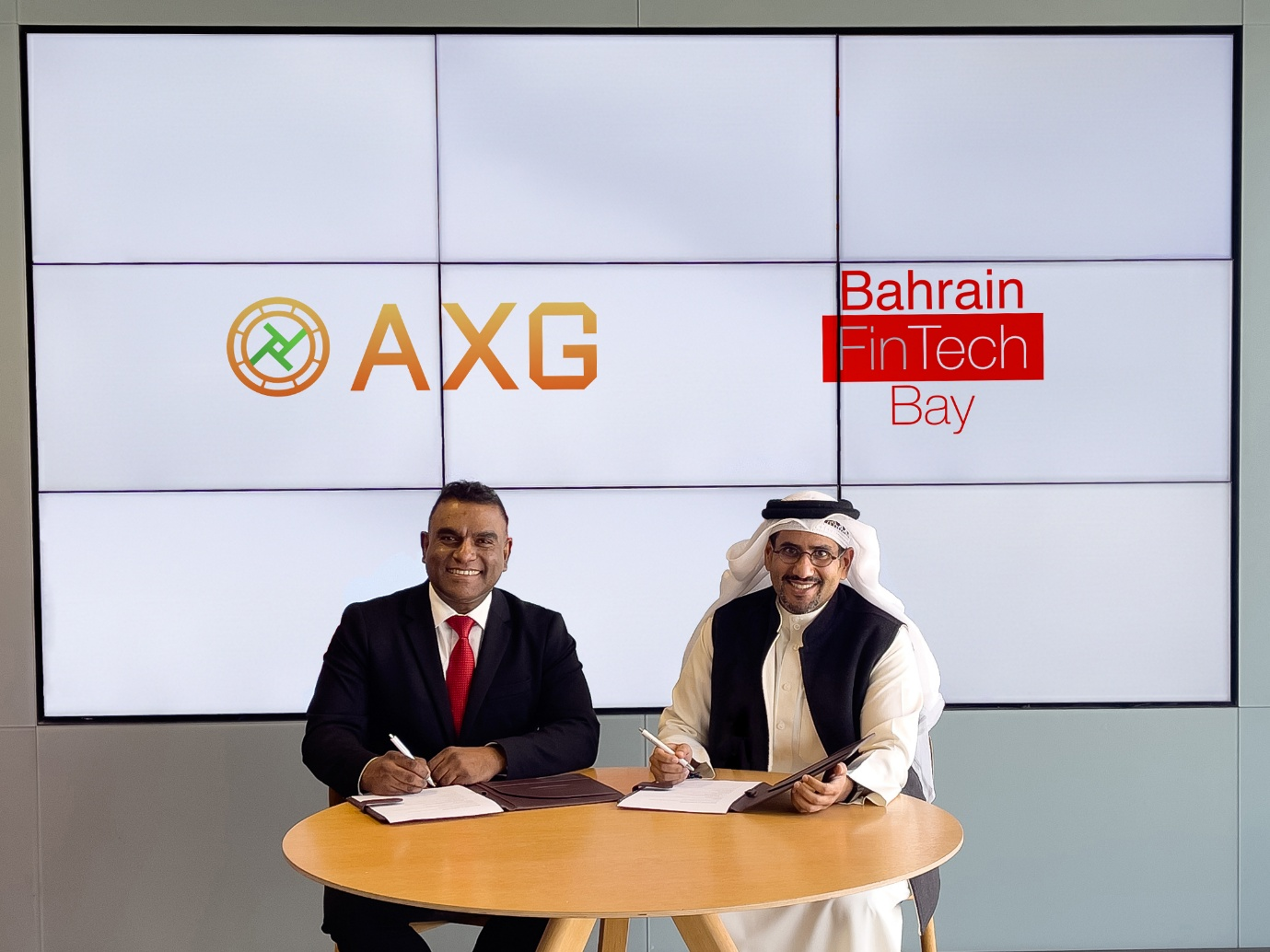
AlloyX and Bahrain FinTech Bay Announce Strategic Partnership to Accelerate Stablecoin Innovation
Globenewswire· 2026-02-15 12:00
Core Insights - AlloyX Limited has announced a strategic partnership with Bahrain FinTech Bay to enhance innovation and accelerate the adoption of regulated stablecoin applications, reinforcing Bahrain's status as a regional digital finance hub [1][3]. Company Overview - AlloyX Limited, a subsidiary of Solowin Holdings (Nasdaq: AXG), operates as a global integrated financial services institution bridging traditional finance and the digital assets ecosystem. The company focuses on stablecoin payments, tokenization services, digital brokerage, and on-chain financial infrastructure [5]. - AlloyX aims to integrate traditional brokerage and banking systems with blockchain technology to provide secure, efficient, and auditable digital financial solutions for institutions [5]. Partnership Details - Under the collaboration, AlloyX will engage with Bahrain FinTech Bay's innovation ecosystem to explore next-generation stablecoin application scenarios alongside global and regional payments and technology partners [3]. - The partnership aligns with AlloyX's vision for the future of digital finance, emphasizing the commitment to building compliant and scalable stablecoin solutions in Bahrain, which will benefit the GCC region and its global counterparts [4]. Bahrain FinTech Bay Overview - Bahrain FinTech Bay, established in 2018, is the leading ecosystem builder in Bahrain, focused on advancing innovation and collaboration within financial services. It supports scalable fintech initiatives through innovation labs, acceleration programs, and educational opportunities [7][8]. - The organization plays a crucial role in the growth of Bahrain's fintech ecosystem by fostering connections among government bodies, financial institutions, corporates, consultancy firms, universities, associations, venture capital firms, and fintech startups [8].
PayPay Corp(PAYP) - Prospectus
2026-02-12 15:19
Table of Contents As filed with the U.S. Securities and Exchange Commission on February 12, 2026. Registration No. 333- UNITED STATES SECURITIES AND EXCHANGE COMMISSION Washington, D.C. 20549 Form F-1 REGISTRATION STATEMENT UNDER THE SECURITIES ACT OF 1933 PayPay Corporation (Exact name of Registrant as specified in its charter) Not Applicable (Translation of Registrant's name into English) Japan 7389 Not Applicable (Primary Standard Industrial (I.R.S. Employer Identification No.) (State or other jurisdicti ...
Russian crypto regulation set for July rollout, says top lawmaker
Yahoo Finance· 2026-01-28 16:59
Moscow will roll out long-awaited Russian crypto regulation in July, allowing both retail and institutional investors to buy Bitcoin by mid-2027, according to the chief architect of a new financial law. A comprehensive legislative framework will be ready for State Duma lawmakers to vote on at the end of June, Anatoly Aksakov, the head of the State Duma’s Committee on the Financial Markets, told Russia’s Parliamentary Gazette. The law will include regulations for crypto exchanges, which currently operate ...
Nomura spinoff Laser Digital applies for OCC charter
Yahoo Finance· 2026-01-28 14:37
Core Viewpoint - Laser Digital, a spinoff from Nomura, has applied for a national trust bank charter to enhance its digital asset services and streamline regulatory compliance [1][2]. Group 1: Company Developments - Laser Digital plans to offer custody of digital assets and U.S. government securities, as well as spot trading and staking, but will not engage in direct deposits or trade securities [2]. - The application for the national trust bank charter aims to eliminate the need for state-by-state custody licenses, reflecting the company's strategic move to scale its operations [2]. - Steve Ashley, co-founder of Laser Digital, emphasized that the application aligns with the company's global ambitions and the importance of operating under stringent regulatory standards in the U.S. financial market [5]. Group 2: Industry Trends - The Office of the Comptroller of the Currency (OCC) has seen a significant increase in charter applications, with 18 de novo applications filed in 2025, indicating a growing interest among nonbank entities [2]. - The OCC conditionally approved national trust banking charters for five digital-asset firms in December, showcasing a trend towards regulatory acceptance in the digital asset space [3]. - Industry experts predict that the OCC will receive 25 novel charter applications in 2026, highlighting the evolving landscape of banking and the challenges to traditional banking franchise value [6].
Tokenized Gold vs. Real Gold: Which One Actually Works Harder for Your Money?
Yahoo Finance· 2026-01-26 15:13
Despite gold’s recent surge to record levels beyond $5,000 an ounce, a new gold competitor has emerged: tokenized gold. So what exactly is tokenized gold, and how does it compare with real gold? Also see the best gold exchange-traded funds to watch right now. What Is Tokenized Gold? Tokenized gold is exactly what it sounds like — digital tokens. Specifically, digital tokens traded, settled and deployed on blockchains but backed in value by real, physical gold. Recently, the market for these tokens has ...
Crypto regulation to become global reality this year, PwC says
Yahoo Finance· 2026-01-22 15:25
Core Insights - The global landscape for crypto regulation is expected to become more defined as legislation transitions from draft to law, with countries that establish transparent rules likely to lead the industry [1] - The environment will shift from regulatory debates to execution and competition among jurisdictions to attract capital and legitimacy, with a trend towards increased cross-border coordination for market integrity and investor protection [2] Regulatory Developments - Global regulatory collaboration is accelerating, facilitating institutional adoption of cryptocurrency, with regulation reshaping markets and enabling responsible scaling of digital assets [3] - In the European Union, market participants are adapting to the Markets in Crypto-Assets (MiCA) regulation, while the U.S. faces delays in the CLARITY Act due to opposition regarding stablecoin yields [4] - The U.K. is moving towards a full authorization regime for crypto-asset activities, enhancing investor protections and establishing a dual oversight model for payment stablecoins [5] Industry Trends - The shift towards clearer rules may lead to higher compliance costs for crypto firms but could also unlock new products and deeper institutional participation [3] - The winners in the crypto space will be those who integrate compliance, resilience, and transparency into their core operations [6]