EDGE框架

Search documents
麦肯锡:新任CEO的任务清单(精炼版)
Sou Hu Cai Jing· 2026-01-13 09:21
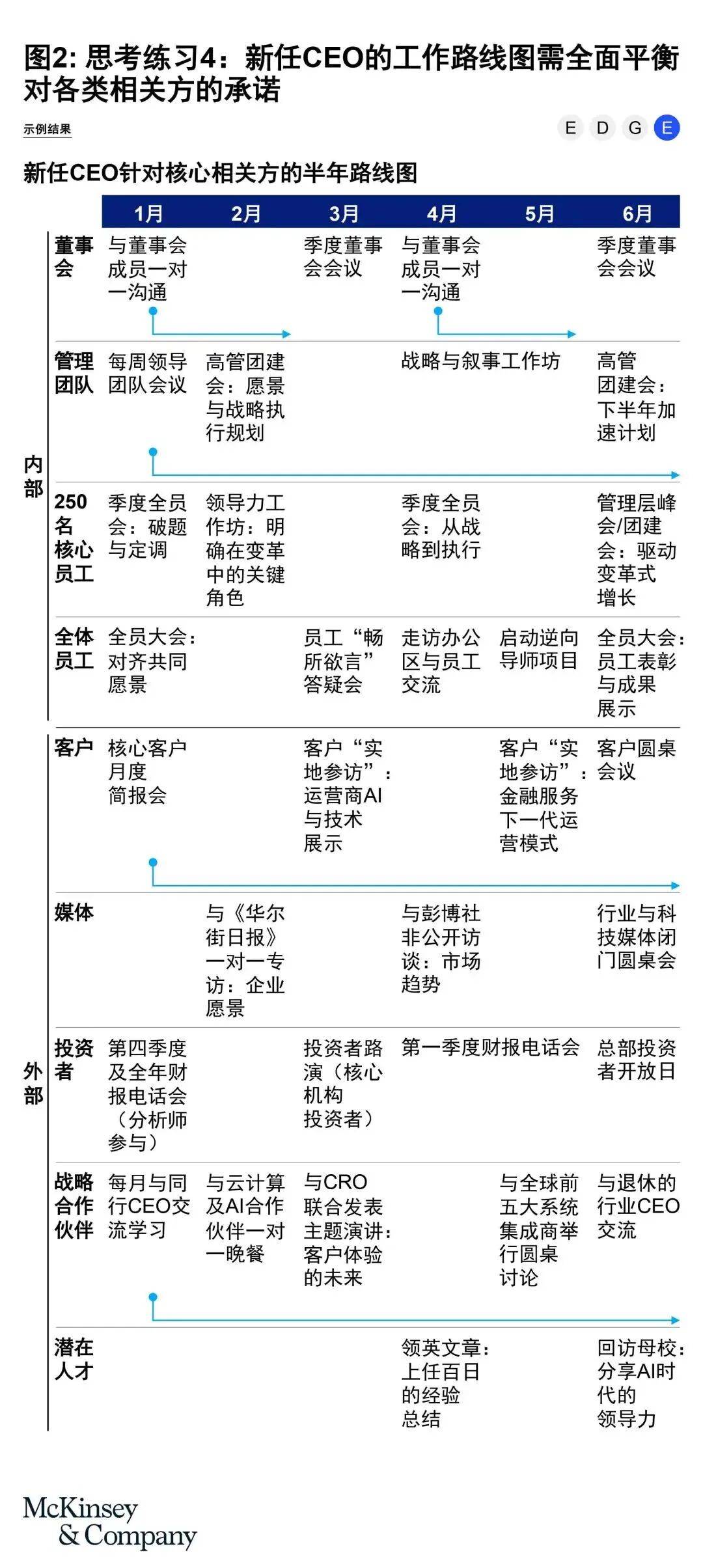
Core Insights - The article discusses the challenges faced by new CEOs, highlighting that the average tenure has dropped to a historic low of 6.8 years, with major companies losing nearly $1 trillion in market value annually due to poor leadership transitions [2]. Group 1: Challenges for New CEOs - The transition from internal decision-maker to a public-facing role is a significant challenge for new CEOs, with only 1% of Fortune 100 CEOs having a background in communications or public affairs [2]. - The article introduces the EDGE framework to help new CEOs manage their complex roles effectively [2]. Group 2: EDGE Framework Overview - **E - Expanded Vision**: New CEOs should establish priorities and leverage relationships with predecessors for a smooth transition [3][4]. - **D - Distinctive Narrative**: CEOs must articulate their identity, mission, and strategic vision clearly to build credibility [15][16]. - **G - Growth-oriented**: It is essential to unify the executive team's narrative and identify narrative ambassadors within the organization to disseminate key messages [22][23]. - **E - Engaged**: Maintaining a balance in internal and external communication is crucial, especially in the initial months of leadership [26]. Group 3: Key Strategies for Effective Leadership - New CEOs should engage in early dialogues with stakeholders to understand their concerns and foster innovation through targeted questioning [6][8]. - A structured assessment of stakeholders is recommended, categorizing them into resistors, supporters, allies, and independents for tailored communication strategies [9][14]. - Building a compelling narrative involves balancing short-term performance with long-term goals and using memorable metaphors to enhance communication [18][19]. Group 4: Crisis Management and Operational Integration - CEOs should collaborate with boards to reshape crisis management plans and focus on core issues during crises [26]. - Establishing a flexible interaction rhythm and allowing time for reflection can help in managing priorities effectively [28]. Conclusion - The article serves as a guide for new CEOs, emphasizing the importance of stakeholder engagement, clear communication, and strategic crisis management to foster trust and drive organizational success [28].

新官上任不迷路:致新任CEO的一封信 (上篇)
麦肯锡· 2026-01-06 04:19
Core Insights - The article emphasizes the challenges faced by new or incoming CEOs, highlighting the importance of effective communication and adaptability in their roles [3][4] - It presents the "EDGE framework" for managing stakeholder relationships, which includes expanding perspectives, shaping unique narratives, maintaining a growth mindset, and deep engagement [5][6] Group 1: Challenges for New CEOs - New CEOs face unprecedented pressure, with average tenures dropping to a historical low of 6.8 years, leading to significant value risks, with S&P 1500 companies losing nearly $1 trillion annually due to poor leadership transitions [4][2] - The complexity of stakeholder relationships has increased, requiring new CEOs to adapt quickly to their public roles and manage diverse interests from investors, regulators, media, employees, and the broader community [4][5] Group 2: The EDGE Framework - The "EDGE framework" consists of four components: - **Expanded**: Positioning the CEO as a bridge between the organization and external stakeholders [5] - **Distinctive**: Crafting the CEO's narrative to articulate the company's value [5] - **Growth-oriented**: Encouraging the team to act as ambassadors for the vision [5] - **Engaged**: Fostering organic connections with stakeholders [5] Group 3: Stakeholder Engagement Strategies - Establishing strong relationships with stakeholders is crucial for successful agenda implementation, with 30% of surveyed CEOs believing that strengthening external relationships in the first two years significantly enhances success rates [6] - New CEOs should assess communication strategies during the transition period, leveraging the opportunity to clarify priorities and build new connections [6][7] Group 4: Transition Strategies - Smooth transitions require learning from predecessors and maintaining humility to ensure a successful power shift [7][9] - Engaging with previously overlooked stakeholders, such as skeptical investors or critical media, can help build trust and address concerns during the transition [7][10] Group 5: Listening and Analysis - The "listening journey" allows new CEOs to understand core stakeholders' perspectives, helping to identify strengths and risks in the company's vision [10] - Conducting a "stakeholder analysis" is essential for external CEOs to evaluate strategic performance and align with stakeholder expectations [13] Group 6: Narrative Development - Crafting a unique narrative is vital for building trust and resonance with stakeholders, focusing on personal identity, mission, vision, and execution rhythm [21][26] - Effective storytelling can enhance communication, with successful CEOs often practicing and refining their narrative to ensure clarity and engagement [27][28]