Energy supply shock

Search documents
X @Bloomberg
Bloomberg· 2026-04-08 12:04
Energy markets have reacted to the two-week ceasefire between the US and Iran as the first sign that the worst of the Middle East energy supply shock could be over. In reality, it will take time to fix, writes @alexlongley1 https://t.co/obluHcx7c0 ...
亚洲能源供应持续收紧,应对更大规模能源供应冲击_ A Tighter Squeeze on Asia‘s Energy Supply; Calibrating to a larger energy supply shock
2026-03-30 05:15
Summary of Key Points from the Conference Call Industry Overview - The report focuses on the **energy sector** in Asia, particularly the impact of the ongoing **Iran conflict** on global energy supply and prices, especially through the **Strait of Hormuz** [4][5]. Core Insights and Arguments 1. **Oil and Gas Price Forecasts**: - The commodities research team has revised oil and gas price forecasts due to expected disruptions in the Strait of Hormuz, projecting Brent oil prices to average **$105 in March** and **$115 in April**, before declining to **$80/bbl in Q4** [4][5]. - An overall impact of a **+30% increase** in average crude oil prices for Asia for the remainder of the year has been noted [4]. 2. **Inflation and Growth Forecasts**: - CPI inflation forecasts have been increased by an average of **0.6 percentage points**, with significant regional variations; near-zero in Korea, China, and Japan, but over **1 percentage point** in Thailand and the Philippines [4]. - Growth forecasts have been cut by more than **0.5 percentage points** in India, Philippines, Thailand, and Singapore, while remaining stable in Japan, China, Korea, and Taiwan [4]. 3. **Current Account Balances**: - Current accounts are expected to deteriorate across the region, except for Australia and Malaysia, with projected deficits of **2% of GDP or larger** for India, Indonesia, Philippines, and New Zealand by 2026 [24]. 4. **Fiscal Policy Adjustments**: - Looser fiscal policies are anticipated as governments aim to mitigate the impact of rising energy costs, with fiscal subsidy costs estimated at **0.2-0.5% of GDP** in several economies [27]. 5. **Monetary Policy Changes**: - Central banks are likely to tighten monetary policy in response to inflationary pressures, with rate hikes expected in India and the Philippines, while Indonesia has removed rate cuts from its forecast [29][31]. 6. **Supply Shock and Shortage Risks**: - A significant supply shock is anticipated, with potential shortages in LNG and oil due to disruptions at key producers like QatarEnergy. Lower-income countries with high energy import needs are expected to face the highest shortage risks [11][12]. 7. **Market Reactions and Risks**: - The report highlights that risks to the energy price forecast are two-sided but skewed towards a longer disruption and higher energy prices. Scenarios predicting Brent crude oil prices of **$100/bbl** in adverse conditions and **$115/bbl** in severe conditions have been outlined [36][37]. Additional Important Insights - The report emphasizes the **importance of strategic stockpiling** and the potential for **currency interventions** by central banks to stabilize economies facing depreciation pressures [28]. - The analysis includes a detailed examination of how different economies are positioned regarding energy imports and their vulnerability to shortages, with Thailand and India identified as particularly at risk [14][15]. - The report also notes that **higher energy prices** will lead to larger inflation and growth impacts, with specific forecasts for real GDP growth across various Asian economies provided [38][40]. This summary encapsulates the critical insights and forecasts regarding the energy sector in Asia, reflecting the ongoing geopolitical tensions and their economic implications.
经济分析师 - 亚洲能源供应持续收紧-Asia Economics Analyst_ A Tighter Squeeze on Asia’s Energy Supply
2026-03-26 13:20
Summary of Key Points from the Conference Call Industry Overview - The report focuses on the **energy sector** in Asia, particularly the impact of the ongoing **Iran conflict** on global energy supply and prices, especially through the **Strait of Hormuz** [4][5]. Core Insights and Arguments 1. **Oil and Gas Price Forecasts**: - The commodities research team has revised oil and gas price forecasts due to expected disruptions in the Strait of Hormuz, projecting Brent oil prices to average **$105 in March** and **$115 in April**, before declining to **$80/bbl in Q4** [4][5]. - The average crude oil price for Asia is expected to increase by **30%** for the remainder of the year due to the revised Brent price estimates [4]. 2. **Inflation and Growth Forecasts**: - CPI inflation forecasts have been increased by an average of **0.6 percentage points**, with significant regional variations; near-zero in Korea, China, and Japan, while over **1 percentage point** in Thailand and the Philippines [4]. - Growth forecasts have been cut by more than **0.5 percentage points** in India, Philippines, Thailand, and Singapore, while remaining stable in Japan, China, Korea, and Taiwan [4]. 3. **Current Account Balances**: - Current account deficits are expected to worsen across the region, particularly for India, Indonesia, and the Philippines, with deficits projected to exceed **2% of GDP** by 2026 [26]. 4. **Fiscal Policy Adjustments**: - Governments are expected to adopt looser fiscal policies to mitigate the impact of rising energy costs, with fiscal subsidy costs estimated at **0.2-0.5% of GDP** in several economies [30]. 5. **Monetary Policy Responses**: - Central banks are likely to tighten monetary policy in response to inflationary pressures, with rate hikes anticipated in India and the Philippines, while Indonesia has removed rate cuts from its forecast [31][32]. 6. **Supply Shock and Shortage Risks**: - The report highlights potential shortages in energy supply, particularly for LNG, due to disruptions at key producers like QatarEnergy. Countries with higher exposure to imported energy are at greater risk of shortages [11]. 7. **Regional Vulnerability**: - Lower-income economies with high energy import needs, such as Thailand and India, are identified as more vulnerable to energy shortages compared to higher-income countries like Japan and Korea, which have better storage capabilities [12][14]. 8. **Market Risks**: - The report notes that risks to the energy price forecast are two-sided but skewed towards a longer disruption and higher prices, with Brent crude potentially reaching **$100/bbl** in adverse scenarios [39][40]. Additional Important Insights - The report emphasizes the significant impact of energy price increases on inflation and growth, with a notable shift in macroeconomic policy across the region to address these challenges [30]. - The potential for further upward adjustments to inflation forecasts and downward adjustments to growth forecasts is highlighted, particularly if the conflict persists [42]. - The report includes detailed forecasts for real GDP growth across various Asian economies, indicating a general decline in growth expectations due to the energy supply shock [43][45]. This summary encapsulates the critical insights and forecasts regarding the energy sector's current state and future outlook in Asia, reflecting the broader economic implications of the ongoing geopolitical tensions.
Energy Markets Should Be More Worried, Chevron's CEO Says
Barrons· 2026-03-23 21:34
Core Viewpoint - Markets are not accurately reflecting the energy supply shock occurring in the Middle East [1] Group 1 - The energy supply shock in the Middle East is significant and has implications for market pricing [1]



Oil Nears $120 as Key Gulf Energy Hubs Come Under Attack
Yahoo Finance· 2026-03-19 09:48
Core Viewpoint - Oil and gas prices have surged due to attacks on critical energy facilities in the Middle East, raising concerns about prolonged disruptions to global supplies [2][3]. Group 1: Price Movements - Brent crude oil increased by 10% to $118.50 per barrel, marking a 65% rise for the month [3]. - West Texas Intermediate oil rose by 2.9% to $95.08 per barrel [3]. - Natural gas prices spiked by 26%, with the Dutch TTF contract trading at 68.70 euros per megawatt-hour, briefly reaching 70 euros [3]. Group 2: Damage and Impact - Iranian missile strikes caused extensive damage to the Ras Laffan complex in Qatar, which is home to the world's largest liquefied natural gas export facility [4]. - Analysts at ING indicated that the damage to energy facilities could lead to longer supply outages, potentially lasting for months [5]. - Attacks could remove at least 700,000 barrels per day of refined product capacity from global markets, affecting diesel, jet fuel, and naphtha supplies [8]. Group 3: Regional Tensions - Iran has threatened to attack key facilities in the Gulf, prompting evacuations by Qatar, Saudi Arabia, and the UAE [6]. - The conflict escalated after Israel targeted Iran's South Pars gas field, which Iran shares with Qatar [6]. - The Strait of Hormuz remains effectively closed, forcing Gulf producers to reduce output or find alternative export routes [9].
Oil jumps 4% as Iranian retaliatory strikes on Qatar's key energy facility stoke supply worries
CNBC· 2026-03-19 00:55
Group 1: Oil Prices and Market Impact - Oil prices have increased due to ongoing tensions in the Middle East, with Brent crude futures rising 4% to $111.80 and U.S. West Texas Intermediate futures increasing over 3% to $99.47 [2] - The strikes on energy infrastructure in the region are raising concerns about a potential supply crunch [1][5] Group 2: Damage to LNG Facilities - Iranian missile strikes have caused "extensive damage" to Ras Laffan Industrial City, the largest LNG export facility globally, prompting emergency response efforts [3] - Qatar has suspended LNG production since March 2 due to previous Iranian drone attacks, impacting its status as the world's second-largest LNG exporter, accounting for nearly 20% of global shipments [5] Group 3: Regional Security Concerns - Qatar's foreign Ministry condemned the missile strikes as a "dangerous escalation" and a violation of sovereignty, indicating potential responses under international law [4] - Saudi Arabia and the United Arab Emirates are on alert following the escalation of attacks on energy facilities in the region [4]
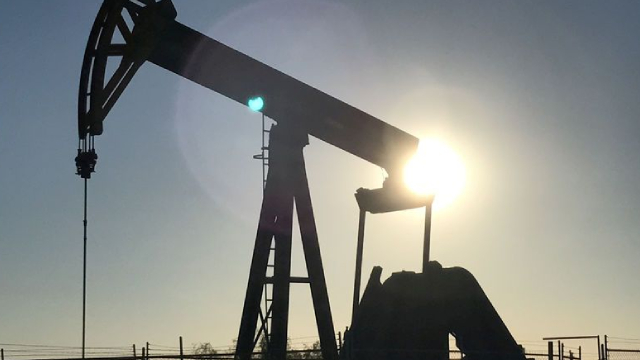
NextDecade eyes first LNG from Rio Grande Train 1 in 2027
Reuters· 2026-03-02 15:37
Company Overview - NextDecade expects to commence its first LNG production from the Rio Grande facility in the first half of 2027, which has led to a nearly 10% increase in the company's shares during morning trading [1] - The company is evaluating multiple areas on-site for the development of additional liquefaction trains, specifically Trains 7 and 8, with plans to advance their development throughout 2026 [1] - As of January 2026, the completion rate for Trains 1 and 2 at the Rio Grande LNG Facility stands at 64.5% [1] Industry Context - The U.S. has seen a rapid increase in commercial activity within the LNG sector, following the lifting of a moratorium on new export permits by President Donald Trump shortly after taking office [1] - The Rio Grande LNG Facility has sufficient space to accommodate up to 10 liquefaction trains, indicating potential for future expansion in the LNG production capacity [1]

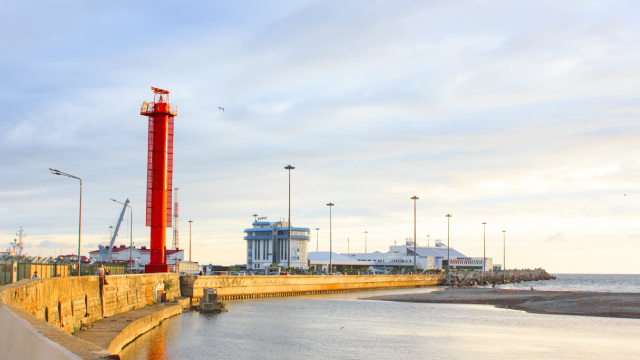
Upbeat European markets waver under turmoil in the Middle East
Reuters· 2026-03-02 15:24
Group 1 - European financial markets are under strain due to the ongoing conflict in the Middle East, raising concerns about energy supply shocks and inflation [1] - Brent crude oil prices have increased nearly 10% since Friday, while European natural gas prices have surged by 50%, highlighting Europe's dependency on energy imports [1] - The euro has weakened against the dollar and hit a 10-year low against the Swiss franc, with JPMorgan predicting it could fall to $1.10-$1.13 if Brent crude reaches $100-$120 [1] Group 2 - The European Central Bank (ECB) sees a permanent 14% increase in energy prices potentially lowering growth by 0.1% and raising inflation by up to 0.5% [1] - The Bank of England estimates that a 10% rise in Brent crude prices adds approximately 0.2 to 0.3 percentage points to UK inflation, with the UK currently having the highest inflation in the G7 [1] - European banks have experienced a significant decline, shedding 5% in two days, marking the largest drop since last April's tariff turmoil [1]