Food inflation

Search documents
化工行业: 伊朗战争引发油价冲击的两种情景-Chemicals Sector_ The Bullwhip_ Two Scenarios For The Iran War Oil Shock
2026-03-24 01:27
Summary of Key Points from the Conference Call Industry Overview - The conference call primarily discusses the **Chemicals and Petrochemicals** industry, focusing on the impact of the ongoing **Iran War** and its implications for energy costs and supply chains [2][3][9][62]. Core Insights and Arguments 1. **Bullwhip Effect Dynamics**: - The severity of the bullwhip effect is inversely correlated with the duration of the oil shock, with shorter conflicts leading to more violent market swings due to panic ordering [4][14]. - An extended oil shock could lead to structural adjustments in the industry, fundamentally altering cost structures and demand patterns [15][20][131]. 2. **Impact on Chemicals and Petrochemicals**: - The chemical industry is identified as "ground zero" for the oil shock, with feedstock constraints leading to significant production bottlenecks [9][62]. - Fertilizer prices have surged by 30%, locking in food inflation through 2027, regardless of oil price normalization [5][12][76]. 3. **Sector-Specific Amplifications**: - Primary metals, particularly aluminum and steel, are expected to experience severe bullwhip effects due to high energy costs, with potential margin risks for downstream fabricators [10][49]. - The automotive sector faces mixed demand signals, with higher fuel prices and economic uncertainty impacting consumer behavior [11]. 4. **Geopolitical and Economic Implications**: - The interconnectedness of global supply chains means that disruptions in one region (e.g., Taiwan semiconductors) can have cascading effects across various industries, including automotive and electronics [6][131]. - Europe is expected to face structural headwinds, making its chemicals less competitive during recovery phases, while Asian producers may capture a larger market share [18][19]. 5. **Long-Term Trends**: - The crisis is likely to accelerate pre-existing trends such as the transition to electric vehicles (EVs), manufacturing migration to ASEAN, and the expansion of the US chemical industry [20][134]. Additional Important Insights - **Food Sector**: The food processing industry is experiencing a classic bullwhip effect due to consumer hoarding and input cost pressures, leading to structural disruptions rather than temporary ones [70][72]. - **Defense Sector**: Increased defense spending is creating competition for components, amplifying disruptions in civilian sectors that rely on the same materials [13][115]. - **Inventory Strategies**: Companies are advised to adopt different inventory strategies based on their scenario outlook, with quick resolution scenarios favoring those who maintained destocking discipline [17][19]. Conclusion - The ongoing geopolitical tensions and energy supply shocks are reshaping the chemicals and petrochemicals landscape, with significant implications for production, pricing, and competitive dynamics across various sectors. The bullwhip effect is a critical factor to monitor as it influences both immediate and long-term market conditions [21][22][127].

全球农业策略师_地缘政治推高食品通胀;海湾能源冲击率先影响物流与化肥行业-Global Agriculture Strategist_ Geopolitics feeding food inflation; Gulf energy shock hits logistics and fertilizers first
2026-03-22 14:35
Summary of Key Points from the Conference Call Industry Overview - The conference call focuses on the **global agriculture industry**, particularly the impact of geopolitical events, specifically the **Iran war**, on agricultural commodities and fertilizer markets [1][2][12]. Core Insights and Arguments - **Food Inflation and Energy Prices**: The agriculture sector is significantly affected by rising oil and natural gas prices, which contribute to increased production and logistics costs, leading to higher food prices. Urea prices have surged by **30-40%** across regions due to supply risks affecting **65-70%** of global supplies [1][8][15]. - **Fertilizer Costs**: Fertilizers account for **30-35%** of farm production costs. The ongoing conflict could lead to a **20-30%** price increase for corn and **15-20%** for wheat by **2026**, with soy oil potentially increasing by **5-10%** [2][3]. - **Potential Bull Cycle**: If the conflict extends into the second half of **2026**, agricultural prices could reach **2022 highs**, particularly for corn, due to nitrogen fertilizer market pressures [3][31]. - **Critical Supply Situation**: There is a **six-month window** for Northern Hemisphere farmers to secure nitrogen fertilizers before disruptions could have irreversible effects on corn production [4]. - **Global Supply Risks**: The current fertilizer crisis poses a greater systemic risk compared to the **2022 crisis**, as the concentration of urea production in conflict-affected regions is higher [15][16]. Additional Important Insights - **Geopolitical Implications**: The Iran war has broader implications for global fertilizer markets, affecting production in regions like India and Europe, where output has already been cut due to rising gas prices [13][14]. - **Food Security Concerns**: The constrained use of nitrogen fertilizers could threaten global food security more severely than previous fertilizer shocks [14]. - **Market Positioning**: Managed money positioning has shifted to a net long position across agricultural markets, indicating increased investor interest despite lower positioning compared to past crises [36][37]. - **Grain Trade Dynamics**: Approximately **20%** of global wheat and corn production is traded internationally, with wheat being the most widely traded grain [58][60]. - **Transportation Costs**: Rising energy prices are expected to increase transportation costs, which account for about **25%** of the landed cost of Brazilian soybeans delivered to China [120][121]. Conclusion - The ongoing geopolitical tensions, particularly the Iran war, are creating significant volatility in agricultural markets, with potential for substantial price increases in key commodities. The situation requires close monitoring as it could have lasting impacts on food security and agricultural production globally.
亚洲经济:供应中断风险-聚焦食品领域-Asia Economics-The Viewpoint Supply Disruption Risks – A Focus on Food
2026-03-16 02:26
Summary of Key Points from the Conference Call Industry Focus - **Industry**: Food and Agriculture in Asia - **Context**: The report discusses the impact of rising energy prices and geopolitical tensions on food supply and inflation in Asia. Core Insights and Arguments 1. **Supply Disruption Risks**: Ongoing geopolitical tensions are expected to exacerbate supply chain disruptions, particularly in energy and related commodities, which are crucial for food production [2][10] 2. **Food Inflation Exposure**: Asia is more vulnerable to food inflation compared to the US and Europe, with food comprising approximately 25% of Asia's Consumer Price Index (CPI) basket, compared to 13% in the US and 14% in the Euro Area [3][11] 3. **Current Price Trends**: Global food prices have increased by about 6% since February 26, 2026, which is significantly lower than the over 40% rise in international oil and fertilizer prices. However, potential future increases in food prices are anticipated if geopolitical conflicts persist [4][12] 4. **Production Cost Structure**: The cost of food production is closely linked to fuel and fertilizers, which are essential for farming operations. The Middle East accounts for 22% of global fertilizer exports, indicating potential supply constraints [4][12][27] 5. **Regional Vulnerability**: Emerging market economies in Asia, such as the Philippines, Thailand, India, and Indonesia, are particularly exposed to food price inflation risks. These countries also face fuel inflation risks, which could lead to concerns for central banks regarding interest rate adjustments [5][13] Additional Important Insights 1. **Agricultural Output**: India has the highest agricultural share in GDP at 17%, followed by Indonesia at 13% and Thailand at 9%. This agricultural dependency makes these economies more sensitive to food price fluctuations [5][13][19] 2. **Trade Deficits**: Seven out of twelve economies in the region run a trade deficit in agricultural products, highlighting the reliance on imports for food security [21] 3. **Fertilizer Dependency**: Countries like India, Thailand, and the Philippines are notably dependent on fertilizer imports from the Middle East, which could impact their agricultural productivity if supply disruptions occur [36][41] 4. **CPI Weights**: The weight of food in the CPI is highest in the Philippines (44%), followed by India (35%) and Indonesia (33%), indicating a significant impact of food price changes on overall inflation in these countries [44][47] Conclusion The report emphasizes the interconnectedness of energy prices, geopolitical tensions, and food inflation in Asia. The potential for rising food prices poses risks to economic stability and monetary policy in the region, particularly for countries heavily reliant on agriculture and food imports. Monitoring these trends will be crucial for investors and policymakers alike.
Iran war snarls key global hub for fertilizer supplies
The Economic Times· 2026-03-05 05:36
Industry Overview - The Gulf region hosts some of the world's largest fertilizer plants, and the ongoing conflict is severely impacting the industry, with the timing described as "literally could not be worse" [1] - The Strait of Hormuz is critical for global fertilizer trade, handling about one-third of it [12] Market Impact - Qatar, a significant player in the urea market, accounts for approximately 11% of global urea exports, with nearly 45% of those shipments originating from Persian Gulf facilities [2] - Following the closure of the Strait of Hormuz, prices for granular urea in Egypt have surged by $60 per metric ton, prompting buyers to seek alternative suppliers in North Africa and Southeast Asia [5] - In New Orleans, the price of March barges for urea increased by $60 to $80 compared to previous prices, with potential for further increases of hundreds of dollars per ton in the coming days [6] Supply Chain Disruptions - Supplies of urea were already tight before the conflict, with geopolitical risks heightened due to prior drone damage to Russian nitrogen facilities [12] - Three out of the world's ten largest ammonia exporters and one in five top phosphates suppliers depend on the Strait of Hormuz for shipping [8] - Even if supplies continue through the strait, rising freight insurance costs could make shipping economically unviable [9] Stock Market Reactions - Fertilizer stocks have seen significant volatility, with CF Industries Holdings Inc., the largest ammonia producer, rising as much as 8.3% to its highest level since late 2022 [11] - The S&P Composite 1500 Fertilizers and Agricultural Chemicals Index reached its highest point since July [11] - Yara International ASA's stock rallied to a three-year high, indicating market sensitivity to regional disruptions [11]


ECB expects food inflation to settle just above 2%
Reuters· 2026-02-26 08:43
Group 1 - The European Central Bank (ECB) expects food inflation to stabilize just above its 2% target by late 2026, which is significant for consumer price stability perceptions [1] - ECB President Christine Lagarde indicated that headline inflation is anticipated to converge to the 2% goal over the medium term, supported by easing wage growth and a resilient economy despite trade challenges [2]

Antitrust enforcement weakens under Trump
MSNBC· 2025-12-20 19:40
Alleged Anti-Competitive Practices - The FTC may have buried a case alleging PepsiCo and Walmart colluded to rig grocery prices, inflating costs for Walmart's competitors [1] - PepsiCo allegedly policed and punished grocery chains that competed with Walmart on Pepsi products [1] - Pepsi's soft drink prices soared 67% since 2019, outpacing the general grocery price increase of over 35% [1] - Trump's Department of Justice announced a settlement with Real Page, accused of helping corporate landlords coordinate rent hikes [8] - Nine states refused to sign on to the settlement between the DOJ and Real Page [15] Company Statements and Market Share - PepsiCo took in $92 billion last year [1] - Walmart controls more than 20% of the US grocery market [1][3] - Walmart spokesperson stated their commitment to negotiating on behalf of customers to deliver value and everyday low prices [2] - Pepsi spokesperson claimed the FTC complaint included inaccuracies and unsubstantiated allegations [3] Government Actions and Criticisms - Trump's FTC chair, Andrew Ferguson, dropped the antitrust case against PepsiCo and Walmart [1] - Ferguson dismissed the investigation as purely political, claiming no evidence of corporate abuse [6] - Assistant Attorney General Abigail Slater called the settlement with Real Page a victory for consumers [12]



'Appetizer economy': Food inflation is on restaurant table as diners go smaller with menu choices
CNBC· 2025-12-12 15:17
Core Insights - The current dining trend in the U.S. is characterized by an increase in appetizer orders, reflecting a shift in consumer behavior towards more affordable dining options amid food inflation [1][2][3] Restaurant Industry Trends - Appetizer orders have risen by 20% year over year, while orders for entrees and desserts remain flat or declining [2] - The "appetizer economy" is emerging, with some appetizers experiencing growth rates exceeding 30% [3] - Dessert orders have decreased by 2% year over year, indicating a shift in consumer preferences [3] Consumer Behavior - Consumers are increasingly opting for appetizers due to their association with promotions and drink specials, making dining out more affordable [4] - The trend towards frozen or shelf-stable appetizers is also growing, helping restaurant operators manage costs and reduce waste [4] Grocery and Private Label Trends - The food spending landscape reflects a K-shaped economy, with affluent consumers increasing spending on novel products while the majority shift towards private label brands [5][6] - Consumers can save 10-20% by switching to private label products, which have gained acceptance and are now perceived similarly to national brands [6] - Retailers like Albertsons, Costco, and Kroger are expanding their private label offerings, with expectations that private label could represent 30% of sales for some companies [7] Food Inflation and Pricing - Food inflation remains persistent, with food-at-home prices increasing between 1.9% to 2.7% year-over-year [9] - The consumer price index for September indicated a 3.1% increase in food prices, with specific categories like meat and poultry seeing a surge of 5.2% [10] - The "food away from home" sector is experiencing even higher inflation at 3.7%, prompting a shift towards private label spending in various dining establishments [11] Supply Chain Challenges - Tariffs and supply chain issues have contributed to price increases, particularly for perishable items, with no immediate relief expected [12] - The complexity of the food supply chain means that consumers may not understand the time required to stabilize supply after disruptions [13]

Chef Lidia Bastianich on food inflation, new PBS special and top Thanksgiving tips
Youtube· 2025-11-24 13:21
Core Insights - The discussion centers around food inflation and its impact on consumers and restaurants, highlighting the challenges faced in the food industry [2][3] - The importance of community and neighborly support through food is emphasized, showcasing how food can unite people [7][10] Food Inflation - Food prices are rising across restaurants, wholesale, and retail, affecting both businesses and consumers [3] - Strategies such as seasonal buying and using cost-effective ingredients are recommended to navigate food inflation [4][5] Community and Food - The new PBS special "Lydia Celebrates America: A Nation of Neighbors" focuses on the role of food in fostering community connections [7] - Examples of community initiatives, such as restaurants offering meals in exchange for work or food donations, illustrate the spirit of neighborly support [10][12] Thanksgiving Insights - Thanksgiving dinner costs are reportedly lower this year, with turkey prices down by 17%, providing relief to consumers [13] - Tips for preparing a special Thanksgiving meal include maximizing oven use and incorporating unique flavors, such as balsamic vinegar for turkey [14][15][16]

The fast-casual bowl boom is over. Wall Street isn't sold on Cava, Chipotle deals to lure back spenders
CNBC· 2025-11-22 15:01
Core Insights - Fast-casual restaurants like Chipotle, Cava, and Sweetgreen are experiencing a decline in customer traffic, particularly among younger consumers due to economic pressures such as food inflation and job insecurity [2][3] Industry Trends - Nearly 40% of consumers perceive fast-casual dining as too expensive, which aligns with Chipotle's efforts to combat the perception of high menu prices [2] - The fast-casual segment is seeing a shift in consumer behavior, with younger diners becoming more cautious about discretionary spending, leading to fewer weekday lunch visits [3] Company Strategies - Chipotle has shifted its focus towards loyalty programs and promotions to attract customers, with two-thirds of consumers indicating that promotions influence their dining decisions [3][4] - In October, Chipotle launched a month-long rewards program and special promotions, including a Halloween offer for customers in costume, to drive traffic and engagement [5]


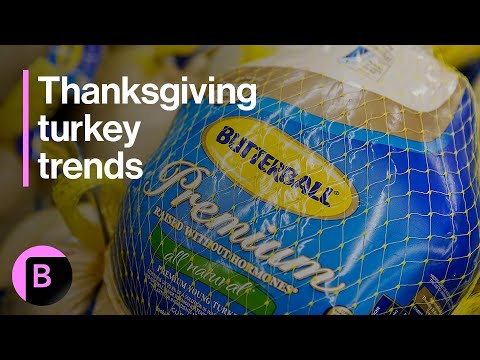
Thanksgiving Turkey Trends and Tips from Butterball CEO
Bloomberg Television· 2025-11-21 18:49
Market Trends & Consumer Behavior - Turkey prices are the same or lower than last year for Thanksgiving, with retailers offering strong pricing [2] - Consumers do not plan to compromise on turkey for Thanksgiving, with 84% planning to have it on the table, consistent with previous years [2][4][5] - There's a growing consumer focus on protein, particularly low-fat protein, making turkey a suitable option [7] - Ground turkey is experiencing double-digit growth, indicating a shift towards everyday consumption [8] Company Strategy & Operations - Butterball has a network of over 600 family farmers across the country, ensuring a constant supply of turkeys [10] - The company can plan carefully and make adjustments throughout the year to ensure adequate supply [11] - About one-third of Butterball's business revolves around holidays, while the rest is year-round [17] - Butterball is adapting its communication strategies to reach younger consumers who are now making purchasing decisions [18] Industry Challenges & Opportunities - Bird flu has impacted the turkey industry for the last several years, but supply is expected to be adequate for Thanksgiving [12][13] - The federal government has allocated $1 billion to help prevent the spread of bird flu [14] - Turkey is positioned as a healthy and economical protein, fitting well with current dietary trends [19]