
GLP - 1 weight - loss drugs

Search documents
Starboard Value Is Betting Big on This Blue-Chip Dividend Stock. Should You?
Yahoo Finance· 2026-03-12 14:28
Core Viewpoint - Activist hedge fund Starboard Value has acquired a significant stake in Lamb Weston and is advocating for the company to reduce costs by $500 million by fiscal 2028, while Lamb Weston has already committed to cutting $250 million in expenditures by the same year [1]. Company Overview - Lamb Weston specializes in selling frozen potato products, particularly french fries, to supermarkets and restaurants, including fast-food chains [3]. Financial Performance - In the fiscal second quarter, Lamb Weston reported a 1% increase in sales year-over-year, totaling $1.62 billion, while its operating income, excluding certain items, decreased by 4% to $182.8 million [4]. - Analysts predict a 17.6% decline in earnings per share (EPS) for the current fiscal year, with a subsequent 12.3% increase expected in the following fiscal year, although total revenue is anticipated to drop by 1.4% during that period [4]. - The company has a forward price-to-earnings (P/E) ratio of 16.1x and a market capitalization of $6 billion. Shares have fallen 11.5% in the past month and 25% over the last three months [5]. Starboard's Performance - Starboard Value's recent performance has been mixed, with its top-20 holdings generating an annualized return of only 2.86% over the last three years, underperforming the S&P 500 Index during that time [7]. - In 2024, Starboard's main fund returned under 5%, and the fund faced challenges in pushing its agenda at companies like Autodesk, News Corp, and Pfizer [8].

Middle East countries cut daily oil output, Bloomberg News reports
Reuters· 2026-03-10 08:15
Group 1 - Saudi Arabia has reduced its oil output by 2 million to 2.5 million barrels per day [1] - The United Arab Emirates has cut its oil output by 500,000 to 800,000 barrels per day [1] - Kuwait has decreased its oil output by 500,000 barrels per day [1] - Iraq has lowered its oil output by approximately 2.9 million barrels per day [1]


Lindt says GLP-1 users are eating more chocolate, not less
Reuters· 2026-03-10 08:11
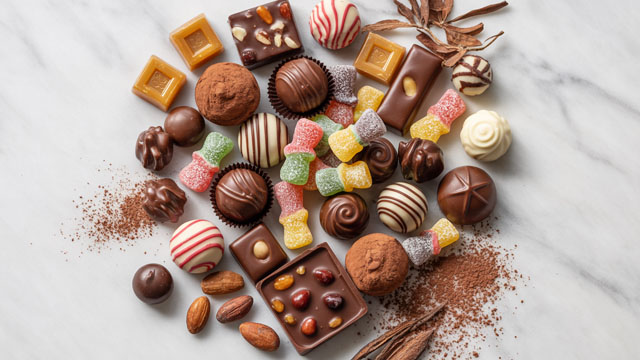
Group 1 - Lindt & Spruengli reported that chocolate sales are increasing among U.S. users of GLP-1 weight-loss drugs, contrary to expectations that these drugs would decrease confectionery demand [1] - An internal study indicated that 15% of U.S. households use GLP-1s, which account for 17.5% of chocolate sales [1] - U.S. sales of premium chocolate among GLP-1 users rose by nearly 17% in 2025, compared to a 6.5% increase among non-GLP-1 users [1] Group 2 - Analysts at Berenberg had predicted that the introduction of oral GLP-1 weight-loss drugs would negatively impact the food industry, particularly confectionery, estimating a sales volume drag of 0.9 percentage points for Lindt by 2027 [1] - The anticipated expansion of GLP-1 drug usage is expected to include more men and younger patients, as oral drugs are projected to result in less drastic weight loss compared to injectables [1]

Market Disruption: Alcohol Giants Lose $830B as Gen Z Pulls Back, While AI “Scare Trade” Rattles Software and Wealth Sectors
Stock Market News· 2026-02-22 02:08
Alcohol Industry - The global alcohol industry has experienced a "structural change," resulting in a loss of $830 billion in market value since 2021, which is a 46% decline from its peak in June 2021 [2][7] - The downturn is particularly significant among Gen Z consumers, with 21.5% of legal-age adults in this group not consuming alcohol at all, and 39% drinking only occasionally [3] - The rise of the "sober curious" movement and the popularity of GLP-1 weight-loss drugs are contributing to this shift, leading major companies like Diageo and Pernod Ricard to see their shares drop to decade lows [3][7] - Non-alcoholic beverage sales have surged by 30% last year, prompting traditional alcohol brands to adapt their long-term business strategies [7] Software and Services Sector - The U.S. software and services sectors have lost approximately $2 trillion in value since October, driven by an "AI Scare Trade" where investors are selling firms perceived as vulnerable to automation [4][7] - Companies like Salesforce, Adobe, and Intuit have seen significant declines in their stock prices, with Salesforce dropping 30% in 2026 and Adobe and Intuit falling 25% and 40% respectively [4][5] - The launch of advanced AI tools has intensified market panic, leading to indiscriminate selloffs in sectors like legal services and insurance brokerage [5] Wealth Management Sector - The wealth management sector has been impacted by the introduction of AI-enabled tools, such as Altruist's "Hazel," causing significant stock declines for firms like Raymond James Financial and Charles Schwab [6][7] - Analysts suggest that the selloff reflects fears of massive fee compression and a permanent shift in market share away from traditional advisors due to AI applications [6] Broader Market Trends - The market sentiment has shifted from "buying AI winners" to "fleeing AI losers," affecting various sectors including private credit and real estate brokerage [7] - Real estate and private credit markets are also facing challenges, with companies like CBRE Group experiencing a 16% drop in valuation as investors question the future of human-led services [8] - Alternative asset managers like Blackstone and KKR have seen declines between 13% and 24% this year due to concerns over their exposure to the struggling software sector [8]
Analysis-Hims & Hers GLP-1 pill gambit backfires, accelerating crackdown on drug compounders
Yahoo Finance· 2026-02-19 11:08
Core Insights - Hims & Hers Health is facing challenges in finding new growth drivers after its original sexual-health franchises have matured, particularly following a controversial launch of weight-loss pills that faced backlash from Novo Nordisk and U.S. regulators [1][2] Company Strategy - Hims announced plans to offer a compounded oral semaglutide pill for $49, which is a version of Novo Nordisk's Wegovy, but retreated after warnings from U.S. FDA officials about the legality of such offerings [2] - The company has been positioning itself as an affordable healthcare provider, even investing in high-profile advertising campaigns [5] Financial Performance - Hims had less than $900 million in sales in 2023 but is projected to exceed $2.3 billion in sales by 2025, with expectations of $620 million in fourth-quarter sales, reflecting a 28% increase [6] - The company's sales growth rate has been robust, ranging from 59% to 94% over the past four years, but is forecasted to decline to around 17% over the next two years [7] Market Context - The obesity drug market is projected to reach annual sales of approximately $100 billion by 2030, with a significant portion expected to come from oral medications [8]
Cheerios maker says cost of living, housing expenses changing way consumers spend
Fox Business· 2026-02-17 18:10
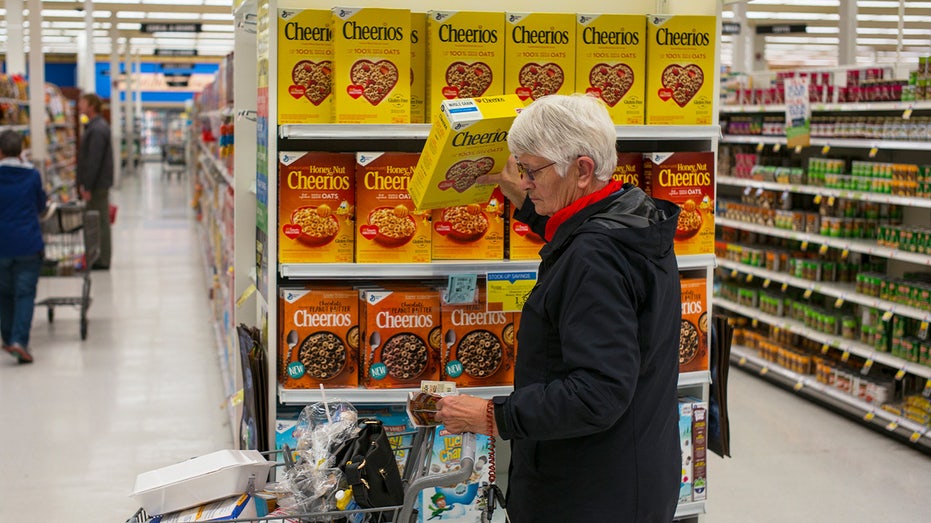
Core Viewpoint - General Mills has reduced its annual sales and profit forecasts due to weak consumer sentiment and a shift towards healthier, lower-cost food options impacting demand for packaged products [1][9]. Group 1: Sales and Profit Forecasts - The company now expects annual sales to decline by 1.5% to 2%, a revision from its previous forecast of a decline of 1% to an increase of 1% [11]. - General Mills anticipates that annual adjusted operating profit and adjusted earnings per share will fall by 16% to 20% in constant currency, compared to the earlier outlook of a 10% to 15% decline [13]. Group 2: Consumer Behavior and Market Trends - Weak consumer sentiment, heightened uncertainty, and significant volatility have negatively impacted category growth and altered consumer purchasing patterns, leading to a slower recovery in volume and higher costs than expected [2]. - The shift in consumer preferences towards healthier options and the increased use of GLP-1 weight-loss drugs are further pressuring demand for packaged foods [3][6]. - Economic pressures are causing lower- and middle-income consumers to focus more on value, reshaping their spending patterns [6][7]. Group 3: Competitive Landscape - General Mills faces growing competition in the protein options market, which is affecting its product lines, including its own protein cereals [5]. - Other companies in the industry, such as PepsiCo, have responded to consumer backlash by cutting prices on core brands, indicating a trend towards value offerings [9].

Magnum’s Sugar Rush Ends as GLP-1 Fears Return
Yahoo Finance· 2026-02-12 18:41
Core Insights - Magnum Ice Cream Company's first results post-demerger from Unilever revealed disappointing performance, with a 3% decline in fourth quarter sales volumes and a nearly 50% drop in annual profit, raising concerns about the viability of indulgent ice cream in the current market [1][2][6]. Financial Performance - Fourth quarter sales volumes decreased by 3%, contrary to expectations for slight growth, while full-year revenue remained flat at €7.9 billion ($9.4 billion), with organic sales increasing by 4.2% due to 2.6% pricing and 1.5% volume growth overall [2]. - Operating profit fell from €764 million to €599 million, and net profit dropped by 48% to €307 million, impacted by separation and restructuring costs [3]. - Free cash flow decreased significantly to €38 million from €803 million the previous year, reflecting demerger outflows and new financing [3]. - Net debt rose to nearly €3 billion, and the adjusted EBITDA margin declined to 15.9% from 16.9% in 2024 [3]. Market Reaction - Following the disappointing results, shares of Magnum, which had previously risen by 25% to 30% since listing, fell by as much as 15% to 16% in Amsterdam [4]. Strategic Considerations - The rationale behind the spin-off was to create a focused ice cream company capable of driving faster growth and sharper execution, but the current performance raises questions about whether indulgent ice cream is facing structural challenges [6]. - The emergence of GLP-1 weight-loss drugs is causing investors to reassess high-calorie categories, as these appetite-suppressing treatments may lead consumers to reduce their consumption of premium ice cream products [7]. - Despite the fourth quarter volume decline, management suggests that this does not indicate a structural shift, citing commodity inflation, currency headwinds, and operational challenges from the separation as contributing factors [8].
Are Medical Device Stocks Flatlining? Where To Look for Signs of Life.
Yahoo Finance· 2026-02-06 20:21
Core Viewpoint - The medical device sector is experiencing significant challenges, described as being in a state of "cardiac arrest," primarily due to the impact of GLP-1 weight-loss drugs and tariff-induced margin pressures [1][8]. Group 1: Market Performance - The iShares U.S. Medical Devices ETF (IHI) has shown a flat performance recently, indicating a lack of growth in the sector [1]. - The ETF's stock basket is currently valued at 30 times earnings, despite a decline in stock prices over the past year [3]. - There is a potential downside risk of over 20%, with projections suggesting a drop to $44 if current market pressures continue [4]. Group 2: Industry Challenges - The rise of GLP-1 weight-loss drugs is perceived as a major threat to traditional medical device markets, leading to concerns about reduced demand for procedures like knee replacements and heart valves [8][9]. - The medical device industry is heavily reliant on international supply chains, and recent U.S. tariffs on imports from China, Europe, and India are negatively impacting profit margins [10]. - Companies are facing increased costs for components while struggling to raise prices for hospitals, which are already operating on thin margins [10]. Group 3: Risk Assessment - The ROAR score for IHI has significantly declined from a peak of 80 to 20, indicating an above-average risk of major loss in the sector [5].
PepsiCo CEO reveals how he is tackling weight-loss drugs and consumer affordability challenges
Yahoo Finance· 2026-02-03 21:30
Core Insights - PepsiCo's CEO Ramon Laguarta emphasizes a significant transformation strategy for the company by 2030, focusing on innovation and adapting to changing consumer preferences [1][2] Group 1: Strategic Focus Areas - The company is addressing the rising threat from GLP-1 weight-loss drugs by adjusting its product offerings, including portion control to meet consumer demand for smaller servings [2] - There is a strong emphasis on hydration, with plans to leverage existing brands like Gatorade and Propel to provide tailored hydration solutions [3] - To tackle consumer affordability challenges, PepsiCo has been testing price investments across multiple U.S. markets, aiming to enhance brand engagement and address elasticity concerns [3] Group 2: Financial Performance and Outlook - Following better-than-expected fourth quarter results, PepsiCo's shares rose, with sales exceeding analyst estimates across all divisions [3] - The company reiterated its top- and bottom-line outlooks for 2026, promising cost cuts, lower prices, and new product launches in areas like protein snacks [4] - Despite the reiterated guidance being anticipated by investors, skepticism remains regarding the company's ability to deliver on these promises, as noted by analysts [5]

Eli Lilly to build $3.5 billion Pennsylvania plant in US manufacturing pushÂ
Yahoo Finance· 2026-01-30 16:08
Core Viewpoint - Eli Lilly is expanding its U.S. production capabilities by investing $3.5 billion in a new pharmaceutical manufacturing facility in Pennsylvania, aimed at enhancing medical supply chains and meeting the growing demand for weight-loss medications [1][2][3]. Group 1: Investment and Expansion - The new plant will focus on producing injectable weight-loss medications, including retatrutide, which has shown better performance than Lilly's existing drug Zepbound [1][3]. - This investment is part of a broader strategy, with Lilly committing over $27 billion to establish four new manufacturing sites in the U.S. and expand production at existing facilities [2]. Group 2: Market Context and Competition - The pharmaceutical industry is experiencing a rush to increase domestic production due to potential import tariffs on pharmaceutical products proposed by President Donald Trump [2]. - Lilly is competing with Danish rival Novo Nordisk to satisfy the rising demand for GLP-1 weight-loss drugs, with plans to launch a new weight-loss pill priced at $150 per month [3]. Group 3: Job Creation and Economic Impact - The Pennsylvania facility is expected to create at least 850 new jobs, marking the largest investment by a life sciences company in the state's history [4]. - The site was selected for its strategic location near universities and existing infrastructure, enhancing its operational viability [4].
