H收A

Search documents
优必选控股锋利股份背后:缺钱拓宽融资渠道还是跟风套利?主业仍“失血”
Xin Lang Cai Jing· 2025-12-26 08:12
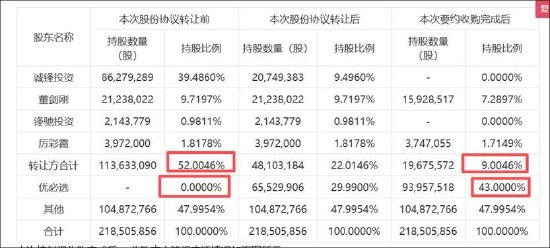
Core Viewpoint - The acquisition of Fenglong shares by UBTECH raises questions about whether it is a trend-following arbitrage or a necessity for new financing platforms due to cash shortages. UBTECH is currently in a continuous loss state and relies heavily on external financing channels for growth [1][18]. Group 1: Acquisition Details - UBTECH acquired control of Fenglong through a combination of "agreement transfer + partial tender offer" [1][20]. - The first step involved UBTECH acquiring 29.99% of Fenglong's shares at a price of RMB 17.72 per share, totaling approximately RMB 1.161 billion [3][21]. - The second step included a partial tender offer for an additional 13.02% of shares at the same price, bringing UBTECH's total stake to 43% [4][22]. Group 2: Financial Context - UBTECH's financial performance shows a trend of increasing revenue but persistent losses, with projected revenues of approximately RMB 10.08 billion, RMB 10.56 billion, and RMB 13.05 billion from 2022 to 2024, respectively, and net losses of RMB -9.87 billion, RMB -12.65 billion, and RMB -11.6 billion during the same period [14][36]. - The company reported cash on hand of only RMB 1.181 billion, indicating a significant funding gap for the acquisition, which cost over RMB 1.612 billion [16][38]. Group 3: Strategic Considerations - UBTECH's acquisition aims to enhance its industrial chain layout and strengthen its core competitiveness by leveraging Fenglong's manufacturing and supply chain capabilities [35][40]. - The acquisition is seen as a strategic move to complement UBTECH's focus on humanoid robots with Fenglong's expertise in precision manufacturing and established customer base [35][40]. Group 4: Market Implications - The transaction has sparked discussions about the potential for UBTECH to pursue a backdoor listing in the A-share market, although its current financial losses may complicate this path [7][25]. - The recent trend of robotics companies acquiring control of listed firms has created notable arbitrage opportunities in the market, as seen in other similar transactions [10][32].