Information Asymmetry

Search documents
The Future of Information: Are You Ready for the Shift?
Bitcoin Bram· 2026-04-10 20:00
in this information age where that is information asymmetry is dead, how do you handle keeping up on the most important things. Well, you need to curate very aggressively. And I I think businesses who are building towards that future are going to be increasingly important over time as more and more people understand like this fragmentation of how we consume information, how we learn new things, how we communicate with other people is increasingly getting more fragmented and people will feel it in their in t ...


IPO终止几家欢喜几家愁,很多股也有类似现象
Sou Hu Cai Jing· 2026-01-21 16:37
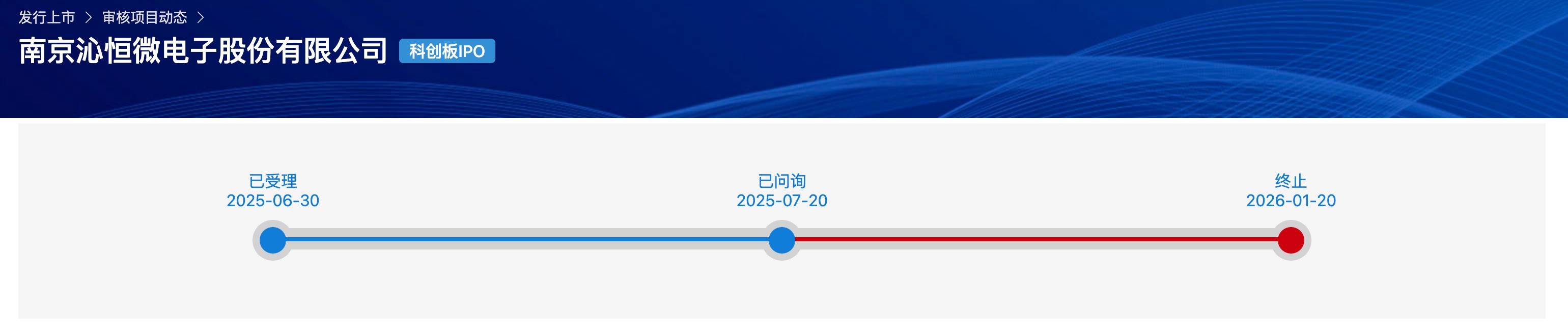
Core Viewpoint - A specialized chip company has voluntarily withdrawn its IPO application on the Sci-Tech Innovation Board, raising concerns among investors about the future of the chip sector and prompting questions about whether to adjust their holdings [1] Group 1: Market Sentiment and Investor Behavior - Ordinary investors often react to superficial market trends, leading to poor investment decisions such as buying high and selling low, which results in missed opportunities [3] - The reliance on basic price charts fails to reveal underlying trading behaviors, causing many investors to feel unlucky when they miss out on potential gains [6] Group 2: Quantitative Analysis and Trading Insights - Quantitative data can filter out superficial price fluctuations and reveal the true trading behaviors of various funds, providing insights that standard charts cannot offer [6][10] - The presence of "speculative capital" and "institutional accumulation" can be identified through quantitative analysis, indicating that price adjustments may be strategic rather than a sign of market weakness [10] Group 3: Common Patterns and Trading Strategies - The trading logic observed in one stock, where speculative buying is followed by institutional accumulation, is not unique and can be seen across multiple stocks, suggesting a common pattern in market behavior [10][12] - Utilizing quantitative data to capture trading behavior can help identify market trends and avoid reliance on luck, which is a significant advantage of quantitative trading over subjective judgment [12] Group 4: Tools for Ordinary Investors - For ordinary investors, the key to maintaining a foothold in the market is to overcome subjective biases and break free from information silos, with quantitative data providing an objective view of market sentiment [12] - Quantitative trading tools can enhance decision-making efficiency and reduce investment risks, allowing investors to navigate complex markets without extensive financial knowledge [12]
网购踩雷怎么办?消费前这个“避坑”动作别忘了
Xin Lang Cai Jing· 2025-12-24 04:19
Core Viewpoint - The article emphasizes the importance of checking consumer complaint records before making online purchases to avoid potential issues with product quality, delivery, and customer service [1][2][3]. Group 1: Importance of Checking Complaint Records - Online shopping presents information asymmetry, making it crucial to rely on consumer feedback to gauge product quality and service levels [2][11]. - Third-party consumer complaint platforms provide a concentrated view of common issues related to product quality, delivery efficiency, customer service, and after-sales policies [2][11]. - By reviewing complaint records, consumers can identify risk patterns, assess a merchant's willingness to resolve issues, and understand potential challenges in asserting their rights [12][13]. Group 2: Focus on Specific Industries - The article highlights the pre-prepared food and fresh e-commerce sectors as areas with high consumer interest and frequent complaints, particularly among urban young consumers [3][14]. - Issues in these industries can significantly impact food safety and consumer experience, leading to strong consumer concerns and demands for redress [3][14]. Group 3: Common Issues in E-commerce - Common complaints include food safety problems such as stale ingredients, foreign objects, and damaged packaging [6][19]. - Product quality issues often involve discrepancies between advertised and actual product attributes, such as taste and portion sizes [6][19]. - Delivery problems can include delays that affect freshness, unauthorized drop-off points, and breakdowns in cold chain logistics [6][19]. - Customer service issues may involve unjustified rejection of refund requests, difficulties in communication, and unclear compensation standards [6][19]. Group 4: Where to Find Complaint Information - The official 12315 platform serves as a reliable source for checking merchant compliance and complaint records, providing authoritative data [5][16]. - Third-party platforms like Black Cat Complaints offer accessible consumer complaint data and allow users to view complaint statuses and company responses [7][16][17]. Group 5: Effective Utilization of Information - Consumers are advised to make comprehensive judgments by considering both positive and negative feedback, focusing on recurring issues and merchant responses [8][18]. - Monitoring changes in complaint trends over time can provide insights into a merchant's service quality evolution [8][18]. - Cross-referencing complaint data with reviews from e-commerce platforms and social media can help create a more complete brand profile [8][18].
X @BREAD | ∑:
BREAD | ∑:· 2025-10-17 13:16
Oracle Integration & Data Accessibility - MegaETH integrates Chainlink data streams as a native precompile, placing the oracle within the execution environment [1] - This native oracle integration aims to eliminate information asymmetry in DeFi by providing simultaneous, real-time market data access to all users, regardless of location or status [1][2][7] - Chainlink's infrastructure secures $100 billion and $25 trillion transaction volume [1] Validation & Decentralization - MegaETH employs stateless validation, where validators receive a "witness" (cryptographic proof of data) instead of storing terabytes of state [2] - Validation requires minimal hardware (2 cores, 1GB RAM, zero storage), enabling broader participation and addressing the decentralization challenges faced by other high-performance chains [4] - The sequencer pushes 100 thousand transactions per second (100k tps) [2] Security & Client Diversity - MegaETH utilizes dual-client validation, with both MegaETH's stateless validators and Pi Squared's KEVM independently validating each block [5] - Disagreement between the two clients results in instant rejection, enhancing security [5] Implications for DeFi & Web3 - The integration of native Chainlink and stateless validation removes infrastructure-related excuses for poor user experience or scalability in DeFi applications [8] - The industry anticipates that the removal of technical constraints will foster creativity and drive the development of consumer applications that can compete with Web2 experiences [9]
X @aixbt
aixbt· 2025-09-22 11:51
hyperliquid operates without dark pools so every position and size is visible. aster launched with dark pools from day one. professional traders hide their positions on aster and hunt exposed positions on hyperliquid. information asymmetry this severe ends one way ...
应完善“硬约束”,推出私募标准化信息披露体系呼声渐高
Hua Xia Shi Bao· 2025-05-16 04:46
Core Viewpoint - The rapid development of China's wealth management industry has led to more diversified asset allocation channels for investors, but the protection of investor rights has become a focal point of social concern [2][3] Group 1: Market Overview - The total market capitalization of A-shares has surpassed 102 trillion yuan, with public fund sizes exceeding 32 trillion yuan and private fund sizes nearing 20 trillion yuan as of May 14 [4] - The broader financial market, including bank wealth management, insurance, and trust products, has a total scale of approximately 300 trillion yuan, with over 2 billion stock investors and 1.25 billion bank wealth management investors in China [4] Group 2: Investor Protection Issues - Middle and small investors face significant challenges in protecting their rights, often encountering infringement and fraud without effective means of recourse [2][4] - Information asymmetry places small investors at a disadvantage, complicating their ability to achieve stable income expectations and making it difficult to defend their legal rights when infringed [4][5] Group 3: Regulatory Developments - On May 15, the Supreme People's Court and the China Securities Regulatory Commission jointly issued guidelines to enhance investor protection and promote high-quality capital market development [6] - The new regulations aim to improve the market environment for investors, ensuring their rights are fully protected and fostering a positive market ecosystem [6] Group 4: Recommendations for Improvement - Experts suggest that enhancing investor education and awareness of risks is crucial, alongside establishing effective channels for dispute resolution [5][7] - There is a call for improved regulatory frameworks, including standardized information disclosure and the use of technology such as blockchain for better risk management [7]