Insurance demand

Search documents
U.S. Auto Insurance Policy Shopping and New Business Growth Continue to Break Records in Q4 with "Hot" Readings on the LexisNexis® U.S. Insurance Demand Meter
Prnewswire· 2026-02-18 14:53
Core Insights - U.S. auto insurance shopping and new business growth reached record levels in Q4 2025, with shopping growth at 6.9% and new policy growth at 7.1%, both categorized as "Hot" readings [1] Group 1: Shopping Trends - The exclusive agent distribution channel experienced positive growth for the first time in 2025, with a growth rate of 5.3%, while the direct channel led with a 12.6% growth rate [1] - Policyholders aged 66 and older showed the highest shopping growth rate at 11%, continuing a trend of outperforming younger demographics for 12 consecutive quarters [1] - The overall annual shop rate reached an all-time high, with 47.1% of policies-in-force having been shopped at least once in the past 12 months, marking a 1.9-point increase from Q4 2024 and a 5.9-point increase from Q4 2023 [1] Group 2: Rate Filings and Market Dynamics - In Q4, 50% of rate modifications were decreases, while 25% were increases with an average increase of 5.1%, leading to an overall industry rate impact of -0.5% [1] - Among the Top 25 auto carriers, 41% of rate revisions were decreases, contributing to an overall rate impact of -0.7% [1] - The shift from steep rate increases to broad-based decreases has not deterred shopping and new business activity, indicating a departure from traditional insurance cycles [1] Group 3: Consumer Behavior Insights - A study revealed that "Once-Sidelined Shoppers," particularly those aged 66 and older, are more likely to shop again after their initial shopping experience, with this demographic accounting for 22% of that group [1] - Longer-tenured customers, those with over 10 years of tenure, represented 29% of the Once-Sidelined Shoppers, indicating a trend of previously loyal customers seeking better rates [1] Group 4: Future Outlook - The industry is advised to monitor the impact of new rate adjustments on consumer shopping behavior and whether recent trends encourage more frequent shopping [1]



文章推荐:保险需求及其偏差之谜|保险学术前沿
13个精算师· 2025-11-09 02:03
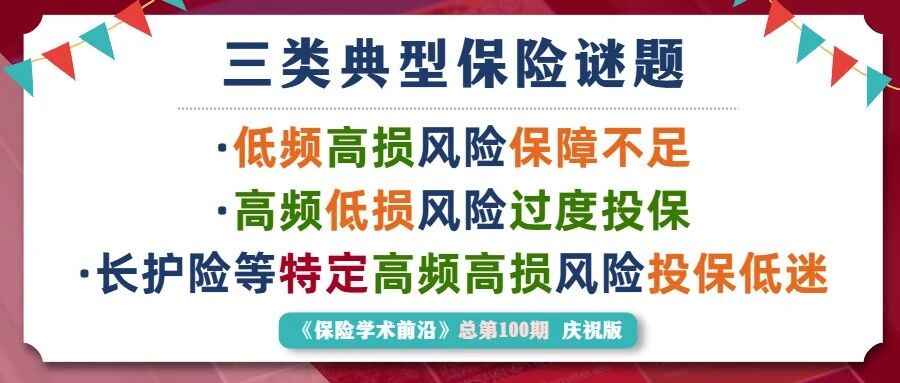
Core Viewpoint - The article discusses the phenomenon of underinsurance against high-loss risks, emphasizing its severe social implications, particularly in developing countries. It highlights behavioral biases and financial literacy as key factors influencing insurance demand and decision-making [2][4]. Summary by Sections Introduction - The underinsurance phenomenon poses significant social challenges, especially in developing countries, due to substantial losses from natural disasters, diseases, and other risks [6]. Insurance Demand Puzzles - Three typical insurance puzzles are identified: underinsurance for low-probability high-loss risks, overinsurance for high-probability low-loss risks, and low demand for specific high-probability high-loss risks like long-term care insurance [3][8]. - Behavioral biases, such as short-sightedness and narrow framing, contribute to these puzzles by leading to suboptimal risk assessments and insurance decisions [4][8]. Behavioral Biases and Heuristics - Various cognitive biases affect insurance decision-making, including: - Coarse probability categorization, leading to misjudgment of risk probabilities [9]. - Short-sightedness, causing individuals to underestimate risks due to a focus on immediate concerns [17]. - Overconfidence, where individuals accurately assess average risks but underestimate their specific risk exposure [17]. - Availability heuristic, where recent or vivid memories disproportionately influence risk perception [21]. - Emotional factors, which significantly impact perceived value and insurance demand [23][25]. Financial Literacy as a Solution - Financial literacy is proposed as a systematic solution to address the underinsurance issue by enhancing public understanding and application of financial concepts [4][28]. - Studies indicate that higher financial literacy correlates with better insurance purchasing decisions and reduced behavioral biases [29][30]. - Financial education can effectively improve insurance demand, particularly in communities with low financial literacy [32][31]. Conclusion - The article concludes that addressing financial literacy gaps may be a viable pathway to mitigate the negative impacts of behavioral biases on insurance demand, ultimately leading to better financial outcomes for individuals [36][37].