Intelligence Efficiency

Search documents
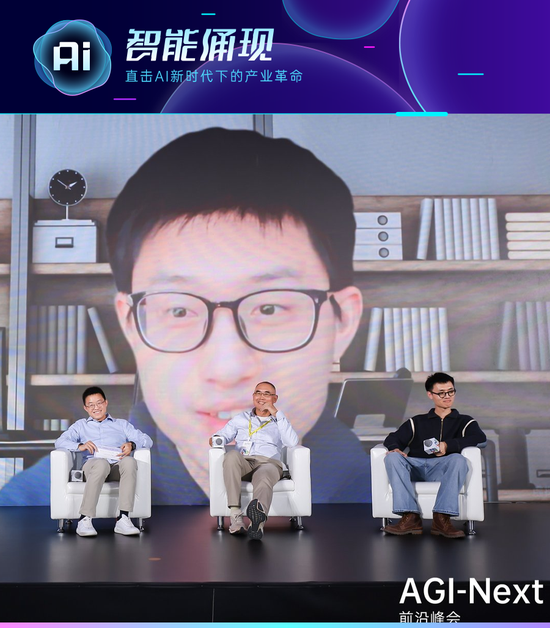
中国AI模型四巨头罕见同台发声
21世纪经济报道· 2026-01-11 06:32
Core Insights - The AGI-Next summit gathered prominent figures in AI, discussing new paradigms, challenges, and opportunities for Chinese large model companies [1] - Yao Shunyu, Tencent's Chief AI Scientist, highlighted the distinct characteristics of the To C and To B markets in the AI landscape [5][6] Group 1: Market Dynamics - Yao Shunyu noted that the To C market does not require high intelligence most of the time, with applications like ChatGPT serving as enhanced search engines [5] - In contrast, the To B market shows a willingness to pay significantly for top-tier models, with companies willing to pay $200/month for premium models, while interest in lower-tier models is minimal [5] - The disparity in model performance is expected to widen, as weaker models incur hidden costs in enterprise settings due to the need for manual error checking [5] Group 2: Technological Evolution - Yao emphasized that future competitiveness will hinge on capturing context rather than merely increasing model parameters, as better responses depend on understanding user preferences and real-time data [6] - The development of autonomous learning is underway, with some teams using real-time user data for training, although significant breakthroughs are yet to be realized due to a lack of pre-training capabilities [7] - Lin Junyang pointed out that the potential of reinforcement learning (RL) remains untapped, and achieving AI's proactive capabilities poses safety risks that need careful management [9] Group 3: Future Paradigms - Tang Jie expressed optimism about the emergence of new paradigms driven by continuous learning and memory technologies, as the gap between academia and industry narrows [10][11] - The industry faces efficiency bottlenecks, with data scales increasing from 10TB to 30TB, yet the returns on investment are diminishing, necessitating a focus on "intelligence efficiency" [10] - The evolution of AI agents is seen as a critical change, with the potential for models to autonomously define goals and plans, moving beyond human-defined parameters [13] Group 4: Commercialization Challenges - The commercialization of AI agents faces challenges related to value, cost, and speed, with a need to ensure that agents address meaningful human tasks without incurring prohibitive costs [14]



唐杰/杨植麟/林俊旸/姚顺雨罕见同台,“基模四杰”开聊中国AGI
Xin Lang Cai Jing· 2026-01-10 14:44
Core Insights - The AGI-Next conference highlighted the competitive landscape of AI in China, focusing on the importance of foundational models and their impact on future business strategies [4][5] - Key players in the AI industry, including Zhiyuan, Tencent, and Alibaba, are exploring different paradigms for AGI, emphasizing the need for new metrics to evaluate model intelligence [6][7] - The discussion revealed a consensus on the increasing differentiation between consumer (ToC) and business (ToB) applications of AI, with distinct strategies for each segment [11][12] Group 1 - The AGI-Next conference featured prominent figures in China's AI sector, including Zhiyuan's founder Tang Jie and Tencent's newly appointed chief scientist Yao Shunyu, indicating a significant gathering of industry leaders [4][5] - The conference underscored the belief that the capabilities of foundational models will determine the success of future AI ventures, with a focus on maintaining a leading position in model development [5] - Tang Jie expressed concerns that the gap between Chinese and American models may not be closing, as many American models remain closed-source [5][6] Group 2 - The participants discussed the evolution of AI paradigms, with Tang Jie suggesting that the exploration of conversational models has reached its peak, and future efforts should focus on coding and reasoning capabilities [6][7] - Yao Shunyu emphasized the importance of scaling not just in computational power but also in architecture and data optimization to enhance model performance [6][7] - The need for new standards to measure AI intelligence was highlighted, with concepts like Token Efficiency and Intelligence Efficiency being proposed as metrics [7][41] Group 3 - The differentiation between ToC and ToB applications was a key theme, with Yao Shunyu noting that while ToC requires strong integration of models and products, ToB focuses on enhancing productivity through the best models available [11][12] - Lin Junyang pointed out that the success of AI applications depends on understanding real user needs, suggesting that effective communication with enterprise clients is crucial for developing successful AI solutions [8][12] - The conversation also touched on the potential for AI to automate significant portions of human work, particularly in the ToB sector, where higher model intelligence correlates with increased revenue [43][44] Group 4 - The participants acknowledged the challenges of deploying AI models effectively, with a focus on the need for better education and training to maximize the benefits of AI tools [44][57] - The discussion included insights on the importance of collaboration between academia and industry to address unresolved questions in AI research, such as the limits of intelligence and resource allocation [20][21] - The potential for new paradigms in AI, such as continuous learning and memory integration, was identified as a critical area for future exploration [38][40]