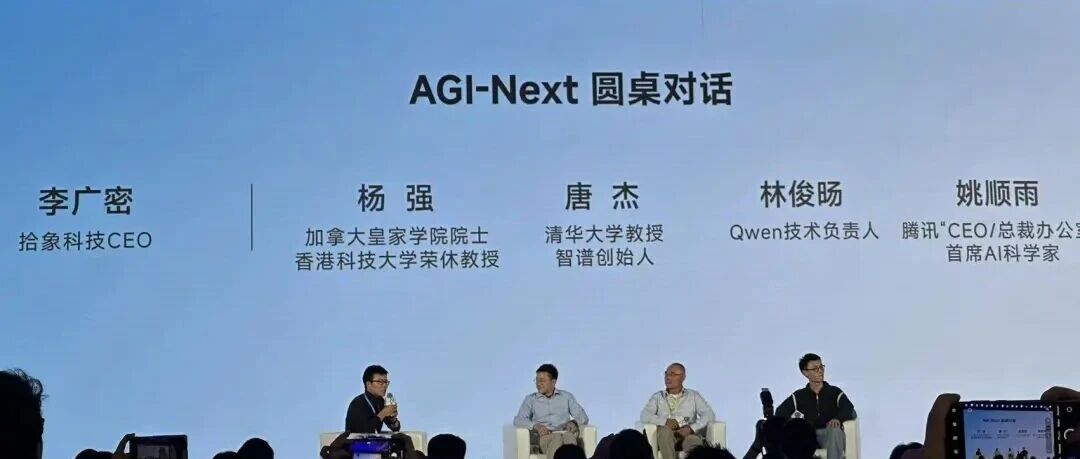
模型分化

Search documents
深度解读 AGI-Next 2026:分化、新范式、Agent 与全球 AI 竞赛的 40 条重要判断
3 6 Ke· 2026-01-14 00:17
Core Insights - The AGI-Next 2026 event highlighted the significant role of Chinese teams in the AGI landscape, with expectations for further breakthroughs by 2026 [1] - The event showcased a clear trend of model differentiation driven by varying demands in To B and To C scenarios, as well as strategic choices by different AI labs [1][2] - The consensus on autonomous learning as a new paradigm indicates a collective shift towards this direction by 2026 [1][5] Differentiation - AI differentiation is observed from two angles: between To C and To B, and between "vertical integration" and "layering of models and applications" [2] - In the To C space, user needs often do not require highly intelligent models, with context and environment being the main bottlenecks [2][3] - In the To B market, there is a willingness to pay a premium for "strong models," leading to a growing divide between strong and weak models [3][4] New Paradigms - Scaling will continue, but there are two distinct paths: known scaling through data and compute, and unknown scaling through new paradigms where AI systems define their own learning processes [5][6] - The goal of autonomous learning is to enhance models' self-reflection and self-learning capabilities, allowing them to improve without human intervention [6][10] - The biggest bottleneck for new paradigms is imagination, particularly in defining what success looks like for these new models [10][12] Agent Development - Coding is essential for the development of agents, with models needing to meet high requirements to perform complex tasks [13][25] - The differentiation between To B and To C agents reflects varying metrics of success, with To B agents focusing on real-world task solutions [27][28] - Future agents may operate independently based on general goals set by users, reducing the need for constant interaction [30][31] Global AI Competition - There is optimism regarding China's potential to enter the global AI first tier within 3-5 years, leveraging its ability to replicate successful models efficiently [19][20] - However, cultural differences and structural challenges in computing power compared to the U.S. present significant hurdles [20][38] - Historical trends suggest that constraints can drive innovation, with Chinese teams motivated to optimize algorithms and infrastructure [39][40]

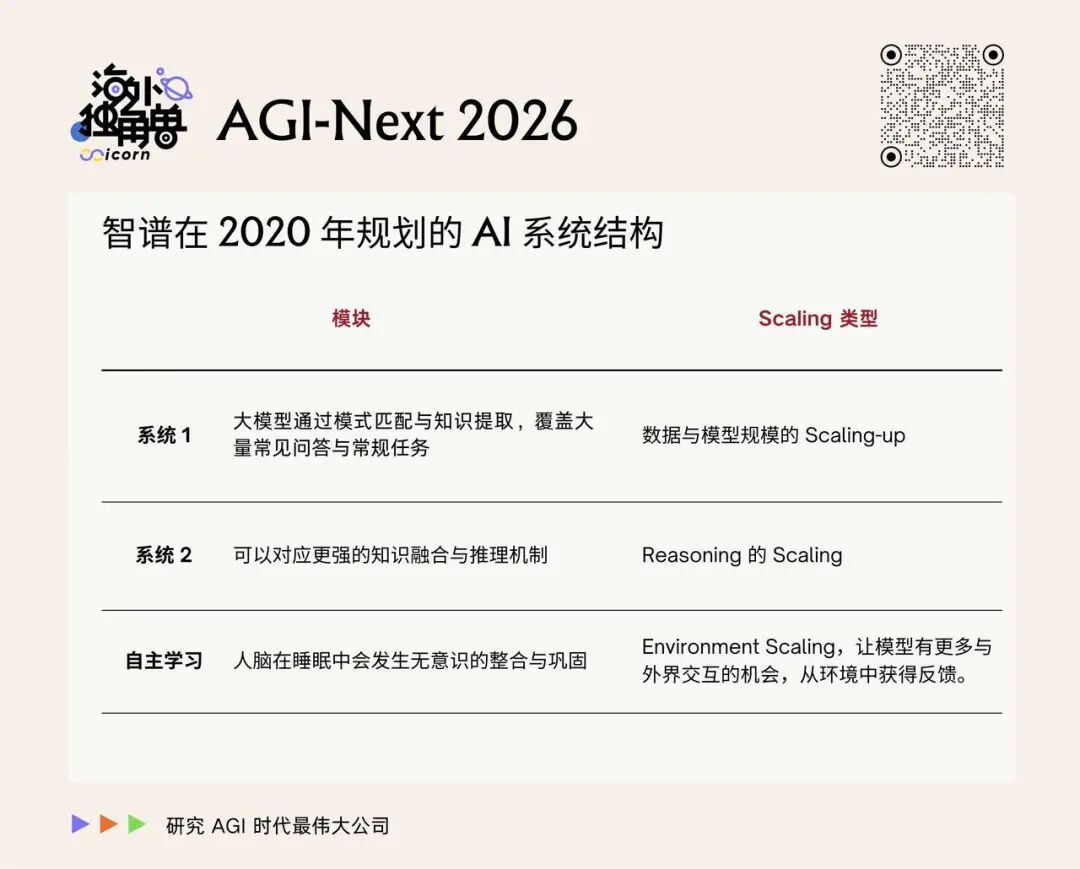
深度解读 AGI-Next 2026:分化、新范式、Agent 与全球 AI 竞赛的 40 条重要判断
海外独角兽· 2026-01-13 12:33
Core Insights - The AGI-Next 2026 event highlighted the significant role of Chinese teams in the AGI landscape, with expectations for further advancements by 2026 [1] - The article emphasizes the ongoing trend of model differentiation driven by various factors, including the distinct needs of To B and To C scenarios [1][3] - A consensus on autonomous learning as a new paradigm is emerging, with expectations that it will be a focal point for nearly all participants by 2026 [1][8] Differentiation - There are two angles of differentiation in the AI field: between To C and To B, and between "vertical integration" and "layering of models and applications" [3] - In To C scenarios, the bottleneck is often not the model's strength but the lack of context and environment [3][4] - In the To B market, users are willing to pay a premium for the "strongest models," leading to a clear differentiation between strong and weak models [4][5] New Paradigms - Scaling will continue, but there are two distinct paths: known paths that increase data and computing power, and unknown paths that seek new paradigms [8][9] - The goal of autonomous learning is to enable models to self-reflect and self-learn, gradually improving their effectiveness [10][11] - The biggest bottleneck for new paradigms is imagination, particularly in defining what tasks will demonstrate their success [12][13] Agent Development - Coding is essential for the development of agents, with models needing to meet high requirements to perform complex tasks [25][26] - The differentiation between To B and To C products is evident in agent development, where To C metrics may not correlate with model intelligence [27][28] - The future of agents may involve a "managed" approach, where users set general goals and agents operate independently to achieve them [30][31] Global AI Competition - There is optimism regarding China's potential to enter the global AI first tier within 3-5 years, driven by its ability to replicate successful models efficiently [36][37] - However, structural differences in computing power between China and the U.S. pose challenges, with the U.S. having a significant advantage in next-generation research investments [38][39] - Historical trends suggest that resource constraints may drive innovation in China, potentially leading to breakthroughs in model structures and chip designs [40]

唐杰、姚顺雨、杨植麟、林俊旸同台对话背后:5个2026年最重要的AI趋势观察
Xin Lang Cai Jing· 2026-01-11 06:47
Core Insights - A high-profile dialogue on AI took place in Beijing, featuring leading figures in China's large model sector, indicating a significant moment for the industry [1][2][15] - The discussion focused on the evolution of AGI, with a consensus that the future lies in autonomous learning and problem-solving capabilities [3][4][17] Group 1: Key Figures and Their Contributions - Tang Jie, a professor at Tsinghua University and founder of Zhipu AI, recently led the company to become "China's first stock in foundational models" [1][15] - Yao Shunyu, a former OpenAI researcher and now Tencent's chief scientist, emphasized the importance of autonomous learning in AGI's future [4][18] - Lin Junyang, head of Alibaba's Tongyi Qianwen model, discussed the need for models to evolve beyond general-purpose tools to specialized applications [7][21] Group 2: Future Directions in AGI - The next "singularity" in large models is expected to focus on autonomous learning, moving beyond passive responses to proactive decision-making [3][17] - Yao Shunyu highlighted that autonomous learning is a gradual process driven by data and task evolution, with current models already showing signs of self-optimization [4][18] - Concerns about the risks of autonomous AI were raised, emphasizing the need for proper guidance in AI development [3][17] Group 3: Scaling Law and Efficiency - The Scaling Law, which posits that increasing data and computational power leads to better model performance, is facing diminishing returns, prompting a shift towards "Intelligence Efficiency" [5][19] - Tang Jie proposed that future advancements should focus on achieving higher intelligence with less computational investment [5][19] - Yao Shunyu noted that improvements in model architecture and optimization are crucial for enhancing model performance beyond mere scaling [6][20] Group 4: Model Differentiation - The conference highlighted the trend of model differentiation, where models are tailored to specific scenarios rather than being one-size-fits-all solutions [7][21] - Yao Shunyu pointed out that in B2B contexts, strong models can significantly reduce operational costs, while in B2C, the focus should be on contextual understanding [8][22] - Lin Junyang emphasized the importance of integrating models with real-time user environments for better performance in consumer applications [8][22] Group 5: The Future of AI Agents - There is widespread optimism about the potential of AI agents to automate tasks, particularly in B2B settings, though challenges remain in B2C applications [11][25] - The development of agents is seen as a multi-stage process, with current models still reliant on human-defined goals [12][26] - The future of agents may involve more interaction with the physical world, enhancing their utility and effectiveness [11][25] Group 6: Competitive Landscape and Innovation - The dialogue acknowledged the existing gap between Chinese and American AI capabilities, with a consensus on the need for innovation to bridge this divide [12][26][28] - Yao Shunyu emphasized the importance of breakthroughs in computational power and market maturity for China's AI future [13][27] - Tang Jie identified opportunities for China to excel in AI through a culture of risk-taking and innovation among younger generations [14][28]


唐杰、杨植麟、姚顺雨、林俊旸罕见同台分享,这3个小时的信息密度实在太高了。
创业邦· 2026-01-11 03:22
Core Insights - The event AGI-NEXT featured prominent speakers from the AI industry, highlighting the rapid evolution of AI models and the shift from chat-based interactions to action-oriented applications [7][8][12][16]. - The discussion emphasized the importance of model differentiation, with a focus on the unique value each model brings based on its design and underlying philosophy [20][21][30]. - The panelists noted that the future of AI will involve a significant shift towards productivity-enhancing applications, particularly in the To B (business) sector, where higher intelligence models are increasingly valued [32][33][62]. Group 1 - The event AGI-NEXT showcased key figures in AI, including representatives from major companies, indicating a strong interest and investment in AI development [6][9][12]. - The discussions revealed that the competition in AI is shifting from merely creating chat models to developing models that can perform specific tasks effectively [16][18]. - The concept of "Taste" in AI models was introduced, suggesting that the uniqueness of each model's design will lead to diverse outcomes in intelligence and application [20][21]. Group 2 - The panelists discussed the clear differentiation between To C (consumer) and To B (business) applications, with a notable increase in the demand for high-performance models in the business sector [31][32][62]. - The conversation highlighted the importance of context in AI applications, suggesting that user-specific inputs can significantly enhance the value provided by AI systems [36]. - The potential for AI to revolutionize productivity in various sectors was emphasized, with predictions that AI could significantly impact GDP growth in the future [62][63]. Group 3 - The discussion on model differentiation pointed out that while consumer applications may not require the highest intelligence, business applications are increasingly reliant on superior models for productivity [32][33]. - The panelists expressed optimism about the future of AI, predicting that advancements in model efficiency and the emergence of new paradigms will lead to significant breakthroughs by 2026 [56][59]. - The importance of education and user training in maximizing the benefits of AI tools was also highlighted, suggesting that those who can effectively utilize AI will have a competitive advantage [63].
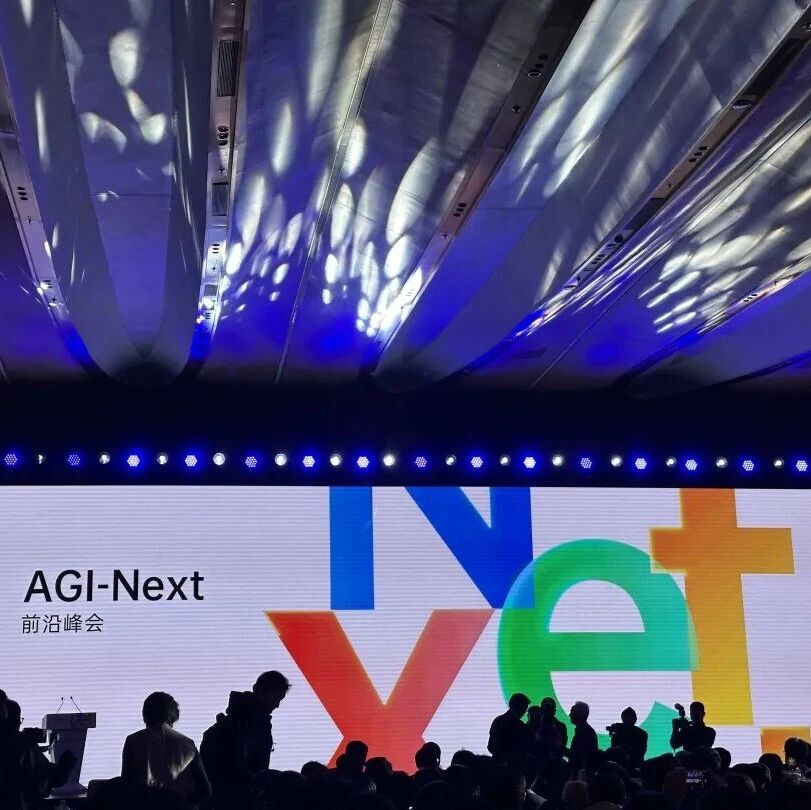
唐杰/杨植麟/林俊旸/姚顺雨罕见同台,“基模四杰”开聊中国AGI
Xin Lang Cai Jing· 2026-01-10 14:44
Core Insights - The AGI-Next conference highlighted the competitive landscape of AI in China, focusing on the importance of foundational models and their impact on future business strategies [4][5] - Key players in the AI industry, including Zhiyuan, Tencent, and Alibaba, are exploring different paradigms for AGI, emphasizing the need for new metrics to evaluate model intelligence [6][7] - The discussion revealed a consensus on the increasing differentiation between consumer (ToC) and business (ToB) applications of AI, with distinct strategies for each segment [11][12] Group 1 - The AGI-Next conference featured prominent figures in China's AI sector, including Zhiyuan's founder Tang Jie and Tencent's newly appointed chief scientist Yao Shunyu, indicating a significant gathering of industry leaders [4][5] - The conference underscored the belief that the capabilities of foundational models will determine the success of future AI ventures, with a focus on maintaining a leading position in model development [5] - Tang Jie expressed concerns that the gap between Chinese and American models may not be closing, as many American models remain closed-source [5][6] Group 2 - The participants discussed the evolution of AI paradigms, with Tang Jie suggesting that the exploration of conversational models has reached its peak, and future efforts should focus on coding and reasoning capabilities [6][7] - Yao Shunyu emphasized the importance of scaling not just in computational power but also in architecture and data optimization to enhance model performance [6][7] - The need for new standards to measure AI intelligence was highlighted, with concepts like Token Efficiency and Intelligence Efficiency being proposed as metrics [7][41] Group 3 - The differentiation between ToC and ToB applications was a key theme, with Yao Shunyu noting that while ToC requires strong integration of models and products, ToB focuses on enhancing productivity through the best models available [11][12] - Lin Junyang pointed out that the success of AI applications depends on understanding real user needs, suggesting that effective communication with enterprise clients is crucial for developing successful AI solutions [8][12] - The conversation also touched on the potential for AI to automate significant portions of human work, particularly in the ToB sector, where higher model intelligence correlates with increased revenue [43][44] Group 4 - The participants acknowledged the challenges of deploying AI models effectively, with a focus on the need for better education and training to maximize the benefits of AI tools [44][57] - The discussion included insights on the importance of collaboration between academia and industry to address unresolved questions in AI research, such as the limits of intelligence and resource allocation [20][21] - The potential for new paradigms in AI, such as continuous learning and memory integration, was identified as a critical area for future exploration [38][40]
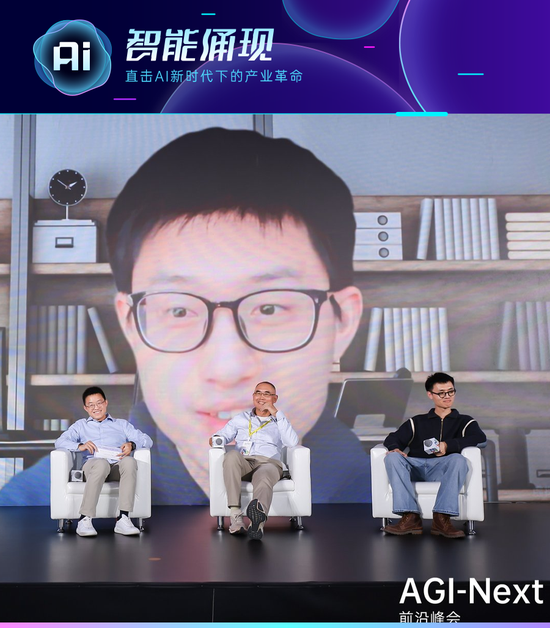
唐杰、杨植麟、林俊旸、姚顺雨罕见同台,「基模四杰」开聊中国AGI
36氪· 2026-01-10 14:14
Core Insights - The article discusses the emergence of AI and its impact on various industries, highlighting the importance of foundational models in determining competitive advantages in the AI landscape [5][6][7]. Group 1: Key Players and Developments - The AGI-Next summit featured key figures from major Chinese AI companies, including Zhiyuan, Tencent, and Alibaba, emphasizing their roles in advancing foundational models [5]. - The discussion revealed a consensus that the capabilities of foundational models will dictate future competition, with a focus on becoming the next major entry point in the AI market [5][6]. Group 2: Paradigm Shifts in AI - The article notes a shift in AI exploration paradigms, with a focus on new metrics for measuring model intelligence, such as Token Efficiency and Intelligence Efficiency [7][8]. - The participants agreed that the next phase of AI development will prioritize autonomous learning, which is seen as a critical direction for future advancements [6][7]. Group 3: Market Segmentation - There is a clear distinction between ToC (consumer) and ToB (business) applications, with the former requiring tightly integrated models and products, while the latter focuses on enhancing productivity through strong models [8][10]. - The article highlights that in the ToB market, companies are willing to pay a premium for superior models, indicating a growing divide between strong and weak models [10][11]. Group 4: Future Trends and Challenges - The discussion points to the need for a new standard in measuring model intelligence as the AI landscape evolves, with a focus on balancing model capabilities and practical applications [7][8]. - The article emphasizes the importance of context and environment in improving AI interactions, suggesting that better contextual inputs can significantly enhance model performance [15][16]. Group 5: Cultural and Structural Factors - The article discusses the differences in research culture between China and the U.S., noting that Chinese researchers tend to favor safer, more established projects over innovative explorations [71][72]. - It also highlights the need for a more adventurous spirit in the Chinese AI landscape to foster innovation and breakthrough developments [70][78].
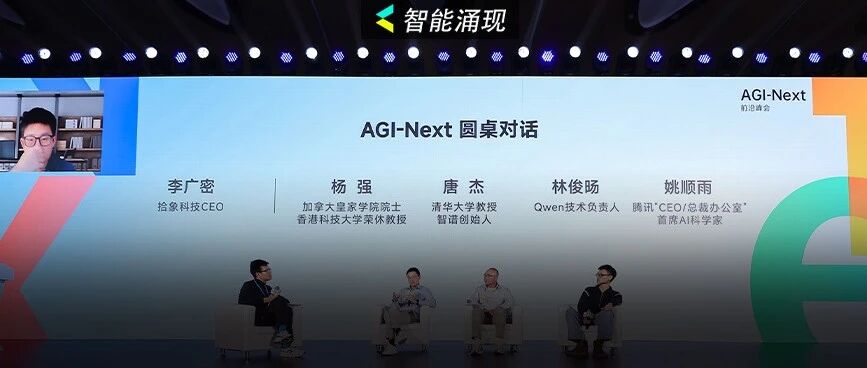
唐杰、杨植麟、姚顺雨、林俊旸罕见同台分享,这3个小时的信息密度实在太高了。
数字生命卡兹克· 2026-01-10 12:37
Core Insights - The AGI-NEXT event showcased significant discussions among AI industry leaders, emphasizing the shift from chat-based models to action-oriented AI systems [1][6][10] - The future competition in AI models will focus on the quality of intelligence and the unique perspectives embedded within them, rather than a single dominant model [7][10] Group 1: Event Highlights - The AGI-NEXT event featured prominent speakers from major AI companies, including DeepSeek, Kimi, and Qwen, indicating a strong interest and attendance from the AI community [1][4] - The discussions highlighted the importance of moving beyond traditional chat models to more action-oriented AI systems, with a focus on practical applications [6][12] Group 2: Model Differentiation - The conversation pointed out a clear differentiation in AI models, particularly between consumer (To C) and business (To B) applications, with distinct needs and expectations for each [12][14] - The emergence of specialized models for specific tasks is becoming more pronounced, with companies focusing on either consumer-facing or enterprise solutions [15][16] Group 3: Future Trends - The panelists discussed the potential for a new paradigm in AI, emphasizing the importance of self-learning and continuous improvement in models, which could lead to significant advancements by 2026 [21][22] - The role of context in enhancing AI interactions was highlighted, suggesting that better contextual understanding could improve user experience and model effectiveness [16][17] Group 4: Industry Dynamics - The competition between Chinese and Western AI companies is intensifying, with expectations that Chinese firms could emerge as leaders in the next few years, provided they overcome key challenges such as hardware limitations [40] - The discussion also touched on the importance of collaboration between academia and industry to drive innovation and address unresolved challenges in AI development [19][28]