
International Science and Technology Innovation Center

Search documents
亦庄新城综合配套服务区街区控规获批
Bei Jing Ri Bao Ke Hu Duan· 2026-02-09 23:20
Core Viewpoint - The approval of the detailed planning for the Yizhuang New City Comprehensive Service Area aims to establish it as a new industrial engine and an eco-friendly living space, focusing on the development of the biopharmaceutical and commercial aerospace industries [1] Group 1: Planning and Development - The Comprehensive Service Area is located in the northwest of Yizhuang New City, covering an area of approximately 5761.97 hectares, and includes 15 blocks [1] - The planning emphasizes the reduction of urban construction land while enhancing green open space, with Nanhaizi Park as the core to create a park cluster [1] Group 2: Industry Focus - The area is set to support the overflow of functions from the South Central Axis and the core area of Yizhuang New City, with a focus on biopharmaceutical and commercial aerospace industries [1] - The biopharmaceutical industry will utilize the International Pharmaceutical Innovation Park as its spatial carrier, while the commercial aerospace industry will be driven by the "Beijing Rocket Street" project [1]
扩围、破局 科创中心书写区域创新发展的“新答卷”
Yang Shi Wang· 2026-02-02 12:30
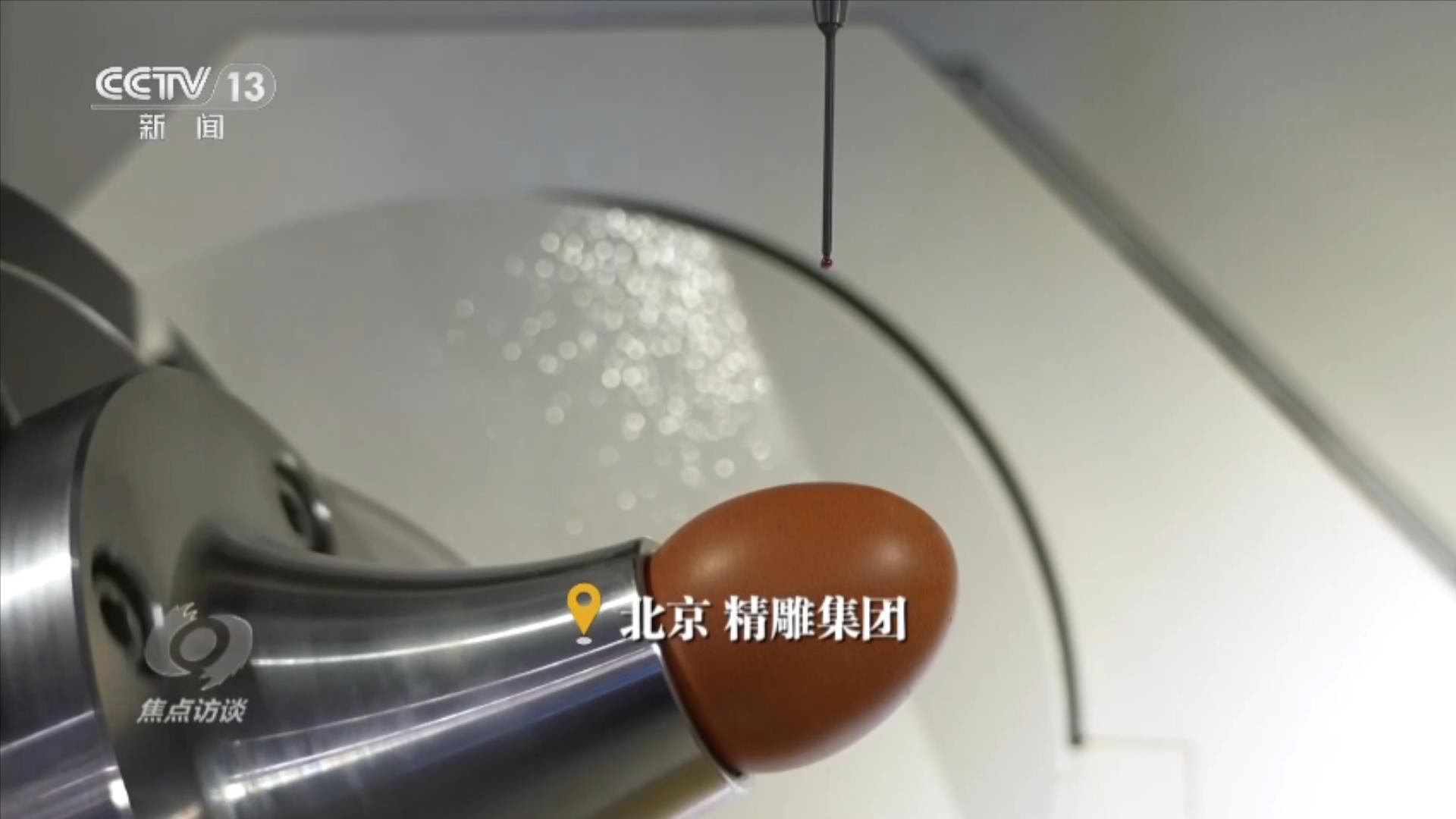
Core Viewpoint - The 2025 Central Economic Work Conference emphasizes the expansion of international technology innovation centers in Beijing (Jing-Jin-Ji), Shanghai (Yangtze River Delta), and the Guangdong-Hong Kong-Macao Greater Bay Area, aiming to enhance regional innovation capabilities and address existing bottlenecks in innovation development [1][9][20]. Group 1: Beijing and Shanghai's Current Status - Beijing has maintained its position as the top global research city for nine consecutive years, with R&D investment intensity stable at around 6% [1]. - Shanghai has established 20 major technological infrastructures, with the total market value of listed companies on the Sci-Tech Innovation Board ranking first in the country [1]. - The expansion to Jing-Jin-Ji and the Yangtze River Delta aims to overcome innovation development bottlenecks and release new momentum for growth [1][9]. Group 2: Collaborative Development in Jing-Jin-Ji - The cross-regional division of labor in Jing-Jin-Ji has developed, with R&D in Beijing, manufacturing in Tianjin, and assembly in Hebei [5][7]. - During the 14th Five-Year Plan, the technology contract transaction amount from Beijing to Tianjin and Hebei exceeded 320 billion yuan, with an annual growth rate of 23%, indicating a significant increase compared to the previous five-year period [7]. - The collaborative development strategy has allowed companies like Beijing Jingdiao Group to thrive by focusing on R&D while leveraging manufacturing capabilities in Tianjin and assembly in Hebei [5][12]. Group 3: Challenges and Solutions in Regional Cooperation - Despite the progress, challenges remain in the collaborative framework, such as insufficient industrial coordination and barriers to the free flow of talent and resources among the three regions [10][12]. - The establishment of the Xiong'an New Area's Zhongguancun Science Park exemplifies efforts to break down administrative barriers and enhance cross-regional collaboration [14][16]. - The Xiong'an initiative has attracted over 260 enterprises, with 65% from Beijing, creating specialized industrial chains and generating over 1,200 new intellectual property rights [16]. Group 4: Long-term Vision for the Yangtze River Delta - The Yangtze River Delta has established a joint mechanism for cross-regional collaboration, funding over 100 joint projects with a total investment exceeding 1.7 billion yuan since 2022 [9][18]. - The National Major Science and Technology Infrastructure for Translational Medicine aims to create a shared resource platform to facilitate innovation and reduce R&D costs for companies in the region [18][19]. - The "Yangtze River Delta Technology Resource Sharing Service Platform" has gathered over 56,000 large scientific instruments and facilitated nearly 12,000 services for enterprises, demonstrating the effectiveness of resource sharing [19]. Group 5: Future Directions and Goals - The strategic expansion aims to transform the existing collaborative foundation into a competitive advantage on the international stage, enhancing the innovation capabilities of both Jing-Jin-Ji and the Yangtze River Delta [9][20]. - By 2030, the goal is for Beijing to become a world-class source of technological innovation, while Shanghai aims to significantly enhance its position and influence in the global innovation network [20][22]. - The overall vision is to create a more integrated and efficient innovation ecosystem across these regions, fostering a new model of development that emphasizes collaboration and resource sharing [22].

2025年上海市国民经济运行情况解读:经济总体稳中向好 发展质效向新向优
Xin Hua Cai Jing· 2026-01-21 03:30
Economic Performance - Shanghai's GDP reached 56,708.71 billion yuan in 2025, with a year-on-year growth of 5.4% at constant prices [2] - The secondary industry added value was 11,650.62 billion yuan, growing by 3.5%, while the tertiary industry added value was 44,958.70 billion yuan, growing by 6.0% [2] - The manufacturing output of the three leading industries increased by 9.6%, surpassing the overall industrial output growth by 5.0 percentage points [2] - The integrated circuit manufacturing and artificial intelligence sectors saw production growth of 15.1% and 13.6%, respectively [2] - The software and information technology service industry revenue grew by 24.2% year-on-year from January to November 2025 [2] Urban Core Function Enhancement - The number of licensed financial institutions in Shanghai reached 1,813, with major financial market transaction volume hitting 40,589.5 billion yuan, an increase of 11.2% [3] - Shanghai's total foreign trade volume reached 4.51 trillion yuan, a year-on-year increase of 5.6%, with exports growing by 10.8% and imports by 1.8% [3] - Shanghai Port's container throughput reached 55.06 million TEUs, growing by 6.9%, maintaining its position as the world's busiest port for the sixteenth consecutive year [3] - The technology contract transaction volume reached 649.679 billion yuan, increasing by 24.9% [3] Macro Control Effectiveness - Urban infrastructure investment grew by 11.2% in 2025, driven by investments in power construction and transportation [4] - Manufacturing investment surged by 22.8%, particularly in integrated circuits and semiconductor manufacturing [4] - Retail sales of social consumer goods increased by 4.6%, with significant growth in cultural office supplies, furniture, home appliances, and communication equipment [4] Social and Livelihood Security - The consumer price index (CPI) rose by 0.1%, with core CPI increasing by 0.7% [5] - The average urban unemployment rate was 4.2% in 2025 [5] - Per capita disposable income grew by 4.1%, with urban residents' income increasing by 4.0% and rural residents' by 5.4% [5]
重大工程新台阶 去年上海完成投资首破2500亿元
Jie Fang Ri Bao· 2026-01-08 09:20
Group 1 - Shanghai's total investment in major projects exceeded 250 billion yuan for the first time, reaching 251.01 billion yuan in 2025, marking a new milestone [1] - During the "14th Five-Year Plan" period, Shanghai's total investment in major projects surpassed 1.12 trillion yuan, with annual investment increasing year by year, contributing to steady economic recovery [1] - Nearly half of the investment in the past five years has flowed into infrastructure, with urban infrastructure accounting for 44% of the total investment, including transportation, water, and energy sectors [1] Group 2 - In 2025, 30 major projects commenced construction, and 30 major projects were substantially completed, including new campuses and expansions in the education sector [2] - Significant healthcare projects included the completion of several municipal hospitals and the structural completion of the first phase of the Zhongshan Hospital Qingpu New Town [2] - Transportation developments included the completion of major road projects and the advancement of the Shanghai-Chongqing-Rong high-speed railway, which is expected to become Shanghai's third-largest high-speed railway station by 2027 [2] Group 3 - Key projects have made breakthroughs in line with national strategies, focusing on building an international economic center with significant advancements in semiconductor and automotive industries [3] - The construction of the second phase of Luojing Port and the comprehensive development of the Xiaoyangshan North Operation Area are part of efforts to establish an international shipping center [3] - Projects related to energy transition, such as the completion of key physical technology projects in magnetic-inertial confinement fusion energy systems and the integration of offshore wind power, are promoting the city's energy structure transformation [3]