
Investment Philosophy

Search documents
I’m a Financial Advisor: These Are the 5 Questions I Wish New Clients Asked
Yahoo Finance· 2026-03-22 17:22
Core Insights - The article emphasizes the importance of asking specific questions when meeting with a financial advisor to ensure a good fit and to uncover valuable information that can aid in financial planning [2]. Group 1: Key Questions for Financial Advisors - **How Do You Get Paid?** This question is highlighted as crucial, as it reveals the advisor's compensation structure, which can influence the recommendations made to clients. Fee-only, commission-based, and fee-based advisors have different payment models that clients should understand [3][4]. - **How Can We Simplify Our Finances?** Advisors suggest that clients inquire about ways to streamline their financial accounts and investments, which can reduce complexity and improve management efficiency [4]. - **What Is Your Investment Philosophy?** Aligning the investment philosophies of both the client and the advisor is essential for effective financial planning, making this a significant question for clients to ask [5]. Group 2: Tax Considerations - **How Do You Help Me Save on Taxes?** Taxes are identified as a major expense in financial planning, and advisors stress the importance of incorporating tax strategies into overall financial planning. Understanding the interaction between income, equity compensation, and investments can lead to better long-term financial outcomes [6][7].
1 Rule, 3 Stocks: Why One Legendary Investor Would Choose These Stocks Above Any Others Right Now
The Motley Fool· 2026-03-21 15:30
Core Viewpoint - Charlie Munger's investment philosophy emphasizes buying high-quality stocks at reasonable prices, and three companies currently stand out as potential investments: S&P Global, Fair Isaac, and Home Depot [1]. Company Summaries S&P Global - S&P Global has a history of over 150 years, showcasing its staying power and generating a subscription-heavy revenue mix through credit ratings, benchmark indexes, and analytics [2]. - The company has a market capitalization of $127 billion, with a current price of $424.43 and a gross margin averaging 65% over the last decade [3][4]. - Despite a price-to-earnings (P/E) ratio of 29, which is around the market average, shares are trading within 10% of their 52-week low, making it an attractive buy for Munger [6]. Fair Isaac - Fair Isaac operates a deep moat around the mortgage application process and is known for its FICO scores, which influence lending rates across various loans [7][8]. - The company has a market capitalization of $27 billion, with a current price of $1,126.34 and an impressive gross margin of 83%, up from 67% a decade ago [12][9]. - Free cash flow has increased by 394% over the last 10 years, now standing at $718 million, although the P/E ratio of 44 is above the market average [9][11]. Home Depot - Home Depot is a leading home improvement retailer with approximately 2,300 stores and a stable gross margin averaging around 32% over the last 25 years [13][14]. - The company has a market capitalization of $319 billion, with a current price of $320.75 and generates over $2 billion in quarterly free cash flow [16]. - However, the company's net debt has increased by over 250% in the last decade to nearly $64 billion, which may concern Munger [15].



Constellation Brands: A Transition Year, But The Valuation Looks Compelling
Seeking Alpha· 2026-03-11 14:46
Core Insights - Constellation Brands (STZ) has experienced significant changes over the past year, including the impact of tariffs on its beer business, the divestiture of six wine brands, and the appointment of a new CEO [1] Group 1: Business Changes - The beer business has been affected by tariffs, which may influence pricing and market competitiveness [1] - The company has divested six wine brands, indicating a strategic shift in its portfolio management [1] - A new CEO has been appointed, which could lead to changes in corporate strategy and operational focus [1]


Mastercard's Shift From Payments To Software
Seeking Alpha· 2026-03-10 16:51
Core Insights - Mastercard is recognized as a stable investment due to its dominant position in the global payment network, with revenue growth expected to re-accelerate in 2025 [1] Group 1: Company Overview - Mastercard operates as a leading payment network, historically providing a safe and predictable investment option [1] - The company is anticipated to experience a resurgence in revenue growth by 2025, indicating potential for future profitability [1] Group 2: Investment Philosophy - The investment strategy focuses on a long-term horizon of 5-10 years, emphasizing investments in companies with a strong competitive advantage [1] - There is an interest in emerging companies that are positioning themselves as future leaders in their respective industries [1] Group 3: Personal Development - The company is enhancing its understanding of business and capital allocation through a Master's degree in Entrepreneurship [1] - Efforts are being made to obtain Series 65 certification to transition into the professional advisory space, aiming to assist others in navigating financial markets [1]


New CEO Greg Abel's 18-Page Letter to Shareholders Is an Unprecedented Look Into the Future of Berkshire Hathaway. 3 Things Investors Should Know
The Motley Fool· 2026-03-08 07:05
Core Insights - New CEO Greg Abel has officially taken over from Warren Buffett, marking a significant leadership transition at Berkshire Hathaway with an 18-page letter to shareholders outlining his vision and the company's current state [1] Group 1: Corporate Structure and Leadership - Berkshire Hathaway consists of 51 non-insurance operating divisions across various sectors including insurance, energy, mortgages, and railroads [4] - The company will maintain a decentralized model, allowing leaders of each business greater autonomy and accountability, which is viewed as a competitive advantage [5] - Ajit Jain will continue to lead the insurance business, while Adam Johnson will oversee all consumer products, services, and retailing businesses, which include 32 non-insurance operating companies [5] Group 2: Investment Strategy - Abel will be responsible for capital allocation in Berkshire's large equities portfolio, which is primarily funded by the float from insurance operations [6] - The equities portfolio is expected to have "limited activity" moving forward, with four key stocks—Apple, American Express, Coca-Cola, and Moody's—likely to see minimal changes [7] - These four companies are viewed as long-term investments, although Abel did not rule out adjustments based on fundamental changes in their economic prospects [8] Group 3: Capital Distribution Policies - Berkshire Hathaway has a significant cash reserve of $370 billion, leading to speculation about potential capital distributions to shareholders [11] - The company will not initiate dividend payments unless it believes it can create more value through business investments, although the board reviews this policy annually [12] - Share repurchases will continue to be conducted when shares are trading below intrinsic value, with consideration for purchasing large blocks from major investors [13]
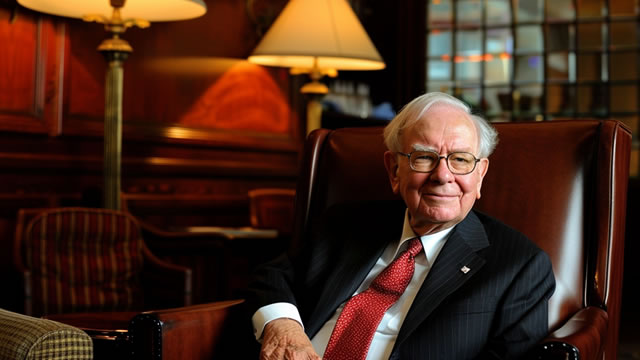
Berkshire Hathaway begins repurchasing shares, CEO Greg Abel buys $15 million in stock
CNBC· 2026-03-05 12:30
Core Viewpoint - Berkshire Hathaway has resumed share repurchases for the first time since 2024, with new CEO Greg Abel personally purchasing $15 million worth of stock, indicating confidence in the company's value and future prospects [1][3]. Group 1: Share Repurchase Activity - Berkshire Hathaway began repurchasing its Class A and Class B shares on Wednesday, following a policy that allows repurchases when the CEO, in consultation with the chairman, believes the price is below intrinsic value [2]. - The company's shares have declined by 10% from their record high in May, influenced by a nearly 30% drop in operating earnings for the fourth quarter, primarily due to challenges in the insurance sector [3]. Group 2: Leadership and Investment Philosophy - CEO Greg Abel's recent stock purchase increases his personal stake in Berkshire, addressing investor concerns regarding his commitment compared to Warren Buffett, who owns approximately 37.5% of Class A shares and has no plans to sell [4]. - Prior to this purchase, Abel owned $164.4 million worth of Berkshire stock and has emphasized continuity with Buffett's investment philosophy, assuring investors that the company's culture of financial conservatism and disciplined investing will persist [5].
EnerSys: Showing Margin Power But Waiting For Volume Growth
Seeking Alpha· 2026-02-06 11:52
Core Viewpoint - EnerSys (ENS) reported a solid but uneven performance in Q3, driven by cost reductions, improved pricing, and a better product mix, despite revenues showing minimal growth and missing estimates due to weaker demand [1] Financial Performance - Revenues for EnerSys barely grew and fell short of market expectations, indicating a challenging demand environment [1] Operational Highlights - The company's performance was supported by effective cost-cutting measures and an enhanced product mix, which contributed positively to its financial results [1]


American Express(AXP) - 2025 Q4 - Earnings Call Transcript
2026-01-30 14:32
Financial Data and Key Metrics Changes - Full-year revenues increased by 10% to a record $72 billion, and EPS rose by 15% to $15.38, excluding the Accertify gain [5][16] - Net card fees grew by 18%, reaching a record $10 billion for the year [17] - Revenue growth for 2026 is expected to be between 9% and 10%, with EPS projected between $17.30 and $17.90 [7][29] Business Line Data and Key Metrics Changes - Card member spending remained strong, with retail spending up 10% and spending at luxury retail merchants up 15% [17] - B2B total spend increased by 8% (FX adjusted), with growth in both goods and services and P&E [17] - Loans and card member receivables increased by 7% year-over-year, with credit performance remaining strong and stable [21][22] Market Data and Key Metrics Changes - International spending grew by 12% (FX adjusted), with broad-based growth across consumer and business customers [18] - Millennial and Gen Z customers now represent the largest share of U.S. consumer spending, indicating a shift in demographics [18] - Transactions growth was consistent at 9%, reflecting continued customer engagement [19] Company Strategy and Development Direction - The company continues to focus on premium products and high credit standards, with a disciplined investment approach to drive growth [16][24] - Investments in technology and marketing are expected to enhance customer engagement and operational efficiencies [11][24] - The company plans to maintain a strong capital return strategy, with a 16% increase in quarterly dividends planned for 2026 [8][27] Management's Comments on Operating Environment and Future Outlook - Management expressed confidence in the strength and stability of the premium customer base, anticipating continued growth in 2026 [7][29] - The competitive landscape remains challenging, but the company believes it can maintain its leadership through innovation and customer service [74][75] - Management highlighted the importance of macroeconomic factors as potential risks to the 2026 outlook, rather than competitive dynamics [73] Other Important Information - The company has invested significantly in marketing, with a total of $6.3 billion spent in 2025, reflecting a 75% increase since 2019 [8] - The new third-generation data and analytics platform is expected to enhance marketing efficiency and customer personalization [12] - The company has reduced its share count by 7% since 2022, demonstrating confidence in sustainable earnings [27] Q&A Session Summary Question: Can you expand on the allocation of marketing dollars towards fee-paying products? - Management noted a strong demand for premium products, particularly the Platinum Card, and emphasized flexibility in marketing investments [35][36] Question: What are the expectations for commercial services and the competitive landscape? - Management acknowledged a slowdown in middle-market spending but expressed confidence in their competitive position and upcoming product refreshes [40][42] Question: How does the company view the potential impact of the 10% credit card cap proposal? - Management believes the cap would negatively affect the market by reducing the number of cards and line sizes, which could harm small businesses [68][70] Question: What are the key initiatives for 2026? - Management highlighted priorities such as winning in the premium space, building commercial capabilities, and enhancing digital offerings [83][84]

Warren Buffett's Investment Philosophy: 'Be Fearful When Others Are Greedy and be Greedy When Others Are Fearful'
Yahoo Finance· 2026-01-25 21:31
Core Insights - Warren Buffett is shifting his personal investments from government bonds to U.S. stocks, reflecting his long-term confidence in the strength and resilience of American businesses [1][4] - Despite current market fears and economic turmoil, Buffett views the situation as an opportunity for investment, adhering to his principle of being "greedy when others are fearful" [2][4] - Buffett acknowledges the need for caution regarding highly leveraged entities but dismisses concerns about the long-term prosperity of robust companies in the U.S. [3][5] Investment Strategy - Buffett's investment strategy emphasizes taking advantage of market fear, suggesting that current conditions may lead to significant growth in the U.S. stock market [4] - His confidence in the resilience of many U.S. companies is underscored by his decision to move away from government bonds [5] Market Outlook - Buffett believes that while short-term market fluctuations are unpredictable, a market surge is likely before sentiment or the economy recovers [3] - His advice to investors is to act promptly, as waiting for clearer signals may result in missed opportunities [3]