Job market

Search documents
Fidelity delivers sobering interest-rate message amid Fed pause
Yahoo Finance· 2026-03-22 15:07
Core Viewpoint - The Federal Reserve decided to keep its benchmark interest rate unchanged during the March 17-18 meeting, a decision anticipated by investors due to persistent inflation and a stable job market [1][3]. Economic Conditions - The job market has shown sluggishness but has not deteriorated sharply, which could have influenced the Fed's decision towards rate cuts [3]. - New manufacturing orders have increased, indicating a firm start to 2026, while tax-related stimulus is beginning to benefit consumers and businesses [4]. Inflation and Energy Markets - The ongoing conflict in the Middle East has introduced new uncertainties, particularly regarding energy markets, which could impact inflation rates [5][6]. - Rising oil prices since the onset of the conflict are expected to affect headline inflation measures, such as the Consumer Price Index (CPI) and Personal Consumption Expenditures Index (PCE), once March data is released [10]. Future Considerations - The Fed is currently facing multiple economic crosswinds, making the outlook for future policy decisions uncertain [6]. - Key unknowns include the extent to which energy-market disruptions will influence inflation and the overall economic landscape [9].
When it comes to getting a pay raise, you'll probably have to ask for it
Yahoo Finance· 2026-03-17 10:00
Core Insights - Employers are often aware that they are underpaying some employees, but many only increase pay when directly asked by the employee or their manager [1] - Pay transparency laws are prompting employees to become more aware of pay disparities, leading to increased inquiries about compensation [2][3] Group 1: Pay Transparency - 16 states and the District of Columbia have enacted mandatory pay transparency laws requiring salary ranges in job postings, with another 10 states introducing related bills [3] - Pay transparency is revealing existing pay inconsistencies rather than creating new issues, as employees notice disparities when comparing their pay to job postings [4] Group 2: Employee Retention and Job Market - A significant number of employers report that unfair pay perceptions are causing talented employees to leave their jobs, with over a quarter of employers acknowledging this trend [5] - The current job market is challenging, leading to a phenomenon where employees are hesitant to complain about pay due to fears of job loss, with many clinging to their positions [6][7] - Pay growth for job-switchers has decreased, with the pay premium for changing employers reaching a record low, and the likelihood of finding a new job has diminished [7]
X @Forbes
Forbes· 2026-02-16 10:30
Entry-level new graduates, career switchers and those with certificates or associate degrees are having difficulty finding jobs. To help with this problem, Resume Now analysts reviewed Bureau of Labor Statistics and O*NET data. To qualify, each of the 12 entry-level careers had to hit four marks at once: education, salary, job growth and AI risk.Read more: https://t.co/LJdRCgKkaj ...
Inflation is easing, jobs are holding up, and growth is solid. But after years of high prices and with new risks emerging, declarations of victory feel premature.
WSJ· 2026-02-15 02:00
Core Viewpoint - Inflation is easing, job markets are stable, and economic growth remains solid, but declaring victory over these issues may be premature due to the emergence of new risks [1] Group 1 - Inflation rates are showing signs of easing, indicating a potential stabilization in the economy [1] - Job markets are holding up well, suggesting resilience in employment despite previous economic challenges [1] - Economic growth is described as solid, reflecting a positive outlook for the overall economic environment [1] Group 2 - The article highlights that after years of high prices, the current situation may still pose risks that could affect future economic stability [1] - New risks are emerging that could impact the economic landscape, warranting caution in interpreting current economic indicators as a sign of complete recovery [1]
They Asked, 'Why Aren't We Fighting For Remote Work Again?' The Response Was A Reality Check: 'We're Too Busy Fighting To Even Get A Job'
Yahoo Finance· 2026-02-13 16:46
Group 1 - The initial enthusiasm for remote work has diminished as employees are now more focused on job security rather than negotiating for remote arrangements [1][2][3] - The current job market is characterized by layoffs and increased competition among job seekers, leading to a loss of leverage for workers in negotiations [2][3][4] - Some companies have reverted to traditional office settings due to perceived drops in productivity, with reports of a 40% decrease in productivity among certain employees when remote work was implemented [4] Group 2 - Despite some companies reducing remote work options, others continue to offer it to attract specialized talent, indicating a mixed approach to remote work policies [5] - The perception that remote jobs can be performed by anyone has created a challenging environment for workers, as it diminishes their negotiating power [5]
Job market impact from immigration policy 'doesn't make any sense,' says Treasury's Joseph Lavorgna
CNBC Television· 2026-02-11 16:56
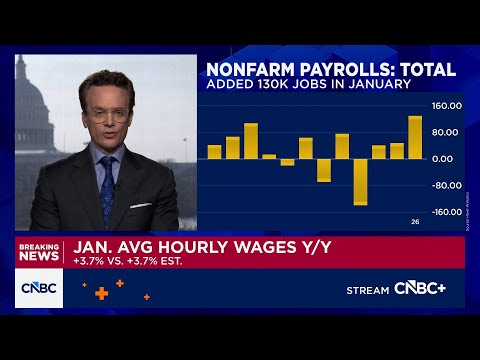
For more on the jobs report, let's bring in Joe Leornia, counselor to the US Treasury Secretary. It's good to have you, Joe. I mean, clearly th this was a good number.What do you think it indicates as far as where we go from here. >> Thank you, Sarah. It was a very good number.You talked about the goods part of the economy. What might be getting lost on people is when you look at GDP, which has been growing about 4% in the full three quarters President Trump's been in office, it's actually been led by the g ...

Morning News NOW Full Episode – Feb. 11
NBC News· 2026-02-11 15:54
IS TERRIFYING. >> A PERSON MASKED AND ARMED, CAUGHT ON THE FRONT DOOR CAMERA IN THE EARLY MORNING HOURS OF THE DAY. SHE VANISHED.THE LATEST IN JUST A MOMENT. ALSO THIS MORNING, TRAGEDY IN CANADA. NINE PEOPLE DEAD, DOZENS MORE INJURED IN A HORRIFIC MASS SHOOTING THAT IS ROCKING A REMOTE COMMUNITY JUST NORTH OF VANCOUVER.THE SUSPECT, POLICE SAY, SUCCUMBING TO A SELF-INFLICTED GUNSHOT WOUND. WHAT WE KNOW THIS MORNING ABOUT WHAT HAS BECOME ONE OF THAT NATION'S DEADLIEST INCIDENTS OF GUN VIOLENCE EVER. PLUS, ANO ...

Huge employment report: US added 130,000 jobs in January
Yahoo Finance· 2026-02-11 15:04
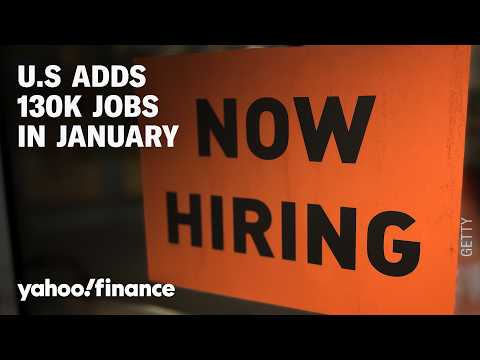
Good morning and welcome to Yahoo Finance's special coverage of the January [music] jobs report. I'm Julie Hyman. Uh we are seeing futures push a little bit higher.Of [music] course, everything could change after this report. Let me run you through the expectations here in terms of non-farm payrolls and the the change that we are looking for here. 65,000 is the average estimate on the part of economist.um that would be a little bit of an uptick from the 50,000 that we saw the increase in December. So that's ...
Jobs Report May Be A Game-Changer For The Fed (Live Coverage)
Investors· 2026-02-11 12:17
Core Viewpoint - The Federal Reserve indicates that the job market is stabilizing, but the upcoming jobs report may contradict this assertion [1] Group 1 - The Fed's assessment suggests a positive outlook on employment trends, indicating a potential stabilization in the job market [1] - There is anticipation that the jobs report could reveal data that does not align with the Fed's optimistic view, potentially highlighting ongoing challenges in the labor market [1]

S&P 500 turns negative for 2026 as investors add job market to a growing list of worries facing Wall Street
MarketWatch· 2026-02-05 22:27
Group 1 - The stock market experienced a significant downturn on Thursday, highlighting how quickly concerns in a specific market segment can escalate into a broader sell-off [1]