Knowledge Augmented Generation (KAG)

Search documents
金山办公朱熠锷:从“看到”到“掌握”:AI应用进入“知识增强生成”时代|Alpha峰会
Hua Er Jie Jian Wen· 2025-12-25 08:53
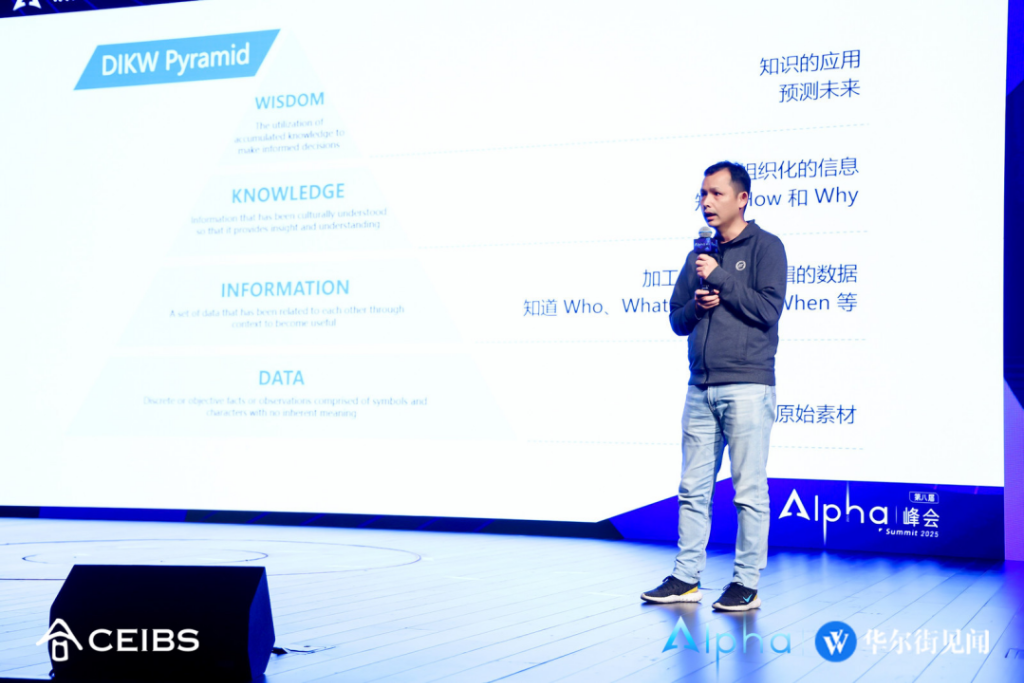
Core Insights - The core challenge of AI applications has shifted from model capability competition to effectively utilizing enterprise private data [3] - The key to AI application value lies in transforming complex, unstructured document data into high-quality, model-understandable knowledge assets [3][4] - The future path involves developing Knowledge Augmented Generation (KAG), which requires systematic governance, modeling, and application of knowledge [3][4] Group 1: Transition from RAG to KAG - AI applications are transitioning from a model-centric approach to a data-centric approach, with data quality being crucial for AI effectiveness [4][5] - The traditional Retrieval-Augmented Generation (RAG) faces limitations as "documents do not equal knowledge" and "semantic similarity does not equal logical relevance" [4][6] - KAG represents a paradigm shift that emphasizes high-quality input through knowledge governance and the integration of multi-modal, structured knowledge assets [7] Group 2: Implementation of KAG - KAG architecture includes a dual-layer structure: a knowledge governance layer for document parsing and knowledge extraction, and a knowledge application layer for integrating various knowledge sources [7][8] - The KAG framework is applied in four key scenarios: knowledge governance, professional intelligent Q&A, intelligent extraction of complex documents, and specialized intelligent writing [8][9] - The intelligent writing process involves two agents working together to generate compliant and accurate professional reports, significantly reducing writing time [9] Group 3: Knowledge Management - Companies must manage knowledge as they do data, establishing a dual lake architecture of "data lake" and "knowledge lake" to transition from digitalization to intelligentization [10] - Effective knowledge management will be the cornerstone for AI to deliver real efficiency improvements in professional fields [10]