Low - alcohol liquor

Search documents
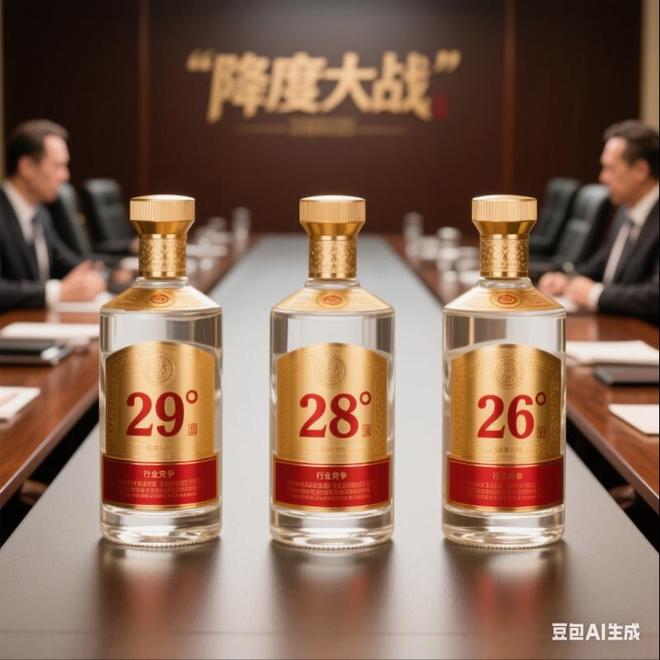
29°VS 28°VS 26°!白酒巨头掀起“降度大战”
Nan Fang Du Shi Bao· 2025-08-19 09:51
Core Viewpoint - The low-alcohol liquor segment is gaining momentum in the Chinese liquor industry, with major companies launching new products to capture market share amid declining sales and high inventory levels [1][3]. Group 1: Industry Trends - Since June, the low-alcohol liquor market has become increasingly competitive, with companies like Shede Liquor, Gujing Gongjiu, Wuliangye, and Luzhou Laojiao introducing new low-alcohol products [1]. - The introduction of low-alcohol products is seen as a strategic move to tap into the younger consumer demographic, which is crucial for expanding market demand [9]. Group 2: Company Performance - Shede Liquor reported a revenue of 5.357 billion yuan in 2024, a year-on-year decline of 24.41%, with net profit dropping by 80.46% to 346 million yuan [4]. - The overall performance of Shede Liquor continues to decline, with Q1 2024 revenues and net profits down by 25.14% and 37.10%, respectively [4]. - Inventory levels among 20 A-share listed liquor companies reached 168.389 billion yuan, an increase of 19.29 billion yuan year-on-year, indicating ongoing inventory pressure [5]. Group 3: Consumer Behavior - The younger generation, particularly those born between 1985 and 1994, is becoming a key target for liquor companies, as their consumption preferences shift towards lower-alcohol and more personalized products [9]. - Young consumers prefer lighter social drinking experiences and are attracted to aesthetically pleasing and convenient product designs [9]. Group 4: Product Performance - Luzhou Laojiao's 38-degree product is expected to generate significant sales, potentially accounting for nearly half of the sales of its flagship brand, translating to around 10 billion yuan in tax-inclusive sales [10]. - There is a debate among investors regarding the impact of low-alcohol products on overall revenue, as they are generally priced lower than traditional high-alcohol products [10].