Manufacturing and Service Industry Synergy

Search documents
南山南、南山北,或将各有一个“粤海街道”
2 1 Shi Ji Jing Ji Bao Dao· 2026-02-27 09:01
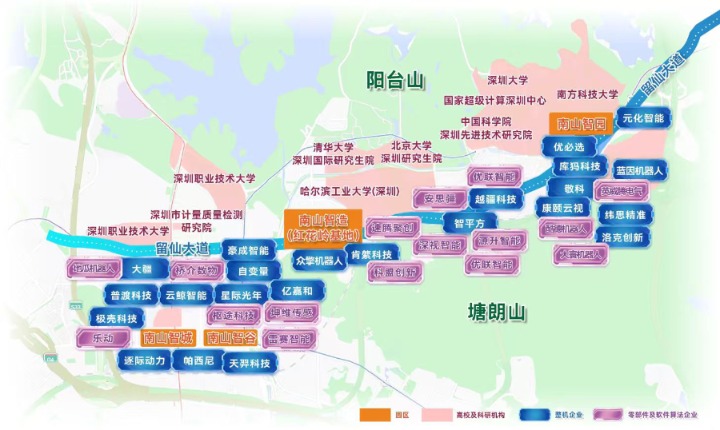
Core Insights - Nanshan District in Shenzhen is emerging as a hub for high-end manufacturing and innovation, with a projected GDP of 1.01 trillion yuan by 2025, making it the first district in China to reach this milestone [1] - The establishment of Nanshan Zhizao and Nanshan Zhicheng parks focuses on the integration of advanced manufacturing and service industries, fostering collaboration among scientists, engineers, and programmers [1][6] - The "vertical factory" concept is being implemented in the Red Flower Ridge base, allowing for high-density industrial development in a space-constrained environment [9] Economic Development - Nanshan District has a GDP exceeding 450 billion yuan, contributing significantly to Shenzhen's overall economic output [1] - The district's industrial structure is evolving, with the second industry accounting for 38.3% of GDP in 2022, marking a recovery after years of decline [5] - By 2025, Shenzhen's industrial output is expected to maintain a leading position nationally, with a stable balance between secondary and tertiary industries [5] Industrial Innovation - The Red Flower Ridge base is home to key enterprises like Zhongqing Robotics and Yuejiang Technology, which are leveraging proximity to R&D centers to enhance production efficiency [8][10] - The base is designed with innovative features such as a spiral ramp for heavy trucks, facilitating efficient logistics and production processes [9] - The integration of various high-tech industries, including robotics and semiconductor manufacturing, is expected to generate a total output value exceeding 183 billion yuan over five years [10] Collaborative Ecosystem - The simultaneous opening of Nanshan Zhizao and Nanshan Zhicheng parks exemplifies the synergy between manufacturing and service sectors, promoting a collaborative ecosystem [11] - The parks provide various platforms for innovation, including AI incubation and biomedicine, enhancing the region's technological capabilities [12] - The development of supportive infrastructure, such as affordable housing for tech talent, aims to create a balanced urban environment that integrates production, living, and ecological spaces [13]